

What Is The Typical Lifespan Of Blackstone Griddles?
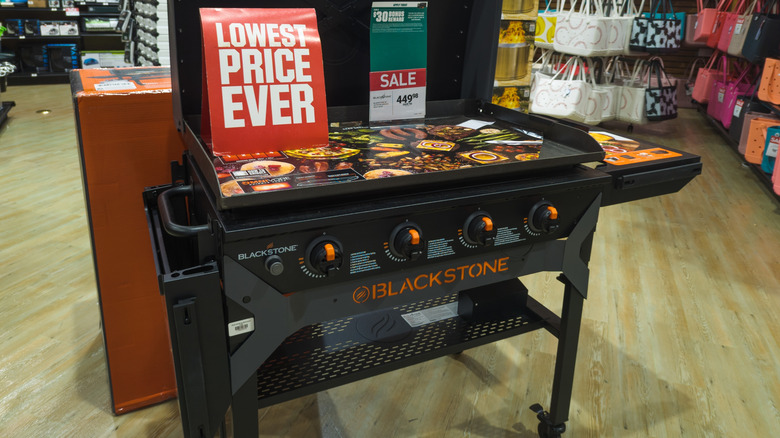
The TikTok-famous Blackstone griddle has found its way into lots of American households — or, perhaps more accurately, onto their patios. In fact, a report from OpenBrand found that Blackstone captured a 26% market share in outdoor cooking equipment. They're popular, but are they durable?
The manufacturer itself says on its website that "Blackstone Griddles are built to last a lifetime." Meanwhile, users on the r/BlackstoneGriddle subreddit report owning their grills for as many as nine years with no or minimal issues, while others report shorter lives. "I had my first for 7 years, and my second for 2," wrote another user in a different thread. "The markings on the knobs go first. Then the rings around the knobs rusted. Then some rust on some parts of the legs." In fact, many durability-related problems that customers have reported about Blackstones don't have to do with the griddle itself but rather the surrounding structure.
For perspective, the average gas grill will last an estimated five to 15 years. That's roughly the same range that Blackstone's griddles fall into based on anecdotal reports, though a few folks said their equipment died in under five years. (Meanwhile, some higher-end grills could last over two decades.) In other words, you can expect your Blackstone to have a yearslong tenure in your backyard, but making it last closer to a lifetime will likely require meticulous maintenance.
Keeping the griddle clean and rust-free is key to extending its lifespan
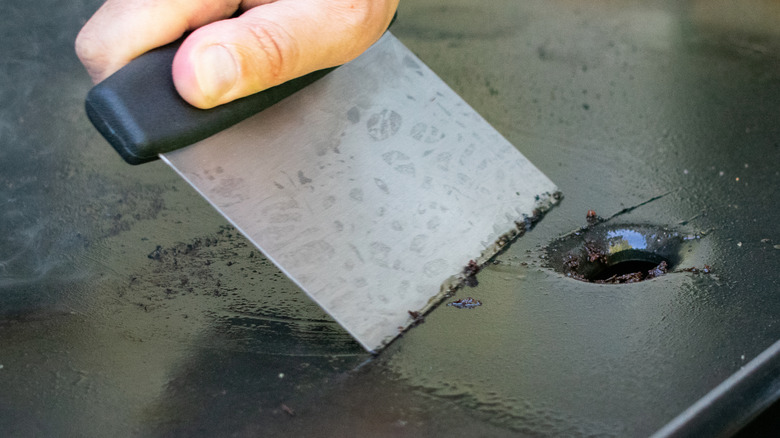
One way to help maintain a Blackstone is to get rid of food debris, the presence of which could attract rodents and bugs or could damage the appliance itself. The best way to clean your griddle involves first scraping it thoroughly with a metal spatula or bench scraper to remove any stuck-on food (you can also use a scouring pad for really stubborn food). Wipe everything down with water and paper towels while the grill is warm. Then make sure the surface is dry, as lingering water can cause rust.
Another key step is seasoning the equipment. You've likely done this before the first use by covering the cooking surface with oil and heating it several times over. After each subsequent cleaning, you don't have to do the same extensive process. Just make sure to keep it fully seasoned by using just one round of oil. To test whether your seasoning is intact, try dripping a little water on the griddle. If the liquid stays in the form of beads, the surface is in good shape.However, you should re-season it if the moisture dries up right away.
Just as you want to make sure there's no excess water after cooking or cleaning, you should try to keep your griddle in a cool, dry place. Ideally, you'll store it under a cover that drains liquid away from the appliance. This will not only keep the cooking surface in good shape but help prevent rust and other damage to the whole structure.