

Why Cast Iron Isn't Always The Best Pan For Cooking Steak
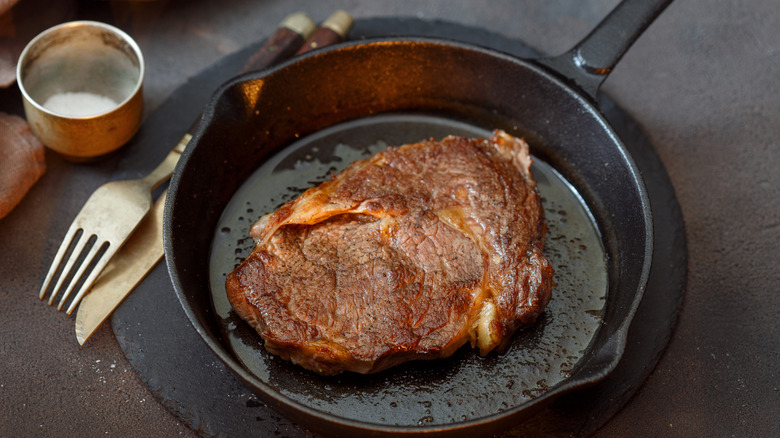
A good cast-iron pan inspires something like territorial affection. Forget jewelry, finding a dependable cast iron is the family heirloom everybody fights over. Most glossy advertising images show a thick steak receiving a hard sear, fat bubbling at the edges — but there are disadvantages of cooking steak on a cast iron. The pans don't heat evenly, there's the threat of sticking, and unwieldy cuts like a tomahawk won't fit in a pan.
Cast irons are capable of getting very hot and delivering that trademark crisp crust, but in practice, spots of the pan can get ripping hot, making thinner steaks, like skirt or flank, easy to overcook. Another mistake you can make cooking steak in a cast iron is letting it stick. This happens when the pan is too hot or cold. The workaround is to drop some oil in the pan before cooking and wait for it to shimmer — that's your cue the temperature is correct.
Cast-iron pans also require seasoning to prevent sticking. Far from lobbing a handful of herbs in, this is an essential step and when skipped, makes cast iron practically unusable for cooking and flipping steaks. To achieve the protective layer of fat that coats the iron, start by washing your pan in soapy water and letting it dry fully. Then rub a small amount of high smoke point oil into it with a paper towel. Warm your pan until the small amount of smoke dissipates and work in another small amount of oil.
How should you cook steak when cast iron isn't right for the job?
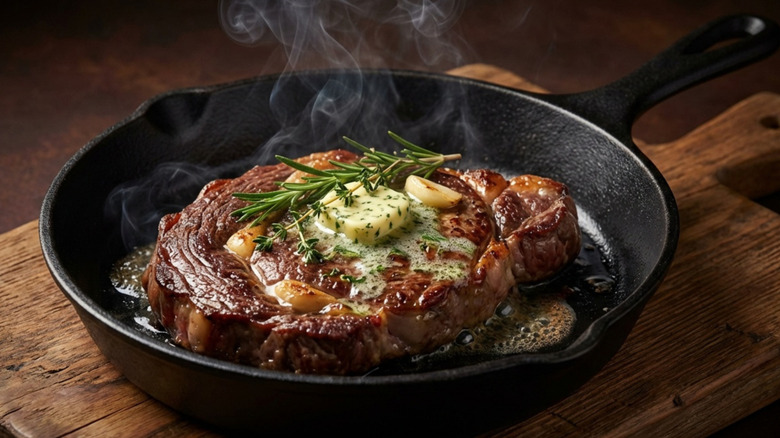
When it comes juicy ribeye, quick-cook porterhouses, and boneless sirloin, cast iron is a great option for achieving a perfect pan sear. But what about other cuts of steak? Filet mignon is a lean cut, and broiling is a good option to avoid turning the delicate meat tough. Season with salt and pepper — herbs like thyme and rosemary pair well with this cut's buttery flavor — and slip it under the broiler, approximately two to four inches under the flame or heating element, for a pleasing sear.
For short ribs, shoulder roasts, and brisket, slow cooking is the best choice. This process turns tougher cuts of beef into fall-apart meat. For example, braising means a long time simmering and softening, while smoking requires a lengthy grill time with flavorful wood. For braising, sear the meat in a deep pan like stainless steel or a Dutch oven and then add a liquid of your choice — be it red wine for deep, rich ragus or beef stock for lighter, umami stews — to deglaze your pan before topping up with more stock to simmer.
Alternatively, opt for the sous vide method when cooking steak. Any cut will work, but the fatty marbled veins running through a strip cut do well with this tender-inducing technique. This is a pretty hands-off approach, so you just need to fill the bath as per your machine's instructions and season and seal your meat. Then give it a quick sear before serving.