

Why Pre-Shredded Supermarket Cheese Never Melts The Way You Expect
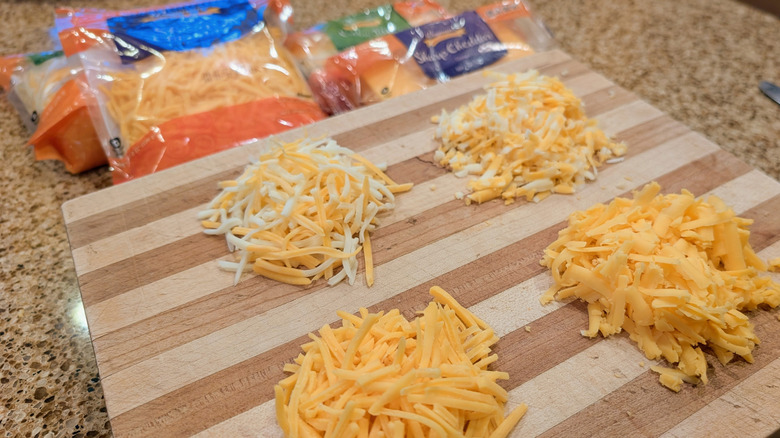
A modern supermarket is full of products that make life more convenient. But a shopper doesn't have to look beyond frozen dinners or canned soup to know ready-made items aren't always as good as making dishes the old-fashioned way. Conventional wisdom says the same is true about pre-shredded, bagged cheese: It won't melt as well as cheese you shred yourself. We put that idea to the test — and clearly found pre-shredded cheese doesn't melt as well as block cheese.
We tested two types of cheese: colby jack and cheddar, each in block and shredded form from Wegmans store brand. After hand-shredding the blocks of cheese, we put one ounce of each type of cheese on slices of bread and melted in a toaster oven for around four minutes. For both types of cheese, the pre-shredded version stayed dry and became rubbery and stringy after melting, while the version shredded directly from the block formed an even, buttery layer on top of the toast. The hand-shredded one also began to melt sooner.
Why is that? Bagged pre-shredded cheese often has weird ingredients added — things like cellulose, potato starch, rice flour, or cornstarch. Those are there to prevent the shreds from sticking together in the bag by coating their surface in a dry, powdery substance. But this also works similarly as the cheese melts, preventing the shreds from combining into that ideal gooey layer. You can wash your shredded cheese to rinse off the anti-caking agents, but if you're going to do that extra step, you might as well just get out the cheese grater instead.
Block cheese melts more evenly and stays creamy longer
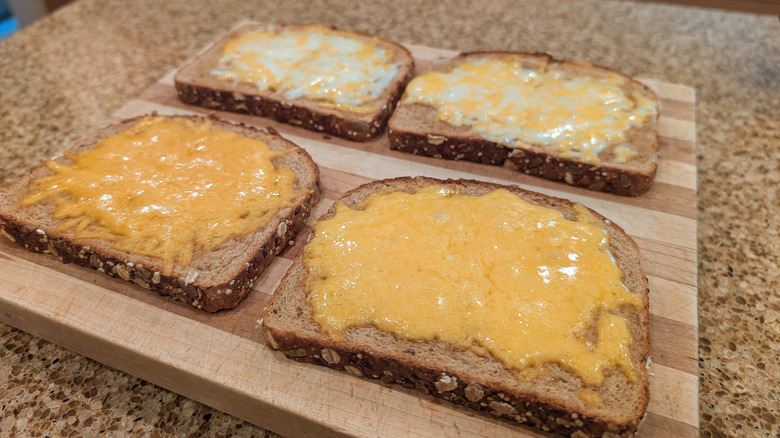
The difference between the two forms of cheese became apparent even during toasting. A minute in, the hand-shredded block cheese started to combine into a somewhat smooth layer, while the pre-shredded kept its structural integrity. At the three-minute mark, there was no longer any evidence of shreds from the block cheese, and it started to bubble, while the pre-shredded cheese was still melting.
Once the toast was taken out of the toaster oven, there was a visible difference. A careful look at the slice made with pre-shredded cheese revealed that, although it was fully melted, hairline divisions remained between each shred. There was no such separation on the slices made with hand-shredded cheese, which formed a solid, even sheet, spreading out to cover the whole piece of bread.
The taste also provided a clear difference. The hand-shredded cheese tasted buttery and smooth, and seemed to have a richer flavor than the pre-shredded, despite being the same type of cheese. Even after melting, the pre-shredded one stayed dry and coagulated quickly, while the hand-shredded one stayed soft and gooey, oozing off of the toast after it had been cut. No doubt both tasted delicious — it is melted cheese, after all — but in a simple application like this, it's worth grating the block yourself for the better result. In applications where dryness matters less, such as on top of chili or in an omelet, you likely won't notice the difference as clearly.