

Mistakes People Make When Cooking With Pumpkin
We may receive a commission on purchases made from links.
When fall rolls around, the days get crisper, those first leaves start turning red and orange, and you might notice more pumpkin entering your diet. But, when it comes to cooking the gourd, there are all kinds of mistakes people make. Perhaps you pick one up at a local farmers market, but aren't sure the best way to cook it; or, maybe you want to bake with pumpkin puree, but keep getting results you aren't pleased with.
We interviewed Joanne Gallagher, a co-founder and recipe developer at Inspired Taste, and Jenn Lueke, author of New York Times bestselling cookbook Don't Think About Dinner and creator of Jenn Eats Goood. Their pumpkin expertise helped us work out where home cooks often go wrong with pumpkin, and what to do instead.
Sure, pumpkin is seasonal, so you might not get to cook with it as much as you do some other veggies, and, it doesn't yield easily, with its thick flesh and guts to scoop out. But now, you no longer have to be intimidated by pumpkin. Once you understand some of the most common pumpkin mistakes, you can confidently avoid them.
Thinking all pumpkins are the same
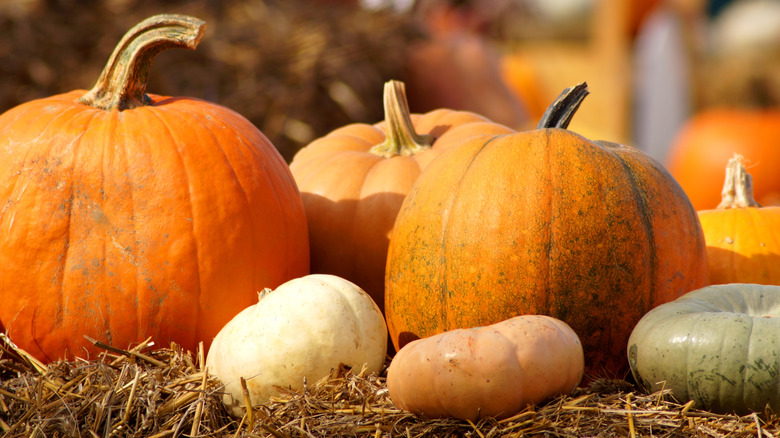
The exact parameters of what makes one thing a pumpkin and another a winter squash are fairly nebulous. However, it's fair to say that pumpkins are varieties of winter squash that (classically) are round, not necessarily orange, and either ridged or smooth-skinned. One thing we know for sure is that there are many types of pumpkin, so assuming that only jack-o-lantern varieties count — or that they all taste the same — will severely limit your options.
The variety of pumpkin matters, and what you want to make with it makes a difference as to which you should choose. Both Jenn Lueke and Joanne Gallagher recommend sugar pumpkins for baking. "As the name suggests, the flesh is sweeter than in other varieties," Lueke explains. "They're grown specifically for cooking, so the flesh is denser and less watery."
According to Lueke, Cinderella pumpkins are versatile. They have sweet flesh like sugar pumpkins, and they work in both baked goods and savory dishes. And although there may be some debate over whether it's a pumpkin or a squash, kabocha squash is another of Lueke's recommendations. "When roasted, their velvety texture is perfect for soups, and makes blending into a puree easy," she says.
One main thing to remember is that carving pumpkins — the kind you'd use to make jack-o-lanterns — aren't ideal for cooking. They're edible, but they're bred to have large, hollow centers and not much flesh, plus — they don't always taste the greatest.
Always boiling pumpkin
If you always cook pumpkin by boiling it, you're making a mistake. It's one method, sure, but it's not going to give you the most flavorful pumpkin. Like other veggies that are boiled, it can turn out watery when cooked this way, and doesn't get the chance to develop the richest flavor.
"I recommend roasting," says Joanne Gallagher. "It builds flavor directly into the pumpkin itself, rather than diluting it in water the way boiling can," she adds. She recommends cutting the pumpkin in half, placing the cut side down on a baking tray, and roasting until the flesh is soft. At this point, you can blend it into a puree or for soups or sauces, or mash it and eat it as a side dish.
Roasting it this way saves the thing that anyone with under-sharpened knives dreads: Cutting a whole pumpkin into chunks. You can also roast chunks or slices of pumpkin if you're making a dish that doesn't involve blending it. This method is an easy way to have pumpkin to add in pasta, gnocchi, or spiced rice. Jenn Lueke says that roasting pumpkin in chunks also brings more of the color out, as well as enhances the flavor. "The caramelization the pumpkin gets in the oven boosts the natural sweetness," she says.
Using pumpkin pie filling instead of pumpkin puree
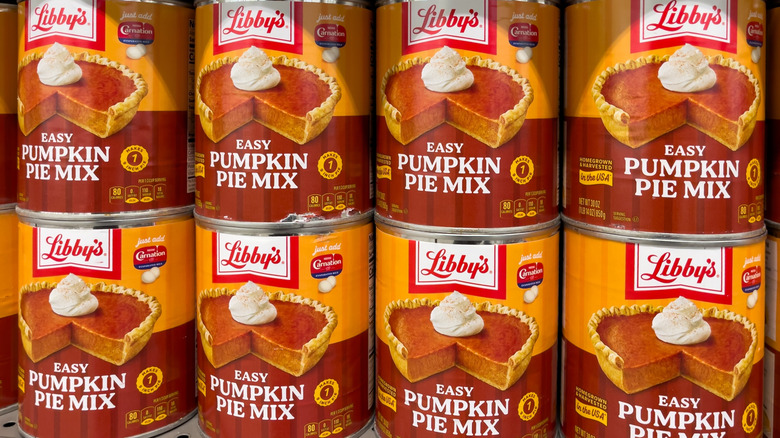
When baking with pumpkin, many people choose to use canned pumpkin puree. This gives you consistent results, and saves the effort involved with making the puree before you even get to the baking part. However, buying pumpkin pie filling or pumpkin pie mix instead of pumpkin puree is a common mistake. Both come in cans, but they're two different things and shouldn't be used interchangeably.
"The biggest mistake is reaching for canned pumpkin pie filling instead of pure pumpkin puree," Joanne Gallagher tells us. "Pie filling already has sugar and spices added and will throw off the recipe," she explains. In some cases, like if you're baking pumpkin pie, this might seem fine, but it's actually nice to be able to control the level of sweetness and the spices that you use.
Then, there are times when you might be baking something other than pumpkin pie that doesn't have spices in it. Or, you might decide to take a shortcut, and cook something savory like a soup or a sauce with a can of pumpkin puree. In these cases, using pie filling would totally mess up your recipe. So, just be aware of what you're buying, and make sure to pick up the correct can.
Assuming you have to buy pumpkin puree
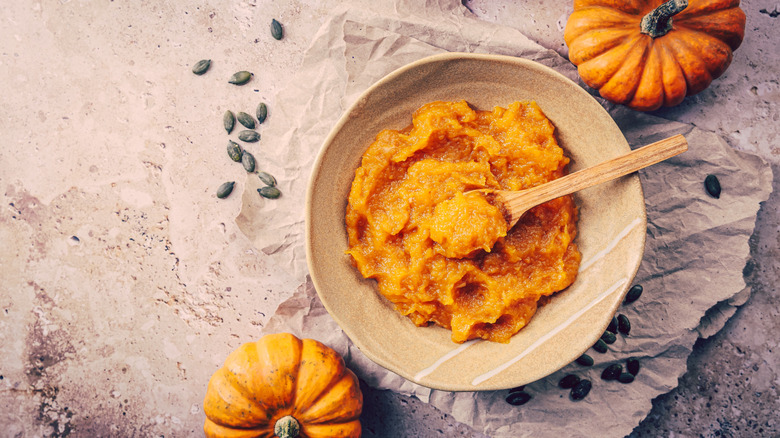
Pumpkin puree can be extremely useful in baked goods and savory recipes, but it's a mistake to assume you have to buy it in a can. Making your own pumpkin puree can be more affordable, and gives you control over the type of pumpkin you use. It's not always a doable choice, but it's a good option to have up your sleeve.
"Don't be afraid to make your own puree from scratch," says Joanne Gallagher. "My pumpkin puree recipe only requires one real ingredient (the pumpkin itself, with optional salt), and it's as simple as roasting and blending." She notes how easy it is, and how well it lasts in the fridge or freezer.
In some cases, your homemade pumpkin puree could be ruining your baked goods. "If you're swapping canned for homemade puree in a recipe, be careful," says Jenn Lueke. "Canned puree, like Libby's, is thicker and more concentrated than homemade."
The question seems to be to squeeze,or not to squeeze. Lueke recommends draining as much moisture out of homemade puree as possible, but Gallagher doesn't believe it's always necessary. "Some recipes call for squeezing excess water out of pumpkin puree through cheesecloth," says Gallagher. "As long as you use a sugar or baking pumpkin and roast it using our method, you shouldn't need to squeeze out any extra moisture," she remarks. However, she does add that if the puree seems wetter than you expect, it doesn't hurt to squeeze.
Not accounting for extra moisture in baked goods
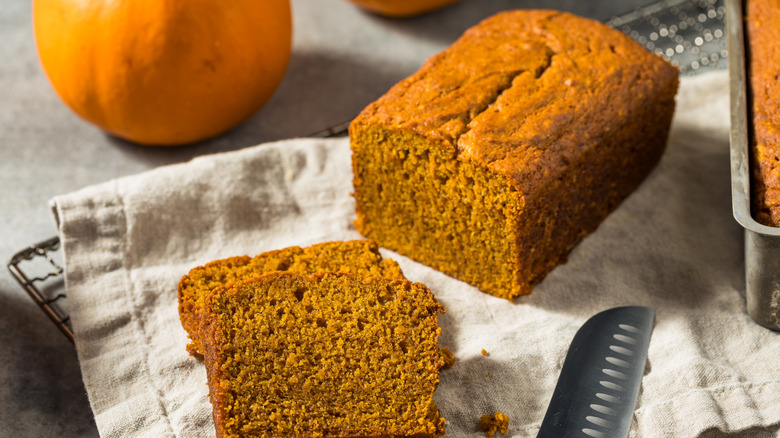
When you're baking with pumpkin, particularly in recipes for pumpkin bread, cakes, or muffins, you need to take the extra moisture from pumpkin into account. When you follow a recipe as designed, the person who developed it will have already factored this in. The issues usually come when you make changes, such as using homemade puree instead of canned, or you decide to take an existing recipe and add pumpkin, when there wasn't any in it before.
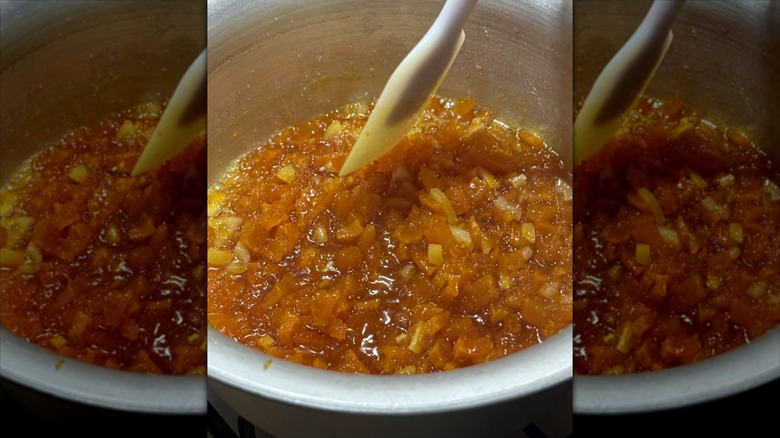
"Homemade puree tends to run watery, which can bring unnecessary moisture to your baked goods, leaving them gummy or dense," explains Jenn Lueke. She recommends simmering any homemade pumpkin puree to thicken it. "This reduces the moisture going into your baked goods, and the natural sugars caramelize, which deepens the flavor," Lueke says. "It's worth the extra few minutes, especially if you're swapping in your homemade puree instead of canned."
Extra moisture can make baked goods turn out wetter than you expected. "Pumpkin bread is so moist that I always test a few different spots with a toothpick toward the end of baking, not just the center, since it can look done in one spot and still be wet in another," Joanne Gallagher remarks. "If it comes out wet, just give it another 5 to 10 minutes in the oven," she adds. If you add extra pumpkin to a recipe, also make sure to reduce the moisture elsewhere.
Underseasoning pumpkin
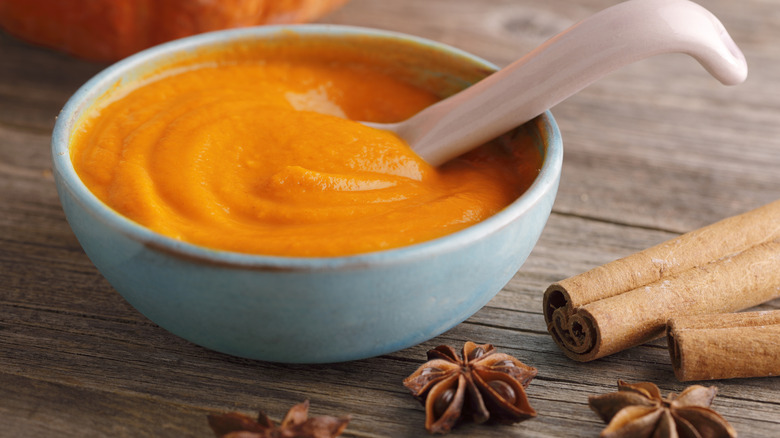
It's very easy to underseason pumpkin. Although it has a distinctive flavor, it isn't exactly a strong one, so using too little seasoning can leave you with a bland dish. Don't be afraid to use plenty of spices, whether in a sweet or savory recipe.
"Pumpkin is mild, so it needs bold seasoning to complement it," Jenn Lueke tells us. "A common mistake is being too shy with salt and spice," she adds. When you're cooking sweet dishes, spices like ground cinnamon, nutmeg, clove, ginger, and allspice blend with the pumpkin flavor nicely. You can use a classic pumpkin spice, but making your own blend lets you play with the ratios, and tailor it more to your liking.
Lueke recommends pairing pumpkin with classic aromatics for savory dishes. "Shallots are especially good because they have that hint of sweetness," she says. "Warm, savory ingredients like browned butter, sage, and parmesan cheese are great depth-builders," she adds. Spice blends like garam masala and ras al hanout are also great to use when cooking pumpkin, as they complement its sweetness, while adding extra savory notes.
Failing to balance the sweetness of pumpkin in savory dishes
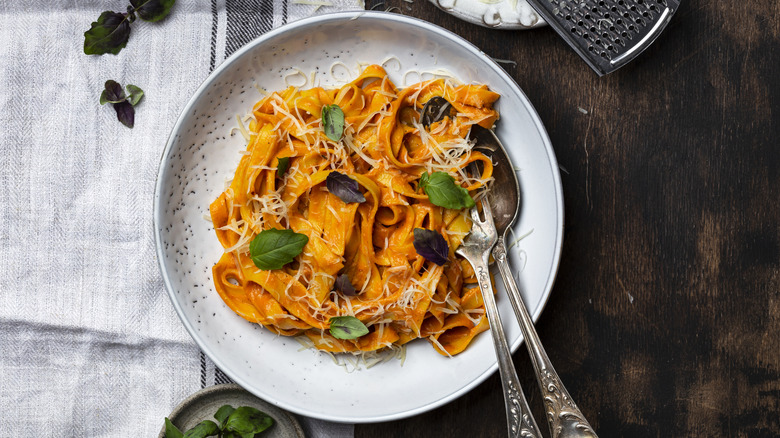
Pumpkin isn't dessert-level sweet, but it does have a bit of sweetness to it. This doesn't mean that it's unsuitable for savory dishes, however. You can use pumpkin in dishes from creamy pasta sauces to spiced rice to satay noodles. You do, however, have to make sure to harmonize the flavors.
Sweet, salty, umami, sour, and bitter — these are the elements of flavor you're often looking for, but when you have more of one (in this case, from the natural sweetness of the pumpkin), you need to make sure you balance them.
"In my pumpkin mac and cheese, I season the cheese sauce with black pepper, nutmeg, and a little Dijon mustard, which keeps things savory rather than sweet," Joanne Gallagher explains. "I always taste the sauce before adding the pasta, and if it tastes flat, I reach for more salt," she adds. While you don't want to overdo it, salt helps to temper the sweetness, as well.
"A little acidity, like a splash of apple cider vinegar, or squeeze of lemon at the end, brightens a dish," Jenn Lueke says. This acidity can also help to counterbalance the sweet notes of pumpkin.
Always sticking to the same recipes
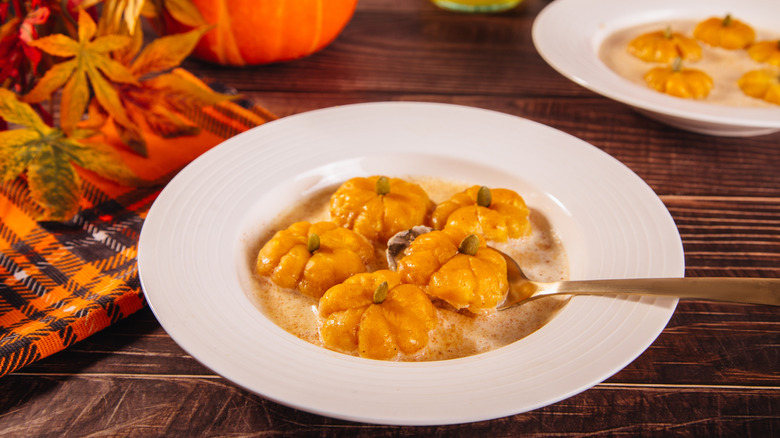
If you make the same pumpkin recipes over and over again, you're missing out on a wide world of tastiness. Pumpkin pie, pumpkin bread, pumpkin risotto, and pumpkin ravioli are all classics for a reason. They're delicious — and we're not suggesting you strike them off the menu, but branching out is never a bad thing.
If you want sweet recipes beyond pumpkin pie, you can use pumpkin in brownies, waffles, scones, cookies, cake, and so much more. These recipes often use pumpkin puree, which can be store-bought or homemade. The pumpkin is typically paired with sweet and warm spices — the kind you may find in a pumpkin pie — but you don't have to. If you love pumpkin but aren't a fan of these types of spices, there are options for you.
In terms of savory dishes, soups and sauces are often popular, but you can also make pumpkin gnocchi, pumpkin enchiladas, pumpkin chili, pumpkin curries — the possibilities are many. If you have a favorite recipe that uses a root vegetable like carrot, sweet potato, or rutabaga, you can usually swap pumpkin in its place.
Assuming you always have to peel pumpkin before cooking
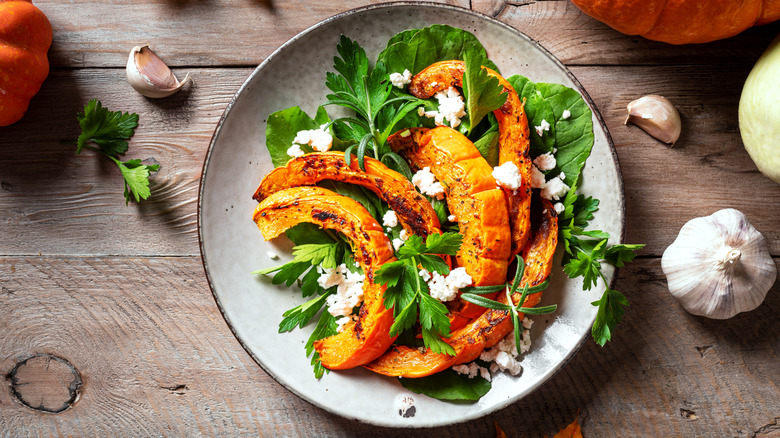
Preparing a whole pumpkin for cooking can seem daunting. Some people get put off by the prospect of peeling the entire thing, which can be a pain — especially when dealing with a ridged or irregularly shaped pumpkin. However, what many people don't know is that it can actually be a mistake to peel it. Not removing the skin from pumpkins not only makes cooking them simpler, but can add more flavor and texture, too.
According to Jenn Lueke, you don't need to bother with the peeling. "Roast it with the skin on, and even some of the stem," she advises. "Once roasted, you should be able to easily scoop out the flesh." You can also cook and eat pumpkin in chunks or slices, with the skin still on. There are varieties that have particularly thick skin that's tough when cooked, but with many types, the skin is perfectly pleasant to eat.
Pumpkin prep requires good tools, whether you are peeling or not. "It's very important to have a good quality, sharp knife when cutting through a pumpkin," says Lueke. "If your knife isn't great, carefully slice off the very top of the pumpkin (where the stem is), to create a bit more leverage and wiggle room for your grip and knife," she adds. Attempting to cut a pumpkin with a dull or small knife can be dangerous, as it's easier for your knife to slip.
Cooking pumpkin too long or not long enough
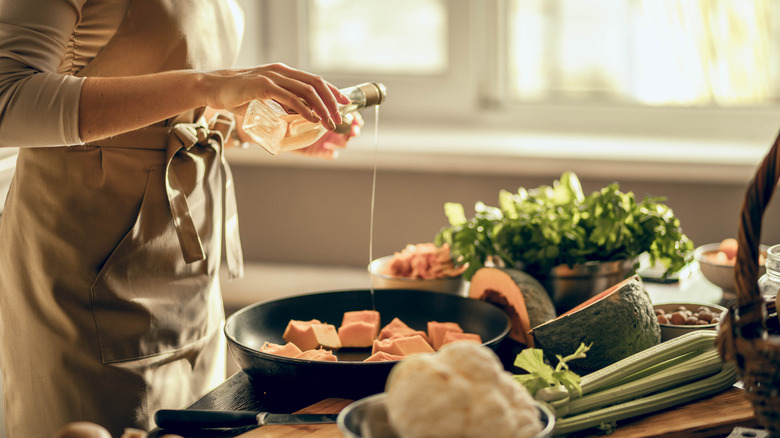
Among the most common mistakes you can make is either overcooking or undercooking your pumpkin. Don't be afraid to give it extra cooking time, or stop cooking early — if things are going faster or slower than you planned for.
"There's a fine line between a perfectly cooked pumpkin and an overcooked one," says Jenn Lueke. "Monitor closely after you pass the 40 to 45 minute mark for a larger pumpkin, and the 30-minute mark for a smaller one," she suggests, if roasting a pumpkin whole. However, if you're boiling it in a soup or stew or roasting it in slices or chunks, the cooking time will be significantly less.
You don't want a pumpkin that's still hard after cooking, particularly if you're planning on mashing, blending or pureeing, as it won't get the silky smooth consistency you're looking for. Plus, chunks or slices of still-hard pumpkin aren't particularly pleasant to eat. On the other side of things, overcooked pumpkin can burn if you're roasting it, or become soggy and waterlogged if you're boiling it.
Storing pumpkin incorrectly
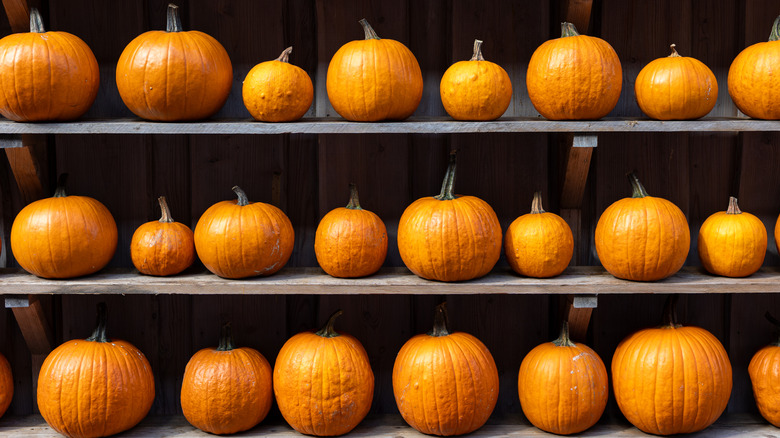
Many people aren't sure how to store pumpkins correctly, or how long they stay fresh once you take them home. This can lead to issues when cooking them. Either the pumpkin is obviously moldy and unusable, or it may have started to turn and not taste its best. Either way, avoiding the mistake of storing your pumpkins incorrectly will keep pumpkins in good shape.
"Pumpkins last a long time, but they don't last forever," says Jenn Lueke. "If you've been neglecting the pumpkin you bought at the store earlier this month, cook it sooner rather than later to ensure the freshest flavor," she recommends, noting that pumpkins that have developed soft spots should be kept for decoration only, and not eaten.
The trick to keeping pumpkin fresh is to store it somewhere dark and cool — but not cold like a refrigerator. A pantry or cupboard will do the job, but if you happen to have a root cellar or basement, those spots are ideal. In these kinds of conditions, you can store pumpkins for around three months.