

What's The Difference Between British & Italian Sausages?
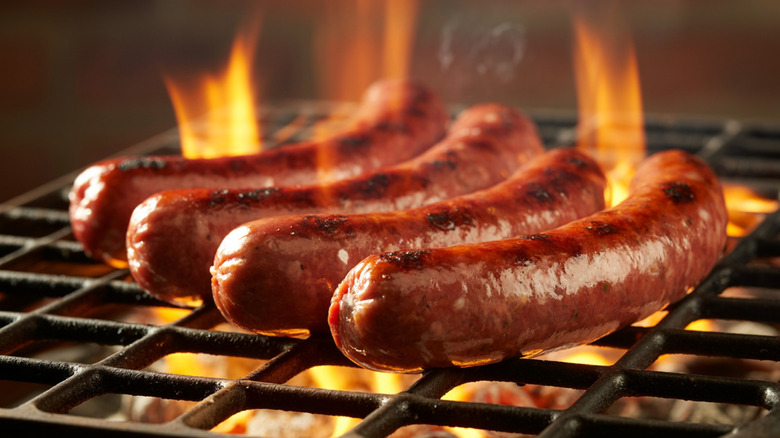
The variety of sausages people cook and cure across the globe seems nearly endless. Germany, for instance, is said to have over 1500 kinds. In many cases, the distinctions are based on the preparation method and the flavorings. When comparing Italian and British sausages, for instance, they may seem fundamentally similar when you consider the meat and basic makeup. Both often consist of ground-up pork and seasoning stuffed inside a casing, which is typically made of pig intestines, collagen, or plastic. Some sausages might be made with beef or a blend of meats.
The most notable differences come in the form of spices, how the food is generally served to diners, and production nuances like the presence of certain additives. However, geography adds another layer of distinction: Italian sausage in the United States is something more specific than and not necessarily similar to the diverse array you will find in Italy. And some British varieties are different enough from the other two categories that you might not want to use them interchangeably for specific recipes. Here's what you need to know about these sausages before seeking them out.
Italian sausages are spice-forward and work well with vegetables
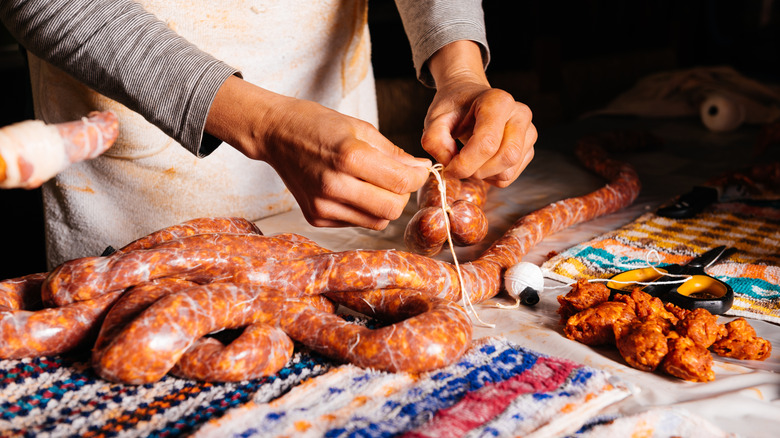
First, let's get one thing straight: There is no single definition of "Italian sausages." Their boot-shaped nation of origin is home to about 1,000 types, including fresh and cured ones. Fresh ones are referred to as insaccati or salsiccia fresca in Italian. People must cook these before eating them. Dried and cured versions are called salami and don't require cooking.
Folks in the United States might have a picture in their minds of what Italian sausage looks like based on offerings at a big-box grocer. In Italy, you'll find a diverse lineup that can be made from pork, beef, or even rabbit, along with a variety of spices. Typically, the sausages are flavored heavily with pepper, fennel, parsley, and other seasonings tied to their respective region.
In many dishes, salsiccia fresca is grilled and served with a vegetable accompaniment. In northern portions of Italy, like Lombardy, certain fresh sausages might be plated alongside spinach or savoy cabbage. In the southern city of Naples, turnip greens and broccoli are more preferred side dishes. American Italian sausages rarely replicate the local flavor profiles, but they have an appeal all their own.
Italian sausages in the US are generally fennel-heavy
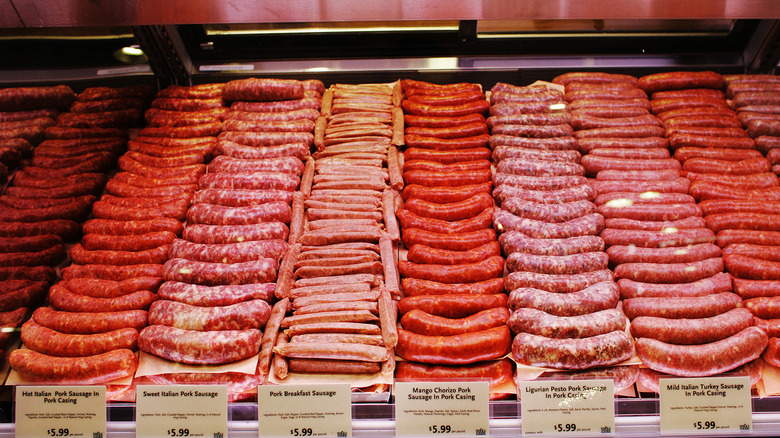
In the United States, there is actually a strict definition for what items retailers can label as Italian sausages. The USDA specifies that they must be "cured or uncured sausages containing at least 85% meat or a combination of meat and fat." Additional specifications exist for the fat, water, and spice contents. When you buy one of these products in an American grocery store, you're likely to get a fresh uncured sausage made with coarsely-ground pork, fat, and spices like fennel (the main flavor that comes through), anise, paprika, parsley, garlic, and salt.
The American-style Italian sausage, therefore, tends to be herbaceous and fresh. Some versions, such as those made with garlic and parsley, will have a notable vegetal flavor. You might also come across products that contain a nutty cheese like parmesan. It's also common to see sweet and hot Italian sausage. These labels refer more to the level of spiciness than the overall flavor. (So a true "sweet" Italian sausage isn't actually sweet-tasting.)
Because of the herby flavors, U.S.-style Italian sausage also pairs well with vegetables. It's often served with a tomato sauce, frequently made with some of the same vegetation that seasons the sausages. Italian sausages also work well with peppers and onions, and those three ingredients form the basis of a classic sausage and pepper recipe.
Many British sausages are milder and earthy
The Italian sausage is all but ubiquitous in American grocery stores, but the same can't be said for the British kind. Online vendors and specialty markets are the most common sources for them on this side of the pond. As with Italian sausages, the idea of British bangers being a single type of meat isn't true. Some notable versions include ginger-seasoned Manchester sausages and Wales' Glamorgan sausage, a vegetarian variant made with cheese, leeks, and bread crumbs.
While the meat-based options most often contain pork, bangers can also have veal or beef, depending on the region of origin. Unlike the traditional Italian products, British sausages also feature a wheat-based additive called rusk that's made from a biscuit or bread dough. It can serve as a filler, but it's also simply a common ingredient. Because rusk is dry and grain-based, it can help with moisture retention by absorbing liquid that escapes from the meat as the sausage cooks.
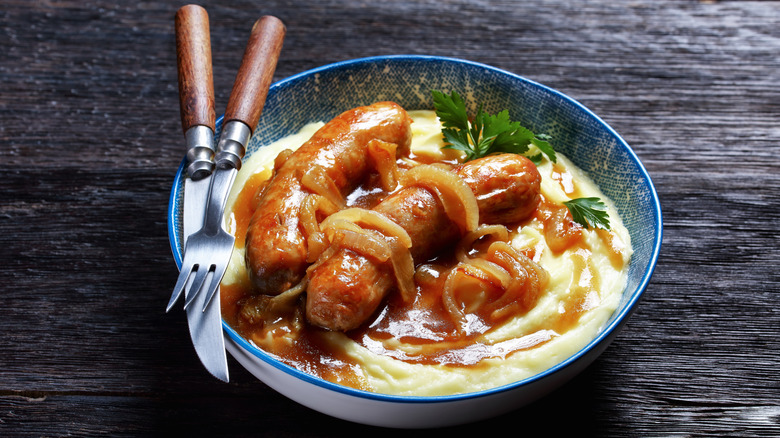
Bangers typically contain spices like sage, nutmeg, mace, and ginger, giving the meat a warm, earthy flavor profile. It's only logical, then, that these British sausages work with other earthy-tasting foods, such as potatoes. Bangers and mash are among the most famous dishes. In toad in the hole, another traditional U.K. food, a banger is baked inside a dough cover and then served with gravy.