

5 Disadvantages Of Using A Stand Mixer
We may receive a commission on purchases made from links.
There's something undeniably satisfying about using a stand mixer. With the proper attachments it can do all the hard work of kneading, whipping, or mixing, essentially acting as your third hand while you multitask with something else. Not to mention, many stand mixer brands offer models that can also transform into a whole other appliance with the help of a power hub and various mixing attachments. And when you give it permanent real estate on your countertop, suddenly, it becomes part of your kitchen's aesthetic.
With all the versatility and convenience a stand mixer can bring to your baking and cooking game, though, there are a few downsides that come with having one, no matter which brand you choose. For instance, appliances like this can come with a hefty price tag. And even if you can carry the financial load, you might not like dealing with the physical weight or noisiness of the device. It is also cumbersome to clean and sometimes inefficient to use due to the risk of uneven mixing.
Depending on what you typically make or intend to use a stand mixer for, the advantages may not be enough to justify the investment. For many tasks, such as general mixing or whipping, a good ole hand mixer can often get the job done with a little elbow grease. None of the drawbacks on this list necessarily mean you should ditch your stand mixer dreams, but knowing some of the disadvantages beforehand can help you decide if this is just another one of those kitchen appliances you've been brainwashed into thinking you need.
The price tag can be hard to swallow

If you've been looking into getting a stand mixer, the price can be one of the biggest dealbreakers. Depending on the brand and model a new high-quality stand mixer could range from roughly $100 to $800. The high price tag for stand mixer brands like KitchenAid, Bosch, Ankarsrum, and Cuisinart is partly due to their durability. They are constructed with heavy metals, as well as high-powered motors designed with longevity in mind. If you frequently bake or cook foods that require physically fatiguing steps, such as kneading bread dough or whipping large quantities of buttercream frosting, the price may be worth the time, hassle, and effort it saves you. For folks who only do those things occasionally, taking the slightly harder route with your hands or a hand mixer can save you hundreds of dollars.
If you don't want to choose between affordability and convenience, certain retailers, like Amazon and Walmart offer refurbished stand mixers from brands such as KitchenAid for significantly less than their original retail price. These mixers have been thoroughly inspected and repaired as needed to ensure they're in working condition. That makes these restored models a potential way to get a quality product without paying a premium price.
They don't always mix evenly

When combining thick mixtures that may stick to the sides or bottom of a bowl, like batter, frosting, or dough, using a stand mixer has a clear downside. The process may involve constant stopping, scraping, and then restarting to ensure everything is thoroughly combined. I have a stand mixer, and due to the aforementioned issues, there are times when I prefer maneuvering a hand mixer instead. With the latter option you can use one hand to control the motions of the bowl and the other. This allows you to move the beaters around as needed without stopping as frequently.
Some stand mixer models, including certain KitchenAid models, allow you to adjust the batter-to-bowl clearance, which helps the mixing attachments reach and thoroughly combine ingredients. Other options, such as some Bosch models, use wider bowls and have special attachments that can make scraping the sides easier. Even with these features, you may still have to stop the appliance occasionally to scrape down the bowl. A stand mixer can save you plenty of effort, but it doesn't always mean you can walk away and expect perfectly incorporated ingredients every time.
They're heavy and bulky
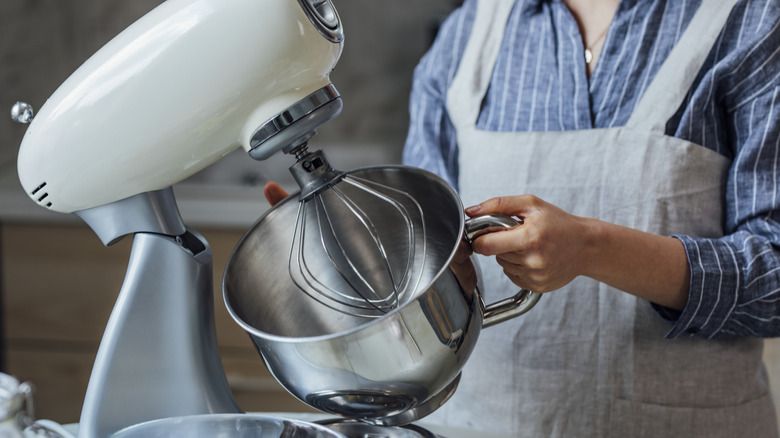
Regardless of the brand or model, the majority of quality stand mixers will be heavy and bulky, simply by the nature of how they're made. Some can weigh as little as 11 pounds, like the Nutrimill Artiste stand mixer, while others might weigh more than 20 pounds, like a classic KitchenAid mixer. When it comes to kitchen appliances and tools, heaviness can be a positive thing because it sometimes indicates the items were made with durable materials. However, for some people, such as older adults, a large, heavy stand mixer could be difficult to maneuver around the kitchen, even when adjusting it on a countertop. In this instance, a hand mixer again proves to be a more suitable option, given that it's lightweight and easy to store.
For anyone with limited counter space, the size of a quality stand mixer may also not be ideal. A possible solution is to choose a more compact product or store a regular-sized device in a cabinet when it's not in use. Whether the concern is accessibility or counter space, if you're wanting many of the hands-free uses of a stand mixer without all the weight and bulk, a dual hand-and-stand mixer may offer a solution to both problems.
Cleanup can be a chore
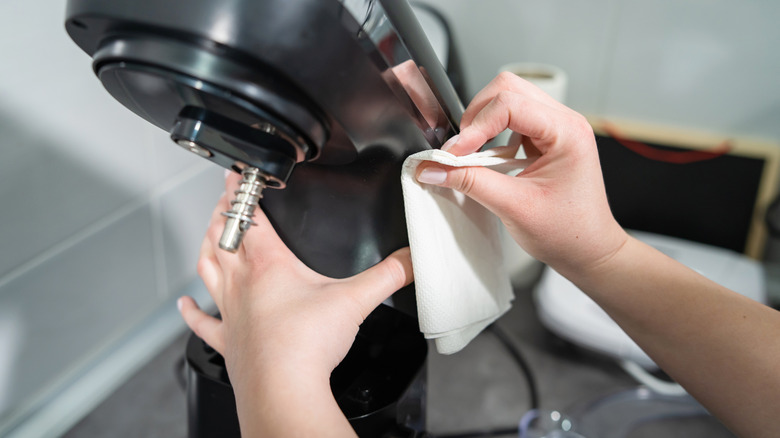
For stand mixers that have a tilt-head design, which they often do, overfilling the mixing bowl can cause the contents to creep inside the small grooves and fixtures where the attachments are inserted. That creates more work than you bargained for when it comes to cleaning your stand mixer and its hard-to-reach areas. This is especially true with sticky or tacky mixtures, like bread dough. Attachments that can be inserted into the power hub of some models can also be tricky to clean. That results from residues becoming lodged in crevices, such as when removing dried pasta dough from a pasta plate attachment.
While some of this cleanup can be avoided with a little extra care, it can still make using some stand mixer models more time-consuming. Avoiding overfilling the bowl (especially with ingredients that expand as they mix), starting the mixer at a low speed, and wiping down the appliance before splatters and residue have a chance to dry are all useful ways to prevent bigger messes. Depending on the manufacturer's instructions, some attachments can go in the dishwasher, while others are better off being washed by hand. Taking the time to manually clean attachments that have small grooves or intricate parts can help stop food from becoming trapped and lower the potential for mold growth.
They can be noisy

It's rare to come across mechanical kitchen tools that don't make at least some noise. On average, stand mixers can be as loud as 75 to 85 decibels while running, which is roughly comparable to the noise level of a vacuum cleaner or lawn mower. If you're someone who finds baking or cooking therapeutic, a noisy stand mixer can easily throw a wrench into what would otherwise be a peaceful pastime. The sound produced by a stand mixer naturally comes from the motor. That noise could easily be amplified if the device has to work harder under the strain of mixing large or heavy loads.
A simple workaround could be to opt for a quieter model of stand mixer, like the Biolomix 1200W, which is advertised as measuring below 60 decibels. Otherwise, using a modern hand mixer is a quieter option. Or skip the appliance altogether and use your own hands for kneading bread dough.