

Is Glass Cleaner Safe To Use On An Induction Stovetop?
We may receive a commission on purchases made from links.
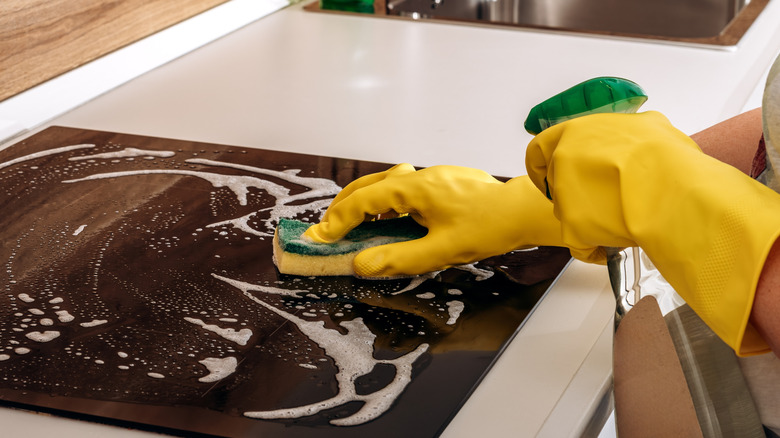
Among all the advantages of an induction stovetop, its sleek, minimal design is up there as one of the best. A simple swipe of a cloth and some spray, and that silky black surface shines once again. Or does it? Comment threads and review sections are awash with consumers discussing which cleaners are suited for the task, and which ones to avoid. A few spritzes of glass cleaner seem innocent enough, but using it is one of the cleaning mistakes people make with glass stovetops — what with the stovetop being made of glass or ceramic glass. Using a glass cleaner like Windex can leave streaks, permanent etches, and release ammonia into the air.
Windex is actually far too harsh for this type of stove. It contains abrasive ammonia, which marks the cooktop and, if not dried off, lingers in the air. This is such a prevalent problem that several brands, including the likes of Whirlpool and GE, won't honor damage warranties if ammonia has been used.
Alongside glass cleaners, another culprit that will scratch your stovetop is wool scrubbers and Brillo pads. As tempting as it is to give a baked-in splotch of pasta sauce a quick buff with something made of wire to loosen it, this will likely scuff the stovetop surface. Despite these glass surfaces being far more delicate than most people realize, they're surprisingly easy to clean. In fact, problems often arise from overcomplicating the process.
So how should you clean an induction stovetop?
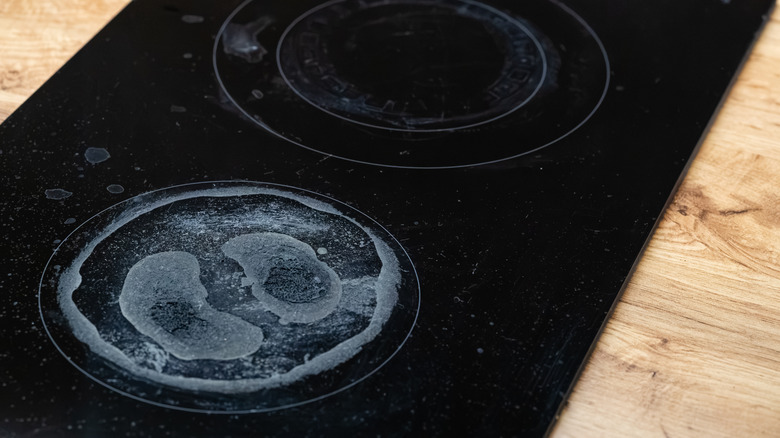
The best way to look after your glass stovetop is with a daily clean, and it really doesn't get any simpler than this. Just dampen a microfiber cloth and give the cooled surface a few swipes. For a little extra potency, add some dish soap. If you keep on top of this task, you probably won't ever reach the point of needing a more heavy-duty approach.
If you have let your stovetop get to the barnacle stage and there are rogue hardened noodles and tough pools of oatmeal to deal with, incorporate a scraper into the mix. A scraping tool or razor blade used at an angle unsticks dried bits of food and crusted-on stains. Scrapers should be wielded carefully and gently to avoid scratching the glass.
When considering the best products to use, a tried-and-true combination of baking soda and white wine vinegar can lift burn marks. Weiman's Glass & Ceramic Cooktop Cleaner is gentle and easy to use for everyday cleaning, and for a scrubber that won't scratch, Scotch-Brite glass cooktop pads are a trusted go-to. For days when you just need a quick cleanup, a pack of wipes is worth having on hand. Weiman has some good ones in a 30-wipe tub.