

American Vs Cheddar Cheese: What's The Difference?
We may receive a commission on purchases made from links.
On the surface, American and cheddar cheese have a lot in common: They're both extremely popular, widely available yellow cheeses that pair perfectly with burgers, grilled cheese, mac and cheese, and basically any comfort food. However, there are a few key differences between American and cheddar, and understanding this dairy distinction will help you better utilize both cheeses.
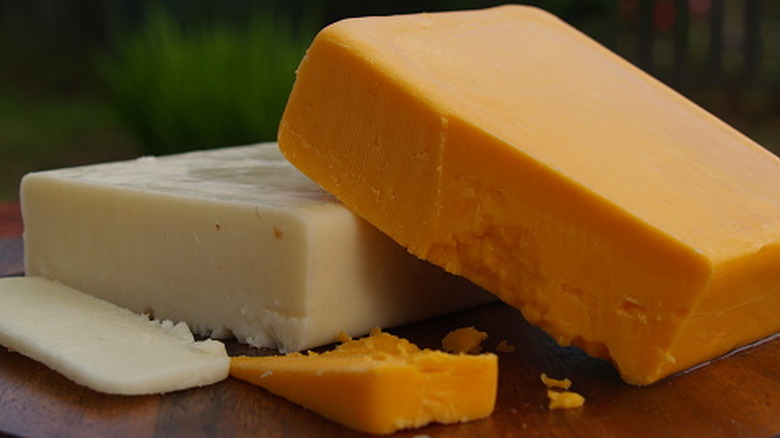
Cheddar is a natural cow's milk cheese that can come in a range of colors and flavor intensities. You don't have to be a cheesemonger to know that a block of seriously sharp Cabot cheddar is wildly different from a block of mild cheddar. By contrast, American cheese is a processed cheese, typically made (at least in part) from American cheddar. Overall, processing gives American cheese a longer shelf life, uniform texture, and consistently smooth meltiness, while cheddar is firmer and comes in a much wider range of flavors and textures. But there's much more to it than that.
American cheese is mild and creamy and melts like a dream
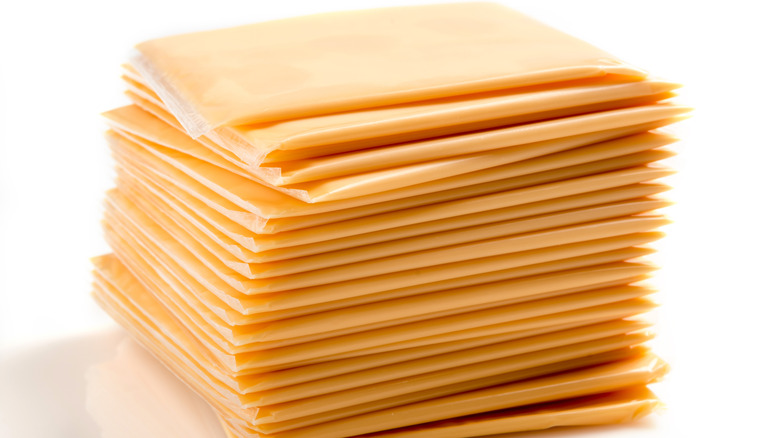
Many curd nerds agree that American cheese as we know and love it took shape in early 20th-century Chicago, when a Canadian businessman named James Kraft patented a new cheese processing method. The process involved adding emulsifying salts to the cheese, creating a product that would stay fresher longer for easy mass distribution. But crucially, it melted like a dream. Emulsifying salts keep the cheese's proteins, fat, and moisture combined throughout the melting process, preventing separation. The extra-gooey, ultra-durable dairy product snowballed in popularity throughout the 20th century, quickly becoming an indispensable staple of delis, burger joints, and home kitchens across the country.
These days, American cheese is known for its velvety texture and extremely mild flavor. It's typically made with mild cheeses such as cheddar and Colby along with emulsifying salts or another emulsifying agent and a liquid. But you can learn more about what's really in American cheese by making it yourself. The process is far simpler than it sounds. You melt the mild cheeses with water and common emulsifying salts (which you can literally buy on Amazon) such as sodium citrate or sodium phosphates.
While pungent cheeses (like sharp cheddar) bring major main character energy, the relatively mild flavor and silky-smooth texture of American cheese play a subtle-yet-vital supporting role, enhancing dishes without stealing the show. American works well in a perfectly gooey grilled cheese, classic cheeseburger, or silky-smooth nacho cheese sauce.
Cheddar cheese has textural and flavor range but can get weird when melted
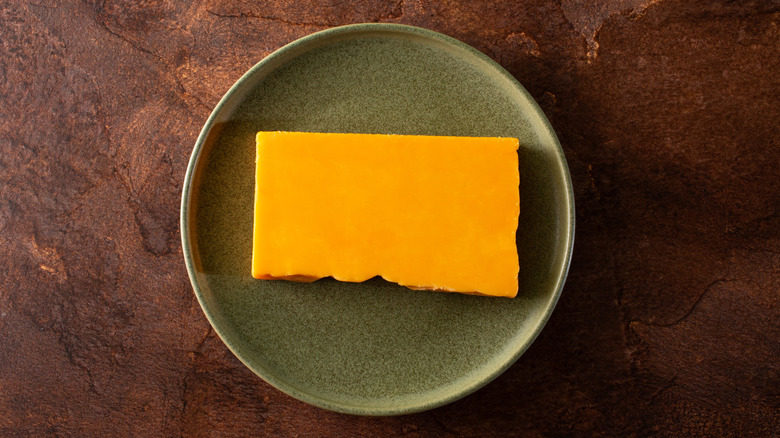
Cheddar has a far longer history than American cheese, but interestingly, it also gets its name from a geographic location. Its roots can be traced back to medieval England in the village of Cheddar. There is also a cheesemaking technique named after it known as "cheddaring," which helps press the whey out of the cheese and influences the texture. From a regulatory perspective, the United States Department of Agriculture requires this cow's milk cheese to be made with the cheddaring technique or "another procedure which produces a finished cheese having the same physical and chemical properties."
Cheddar comes in several distinct varieties based on how long it has been aged. As cheddar ages, it loses moisture and becomes firmer, crumblier, and more pungent. Mild and medium cheddars are aged only a few months for a smoother texture and buttery flavor, while sharp and extra-sharp cheddars can be aged for a year or more, resulting in a crumbly consistency and intense flavor.
Proteins are an essential part of why some cheeses melt better than others. And cheddar's protein bonds tighten with age, so older varieties may separate and become a bit greasy or grainy when melted. However, cheddar still brings plenty of gooeyness and can be a great option for grating and melting. Mild cheddars work well sliced on sandwiches and melted into all manner of cheesy comfort foods, while sharp cheddars are lovely on a sweet-and-savory charcuterie board or mixed into salads and soups.