

The Classic Candy Bar That Was Shipped To Troops During WWI
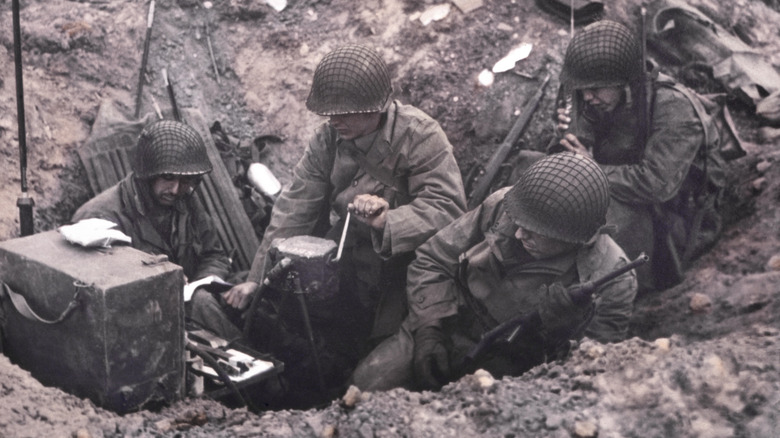
From the earliest version of Necco Wafers during the Civil War to M&M's and Hershey's in World War II, candy has long been a comfort to help soldiers cope in wartime. But one candy bar was designed expressly to withstand shipping to troops in World War I. David L. Clark, an Irish immigrant who opened the D. L. Clark Company in Pittsburgh in 1886, reportedly wanted to help boost the morale of troops overseas fighting in World War I, but his popular chocolate drops were impractical to ship. The military tasked Clark with creating a product that could better withstand travel. And thus, the Clark Bar, a crispy peanut butter confection with a caramel core and coated in milk chocolate, came to be in 1917.
Officials hoped the individually wrapped candy bars would not only boost morale but also give soldiers a little extra energy. In 1918, soldiers received half a pound of candy every 10 days, and the Clark Bar flourished as one of the era's most popular candies. But the confection's story went beyond World War I: By 1929, the D.L. Clark factory produced over 900,000 bars a day.
From battlefield rations to a Pittsburgh classic confection
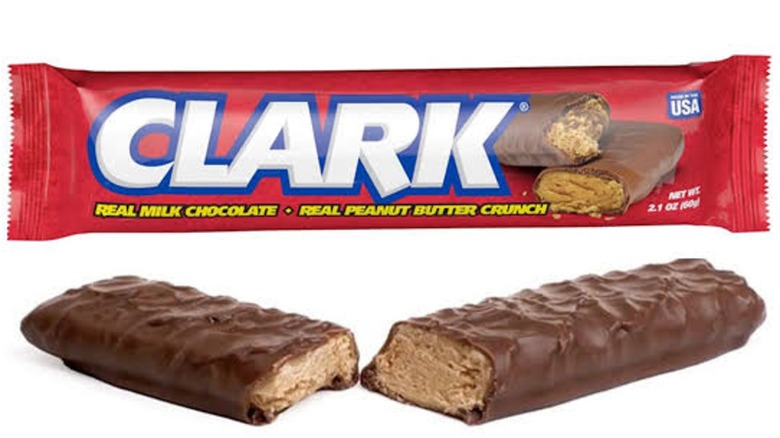
After making a name for itself in World War I, the Clark Bar's success soared even higher during World War II. The company reportedly produced 1 million Clark Bars daily, and roughly 40% of the company's production, or about 400,000 candy bars, went to soldiers overseas. The candy bar was so popular with soldiers that when workers went on strike at the factory in 1942, the federal government, declaring the bar an "essential wartime product," swooped in to get production rolling again. The candies had become a regular part of soldiers' rations, and some reports say the numbers rose to about 80% of production shipping out to soldiers.
The Clark Bar was not only a popular battlefield ration, but it was also the first combination candy bar — thin milk chocolate coating over a non-chocolate filling — an innovation of the time. David Clark died in 1939, but the company remained a family business until 1955. Beatrice Foods became the first of several companies to acquire it, and by the 1990s longtime candymaker Necco, the New England Confectionery Company, owned it. After Necco declared bankruptcy in 2018, the Boyer Candy Company bought the Clark Bar and returned its manufacturing to Pennsylvania. Clark Bars are still available today through Boyer and specialty shops like Candycopia, among others.