

How Did Cowboys Keep Cheese Fresh On The Trail?
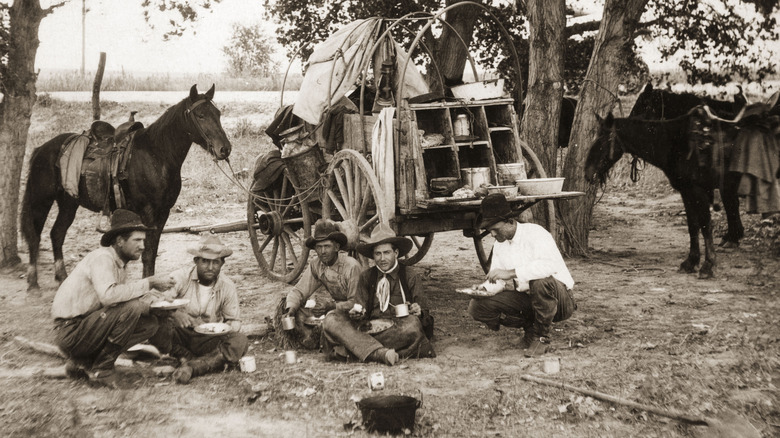
Back in the Old West, cowboys on a cattle drive might have traveled as long as one to four months. Spoiled food could put them in dire straits, and hard cheese dipped in paraffin wax helped solve this issue. The coating helped to protect the dairy from mold spores and retain its moisture.
Preserving cheese in wax has a long history. Developed around the 1830s and refined in the middle of the century, paraffin has a strong water-proofing capability that was put to wide use, including in the preservation of food. It is also odorless and tasteless, so it doesn't impart any flavors to cheese. To the extent that early versions of paraffin boasted those qualities, such a durable product must have felt ideal for a cook packing the chuck wagon. There were likely some drawbacks, though.
Paraffin as it's known today is prone to cracking over time, allowing in unwanted moisture. It can eventually bond to the cheese, making it more difficult to remove. If the Old West wax had all the same qualities, it would have posed those problems, too. Small pieces of paraffin might have found their way into the food containing coated cheese. Luckily, this wax is known for being nontoxic, so it presumably didn't make cowboys sick if they ingested it.
Cheese in the Old West
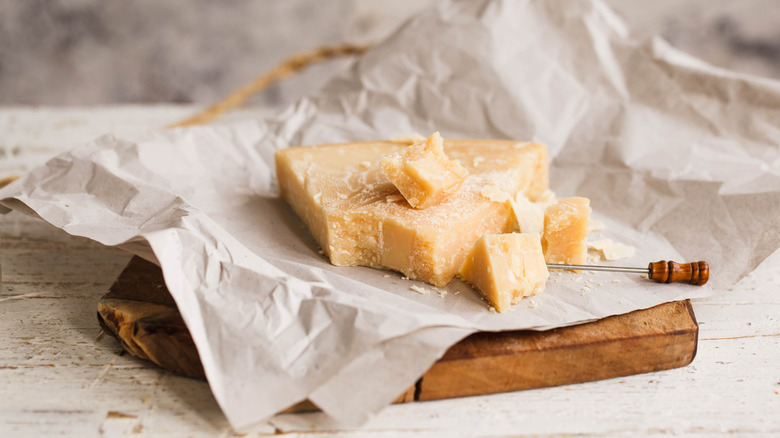
Another important part of preservation is that the cheese packed in the chuck wagon had to be hard rather than soft. The low moisture content in hard cheese provides fewer opportunities for mold to develop. It also removes the need for refrigeration. An additional benefit is that if mold does form on hard cheese, the affected section can be cut away, while the rest stays edible.
As for how the food was actually consumed, people in the Old West didn't typically eat hard cheese on its own. Instead, it was an ingredient added to other dishes. It could be mixed into biscuits or added to pinto beans, another hardy and high-protein staple that fueled cowboys on the trail. When folks on the trail could get their hands on fresh eggs to use with the wax-coated dairy, huevos rancheros may have been on the menu. A Mexican dish cowboys enjoyed back in the Old West, it was sometimes called "cowboy eggs." It consisted of a corn tortilla topped with fried eggs, beans, salsa, and cheese. Huevos rancheros served as a quick and simple meal for a hardworking cowhand.