

10 Popular Foods From The '50s That Have Vanished
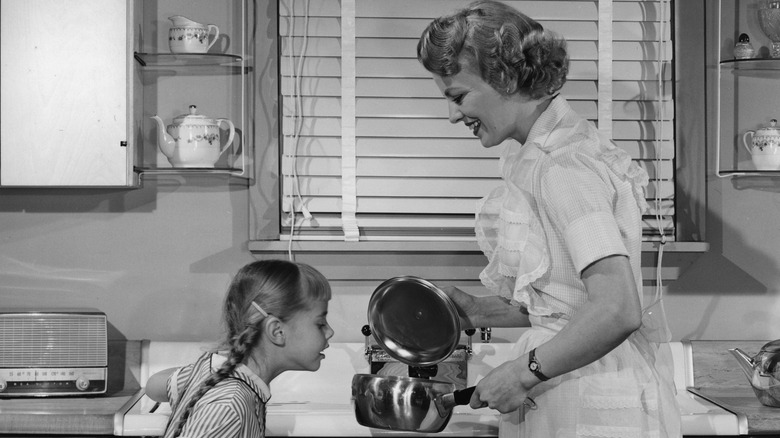
Culinary-wise, the 1950s were an experimental decade that took dinner parties to an elaborate notch with a range of colorful molded salads, casseroles, and fancy appetizers. It wasn't uncommon to have multicourse meals that pretty much cleaned out one's refrigerator or pantry (nothing was wasted). In the '50s, Americans were living in the golden age of convenience: TV dinners, boxed mixes, and canned soups. Ingredients that would normally have no business being on the same plate were suddenly combined into something that only the '50s could pull off, like tuna and Jell-O pie and spaghetti ring Florentine.
New appliances, larger supermarkets, and television were big influences on what foods families made at home. "Betty Crocker's 1950 Picture Cook Book," which was about 450 pages of recipes and colored photographs, helped homemakers expand their scope of what to do with fresh, canned, boxed, and refrigerated items. Even oven and stove manuals included recipes. This decade also saw the rollout of Duncan Hines' cake mix, Cheez Whiz, Eggo frozen waffles, the electric can opener, Pam cooking spray, and Lipton onion soup mix, among other inventions.
If it was jiggly, tall, or translucent, chances are it was served in the '50s. Today, these 10 once-familiar foods are virtually nonexistent from menus of the 21st century.
1. Welsh rarebit
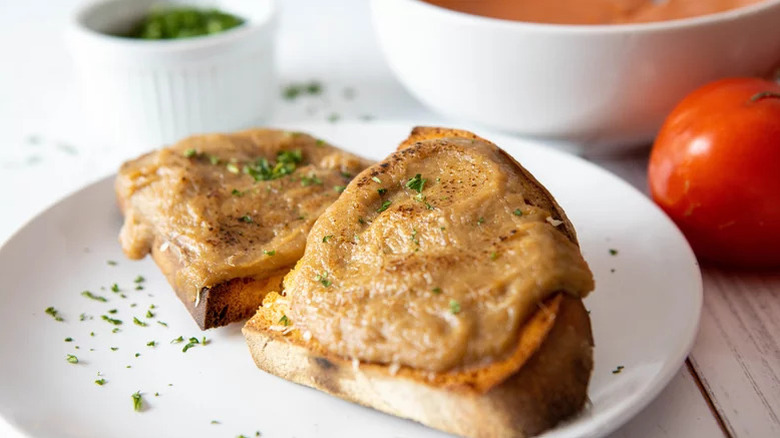
Welsh rarebit was popular in the '50s because it was a comforting, versatile snack and had layers of flavor. It's essentially a piece of toasted bread with a hot cheese sauce, but there's more to it than that. The recipe dates back to the early 18th century in Britain. The technique and ingredients of a Welsh rarebit stem from the overabundance of cheese produced in Wales.
There are a few key components that made this dish stand out, but the star is the freshly grated sharp cheddar cheese. None of that prepackaged, starchy shredded cheese would work because the sauce had to contain enough fat to become a smooth sauce. Welsh rarebit also needs sturdy bread that can be toasted and not get soggy from the cheese sauce. The sauce is complemented with half-and-half, dried mustard, Worcestershire, salt, pepper, and paprika.
As for the name, which has also been called Welsh rabbit, it's a bit of British humor. Theory has it that calling it "bit" was short for "rabbit" because the cheese on toast was a meat substitute. Some Welsh rarebit recipes include broiling the cheese to get it bubbly or adding a slice of ham, scallions, or tomato.
2. Swanson TV dinners
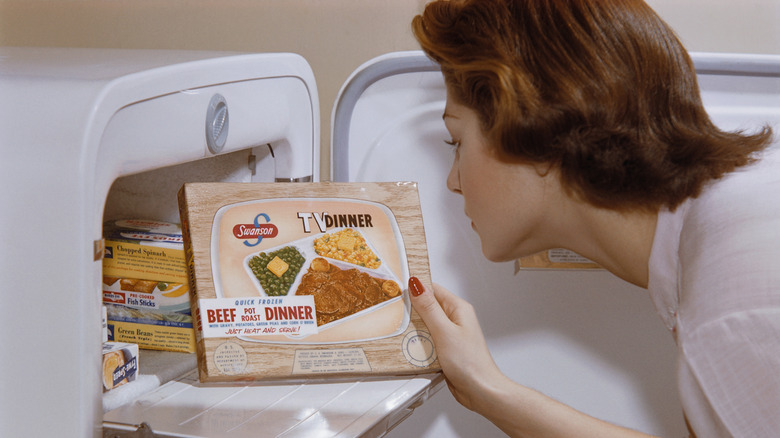
The concept of eating a portable, compartmented meal on a TV tray and in front of the television boomed in the '50s. However, the idea to freeze and sell complete dinners initially began in the 1940s with Maxson Food Systems, FridgiDinners, and Frozen Dinners. When C. A. Swanson & Sons distributed its first frozen TV dinner in 1954, about 64% of Americans had TVs in their homes. Swanson was an established brand, so it focused on marketing the product as easy to make and fun to eat.
The '50s Swanson frozen meals were in divided aluminum trays and could be cooked in the oven directly from the freezer. Swanson's debut frozen TV dinner had turkey, cornbread stuffing, peas, and sweet potatoes. The 12-ounce box was priced at $1.09 and was ready in under 30 minutes. So, why turkey? In 1953 Swanson salesman Gerry Thomas discovered 260 tons of post-Thanksgiving frozen turkey on a Swanson refrigerated railroad car and decided to add other holiday sides to complete the meal.
While the Swanson name is still in existence, the brand's '50s TV frozen dinners have been discontinued. Campbell's now owns Swanson and it focuses primarily on broths and soups, rather than its once popular frozen TV dinners.
3. Jell-O salads
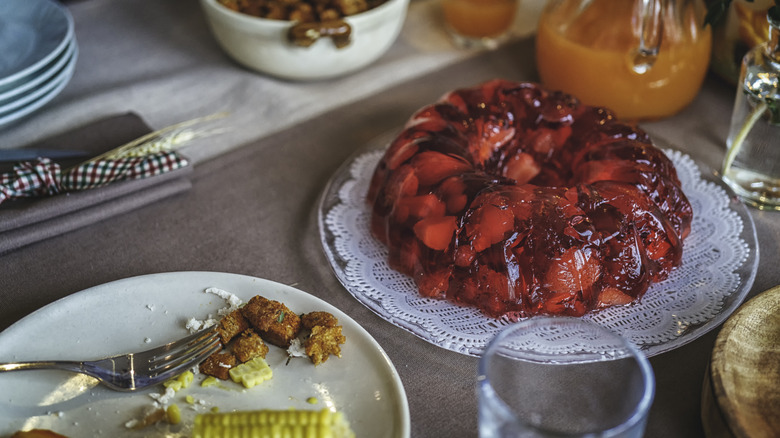
Jell-O was everywhere in the '50s because packaged gelatin was a shortcut that only needed a liquid to come alive. At that time, Jell-O salads were molded into colorful loaves, circles, stars, squares, rectangles, you name it. They were layered and could be dressed up as something sweet or savory. These creations used a combination of fresh and canned foods that displayed the suspended product within the gelatin.
The basic process was to dissolve the gelatin with hot water, then chill it until it thickened. Once it semi-solidified, a canned item was mixed in before it set for a final time in a mold until firm. When it was time to entertain, the decorative Jell-O salad was flipped onto a platter and cut it into slices. It wasn't a quick process, but the '50s were all about presentation.
Sweet varieties contained crushed pineapple, shredded carrots, and citrus Jell-O or bananas, marshmallows, and pineapple. Savory recipes could include cabbage, ham, cheese, or eggs. These presentations could be a dessert or served next to the entree. The popularity of Jell-O as a jiggly salad lost its steam. Now, it's primarily enjoyed as a standalone snack, mixed into cake batter, or layered with fruit and cookies like banana pudding.
4. Liver and onions
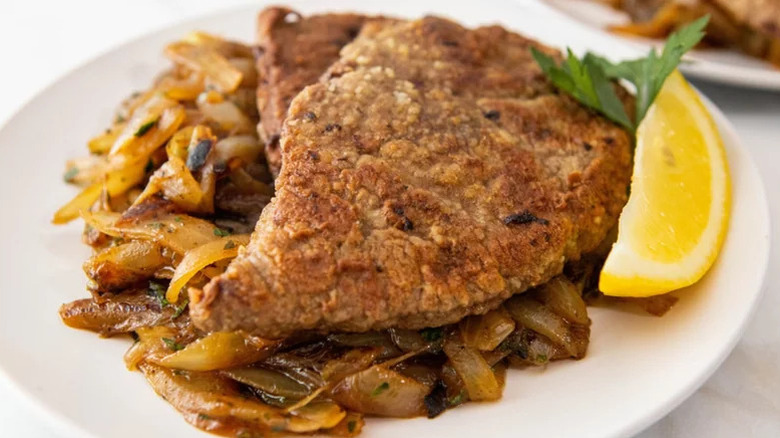
This dish was a carryover from the early 1900s and the 1940s. It became part of American culture when German, Eastern European, and Irish immigrants introduced it as part of their tradition. Another reason for its popularity in the '50s was that it was rich in iron, nutrient-dense, and an affordable protein. An American liver and onions recipe may have included pork or beef liver, but a traditional English version used lamb or calf liver.
Since liver is an earthy organ meat, the sweetness of the sautéed onions balanced the rich metallic taste. The base recipe was just slices (or cubes) of liver and onion. They could be cooked separately or together. The liver was typically dredged in seasoned flour before sautéing. The finished dish was typically paired with mashed potatoes and a vegetable.
It is still common to see varieties of this dish pop up with more extensive ingredients where it is common in Europe. For instance, the Catalan style may use fried garlic and olive oil, while the French might include lard or butter. Today, liver and onions may still be found in some diners, or Eastern European (especially German) restaurants, but it's not as mainstream at the dinner table.
5. Meat and vegetable aspics
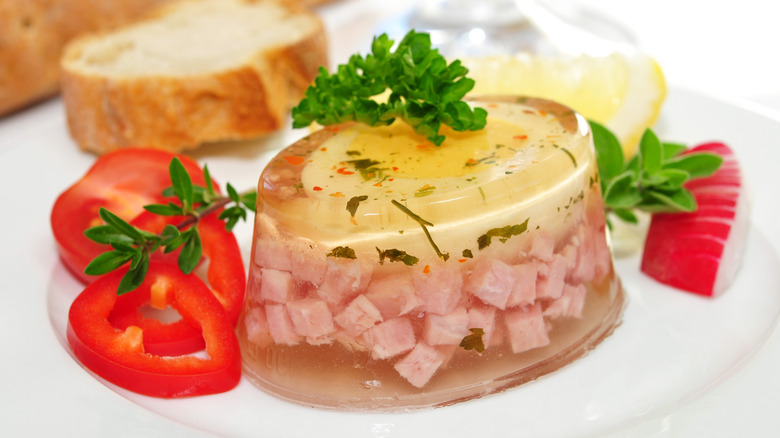
Another molded food that took the '50s by storm was a savory gelatin called an aspic or meat jelly. Although it was molded, there's a big difference between an aspic and Jell-O. Aspics weren't made from a sweet powder like the molded Jell-O salad. It was still clear, but it combined gelatin with meat or vegetable stock or broth and an assortment of other savory ingredients like eggs, meat, seafood, and vegetables. Aspics were firm and sliceable.
While they were obviously edible, aspics were seemingly created more for the sake of presentation (that "wow" factor) than as a dinner staple. The aspic style and technique were seen in European cooking as part of their elaborate and formal presentations, so aspics didn't originate in the '50s. But it found a place among the popularity of molded dishes at that time. Aspics were also a useful way to use inexpensive ingredients like frozen peas to make something more elaborate.
Vegetable aspics were made from unflavored gelatin. For instance, a tomato aspic recipe could be a combination of gelatin with canned tomatoes, fresh herbs, spices, and Worcestershire sauce. To make a meat aspic, bones and meat were boiled and cooled to get the gelatinous, collagen-rich broth. That broth was combined in a vessel like a copper Jell-O mold or Bundt pan with fish, poultry, and/or vegetables to preserve all of its contents. Aspics are generally a thing of the past in America because most contemporary meals don't require presentations that need (or probably want) food to be suspended in gelatin.
6. Chicken tetrazzini
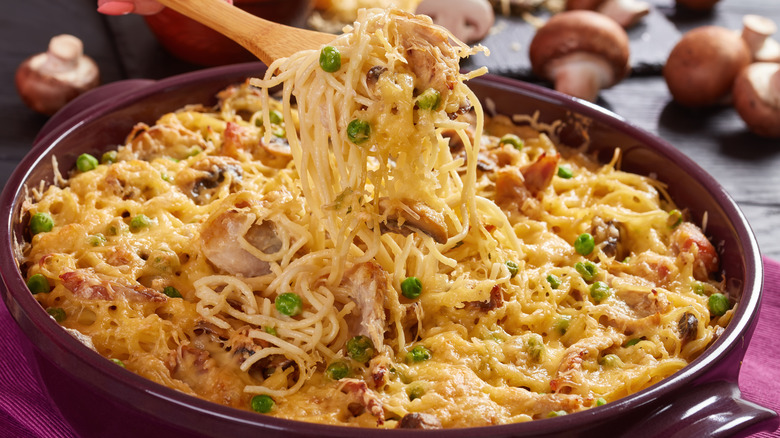
Much like today, casseroles in the '50s were popular because they were affordable, nutritious, comforting, easy to assemble, and great for large families and entertaining. In the mid-1900s, many Americans were fascinated with European-style presentations, ingredients, and really anything that sounded exotic. Enter chicken tetrazzini; a simple, cheesy chicken Italian-American casserole.
It was named in honor of the Italian opera singer Luisa Tetrazzini, who was famous for her role as Violetta in "La Traviata." She toured America, and chefs created this dish, but there's no evidence that she actually tried it. Although there are some inconsistencies on who and where it was created, this dish was a big hit for families who wanted a meal with a little Italian flair. It was also a clever way to use leftover chicken (or turkey).
Chicken tetrazzini recipes varied a bit in ingredients, but a basic '50s style recipe starts by making a roux with butter, flour, heavy cream, and chicken broth. Stir in broken pieces of cooked spaghetti, cooked chicken, and mushrooms. Sprinkle with Parmesan cheese and bake until bubbly. Baking everything until bubbly and golden. While the name chicken tetrazzini isn't mainstream anymore, recipes like pot pies and chicken Alfredo pasta bake were likely influenced by this '50s star.
7. Cherries jubilee
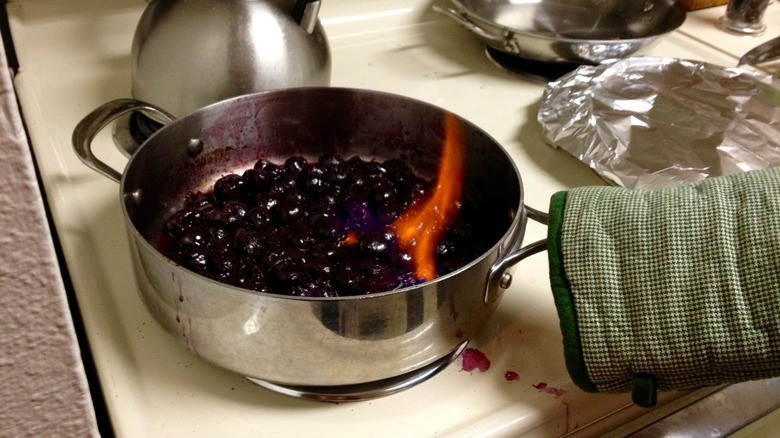
One of the thrills of dining out in a restaurant in the '50s was the theatrical tableside desserts. Cherries jubilee was one of those preparations that was flambéed, which means that a liquor was added to the pan and the mixture was ignited until the flames subsided. Fresh or frozen cherries were cooked with sugar and a flammable liquor like bourbon, rum, or brandy to make a sweet sauce. Then, it was spooned over vanilla ice cream. The biggest appeal is the contrast between the warm fruit and the cold ice cream — and of course, the fire.
Culinary icon and French chef Georges-Auguste Escoffier invented cherries jubilee for Queen Victoria's 1897 Diamond Jubilee. His original recipe used Kirsch, which is a fruit brandy, and it didn't include a side of ice cream. It was later revised to include the latter, just like the '50s version. The decade was known for its dinner parties, presentations, and impressing guests. So, being able to make restaurant-style desserts, especially as fancy as this, was sure to be impressive. While the idea of flambéing desserts isn't common now, dishes like bananas Foster still appear in restaurants and can be cooked at home.
8. Chicken à la king
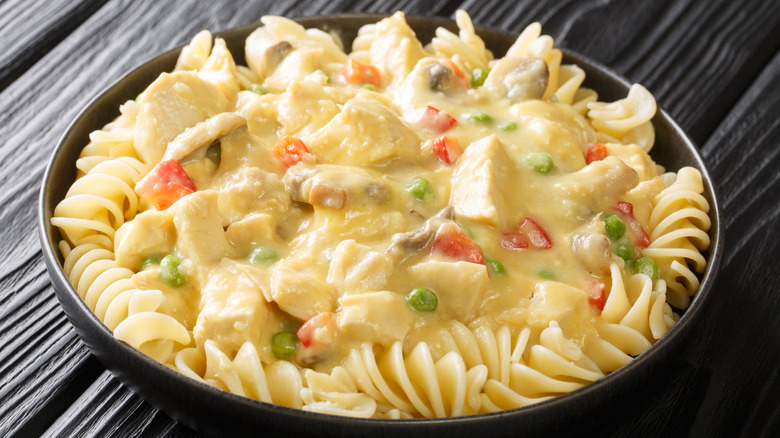
Chicken à la king sounds fancy, but it was just another meal that could be adapted to different budgets and was good for leftovers. It resembles chicken tetrazzini, but this dish consists of diced chicken in a creamy sauce with pimentos, mushrooms, and green peppers – the difference is in how it's served. The original recipes included puff pastry, toast, biscuits, rice, or egg noodles, which acted as vessels for the chicken sauce.
There are multiple claims as to who created chicken à la king, all of which occurred from the 1880s to 1898. Regardless of who invented it, it wasn't a complicated meal, and it contained convenient ingredients. The name may have vanished, but modern recipes have adopted some of the basic ingredients and techniques. Modern takes of chicken à la king could point to the beloved chicken pot pie or the French pastry vol-au-vent, which could be filled with everything from fruit to chicken.
9. Frosted sandwich loaf
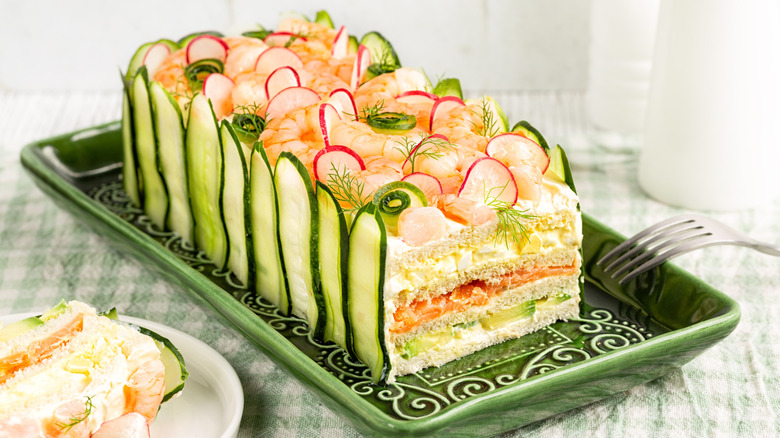
The frosted sandwich loaf was a common food served at bridal showers, luncheons, and holiday parties in the '50s. Imagine various cold salads layered between pieces of bread and "frosted" with a cheese spread and decorated to look like a cake. Interesting, right? The finished product would likely be on the buffet table of an event, probably with a molded jellied salad.
The basic technique was to assemble all the salads and a large loaf of unsliced bread. First, the end of the loaf was cut off, then the bread was cut into even slices that were placed horizontally. Then, you'd start with the first piece of bread (the base) and spread a thick amount of filling on it. Another piece of bread would be stacked above the last layer and the process was repeated until there was no more filling or bread. With all the slices filled, the loaf was then covered with a spreadable frosting like onion cream cheese. It was commonly garnished with olives, herbs, or sliced radishes before chilling in the fridge before serving.
Of course, not all the loaves were the same. The fillings were up to the preparer, so they may have included ham, cheese, tuna, fruits and nuts, flavored butters, or any other popular choices at that time. Nowadays, sandwiches don't need that much flair, although it's still common to see tiny versions (cucumber sandwiches) at upscale high tea events.
10. Chiffon pie
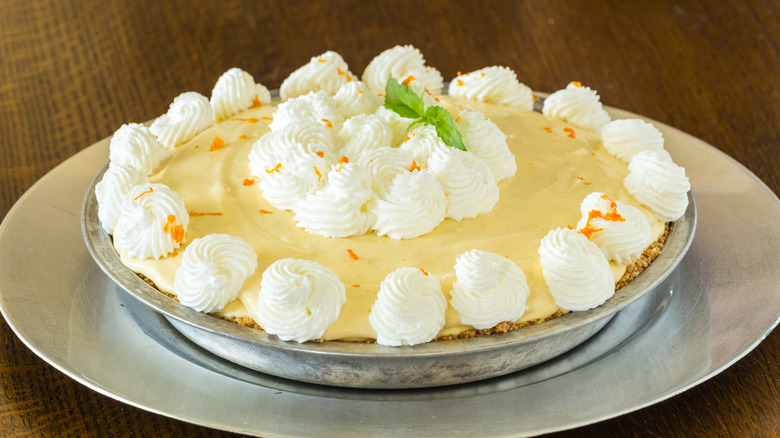
Another popular food from the '50s was likely a favorite because it was a lighter alternative to some of the heavy desserts made during that time. Chiffon pie has a delicate, mousse-like filling that's set in a pie shell to chill. Part of its appeal is that it didn't take hours to prepare (sans the chill time), it didn't need to be baked, and it had a light and silky taste. The goal of this pie was to mimic the lightness associated with the chiffon fabric, which is known for its soft, delicate, and airy feel.
The base of the recipe is unflavored powdered gelatin, eggs, sugar, and other ingredients (it depends on the flavor), making chiffon pie very versatile. It's important to note that a chiffon pie isn't meringue pie. A chiffon pie is airy from the whipped egg white folded into the filling. A meringue pie has a baked custard filling topped with stiffened egg whites that are combined with sugar and toasted. Both results held their shape, making them eye-catching on 1950s dessert tables.