

Ditch Baked Potatoes — Try Them Danish-Style For A Crispy And Caramelized Upgrade
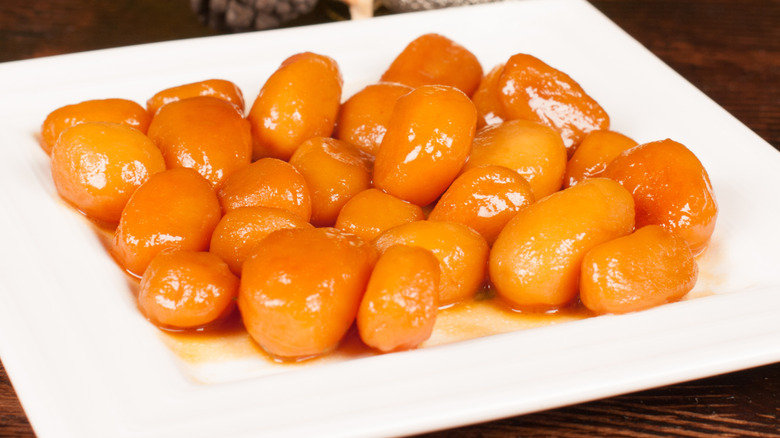
Potatoes are a staple food in practically every culture around the globe, which means there's no shortage of popular international spud dishes to sample. Case in point: If you're sick of plain old baked potatoes, you can make them Danish-style for a sweet and crispy twist. Brunede kartofler is a traditional Danish dish that literally translates to caramelized potatoes.
These sweet spuds are an indispensable element of any Christmas dinner in the Scandinavian country, but they're also totally delicious year-round. The cherry on top? They're incredibly simple to prepare. The basic recipe includes just three ingredients: Potatoes, sugar, and butter. The ratio of sugar and butter to potatoes varies widely based on personal taste, but generally speaking, you'll want at least 2 tablespoons of sugar and a tablespoon of butter per pound of potatoes.
Boil the whole, unpeeled potatoes until tender but not fully cooked (around 10 to 15 minutes, depending on the size of the spuds), peel them, and let them cool. Next, make the caramel sauce: Melt the sugar over medium heat in a large skillet until it turns golden and bubbly, and then stir in the butter. Once it's all melted together, add the potatoes. Simmer the spuds in the caramel sauce for about 10 minutes, gently stirring to ensure an even coating. Serve piping hot, ideally alongside other Danish holiday season staples such as roast duck or pork, red cabbage, and gravy.
Tips for making the best brunede kartofler
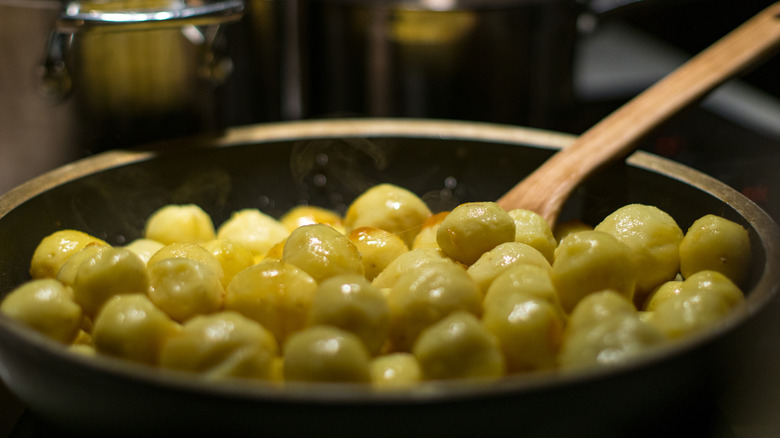
Making Danish caramelized potatoes is delightfully simple, but there are a few tips to keep in mind for the sweetest possible results. First of all, it's crucial to use the right kind of potato: Opt for very small, waxy spuds such as new potatoes or baby Yukon Golds. Avoid starchy varieties, as they can break apart in the caramel sauce (here's the real difference between waxy and starchy potatoes). Pro tip: For an even simpler version, use canned, pre-skinned potatoes and skip the boiling and peeling altogether.
One of the trickiest parts of this recipe is preventing the caramel from burning or separating. If the emulsion between the sugar and butter breaks (which can happen for a wide variety of reasons), it will split into a greasy, lumpy, and generally unappetizing mixture. Luckily, not all hope is lost: If your caramel starts to split after melting in the butter, adding a bit of heavy cream or water can re-establish the emulsion and salvage it in a pinch. Burnt caramel is harder to save, so be sure to closely monitor the sauce and keep stirring to a minimum.
Also, while most recipes recommend caramelizing the potatoes for about 10 minutes, feel free to adapt the cooking time to your personal taste — a shorter simmer produces lighter, saucier potatoes, while a longer cook time creates a darker color and deeper caramelized flavor. If you're hungry for more tater-based culinary inspiration, here are some tasty ways to cook potatoes you never thought of before.