

11 Of The Oldest Wine Brands Still Around Today
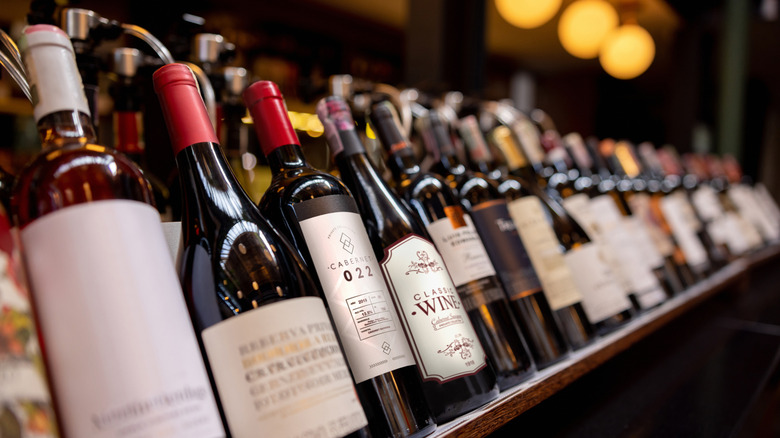
If you prefer getting sauced with a side of sophistication, or simply enjoy something gentle and uncomplicated to wash down dinner, chances are you and wine are already on pretty buddy-buddy terms. You're probably also familiar with household names, like Franzia and Barefoot Cellars. But, humanity's love affair with wine didn't begin with these budget-friendly latecomers.
People were putting names to their wine long before modern branding was a twinkle in a marketer's eye. At the height of the Roman Empire, amphorae were inscribed with details identifying the wine, where it came from, and sometimes even who was supposed to receive it. Brand hype is hardly a modern invention, either. In Pompeii, tavern advertisements reportedly priced wines by tier:
Most of the wines circulating back when the industry was still finding its sea legs have since disappeared into the historical ether. But, a few unicorns have survived centuries of changing tastes, shifting legislation, and the occasional questionable vintage. If you fancy raising a glass to wine history, here are some of the oldest wine brands still in business today.
Veuve Clicquot
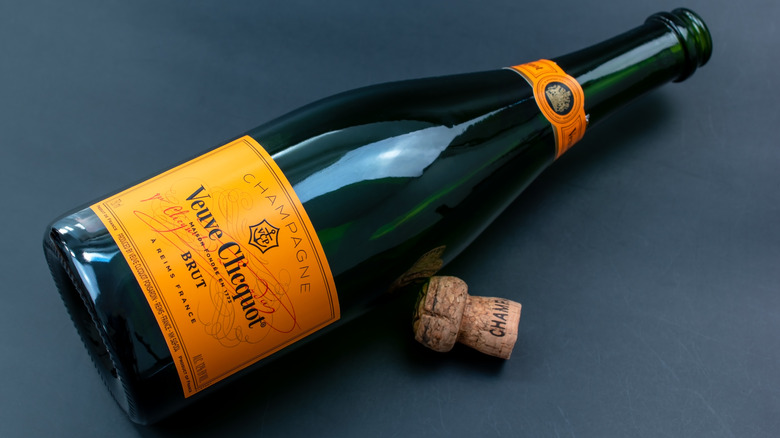
Born out of a happy accident, Champagne began bubbling its way into European commerce by the late 1600s. But, its journey to global fame was anything but sparkly, and few brands know that better than Veuve Clicquot.
Its story begins in 1772, when Reims-born textile merchant Philippe Clicquot launched a wine business with its sights set on overseas markets. By 1805, however, the business was staring down a black hole: Philippe's son and heir, François, had died, leaving his 27-year-old widow, Barbe-Nicole Ponsardin Clicquot, to take the reins just as the Napoleonic Wars threw European trade into disarray.
Demand for French luxuries, like Champagne, had seemingly fizzled amid the tumultuous political climate, but Clicquot suspected Russia's appetite for a good bottle was far from sated. However, with no way to secure a shipping license, that market seemed beyond reach. Here's when Madame Clicquot made one of the biggest gambles in the house's history. In 1814, she smuggled nearly 10,000 bottles of her 1811 vintage to St. Petersburg. The gamble paid off, helping keep the business afloat until French luxury goods rebounded in the wake of the Napoleonic Wars.
Today, Veuve Clicquot remains one of the most celebrated Champagne houses in the world. The house credits Madame Clicquot with helping develop the riddling table, which made it easier to collect and remove sediment from sparkling wine, as well as pioneering rosé Champagne made by blending red wine with white Champagne.
Taylor Fladgate
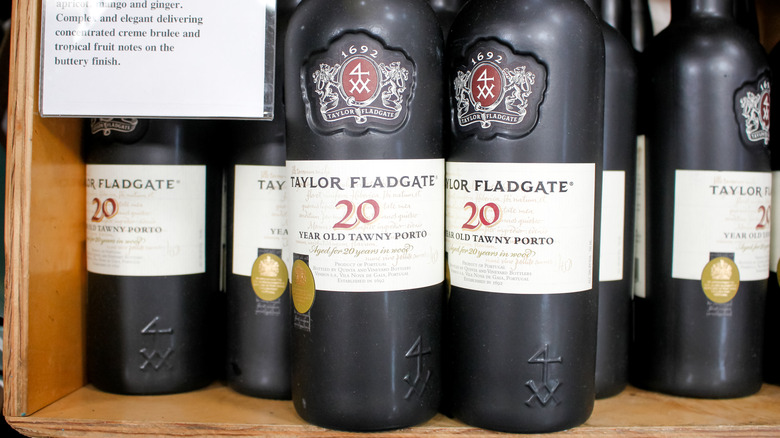
If you prefer your a rich port wine with a side of history, it might be worth splurging on Port royalty Taylor Fladgate. Its story begins in 1692, when English merchant Job Bearsley arrived in Portugal and began trading in "red portugal," a light, tart wine from the Minho region. The Bearsley family gradually ventured into the Port trade, eventually purchasing property at Lugar das Lages near Régua, giving them a leg up over British merchants who relied on other growers to supply their wine.
One of the brand's greatest trials came in the early 1800s, amid the Napoleonic Wars. With French troops advancing on Portugal, British merchants in Porto risked losing their properties and wine stocks. Taylor Fladgate's saving grace came in the form of Joseph Camo, an American of Turkish descent. With his American citizenship offering a measure of protection from French seizure, Camo remained in Porto to oversee shipments to Britain, keeping the trade afloat until British forces retook the city in 1809.
Then operating under the name Webb, Campbell, Gray & Camo, the business didn't acquire the bones of its modern identity until 1838, when John Fladgate entered into a partnership with Morgan Yeatman, adopting the name Taylor Fladgate & Yeatman. Today, Taylor Fladgate remains a renowned Port house with deep roots in Porto and the Douro Valley. Its reputation is still anchored by Vintage Port, but its portfolio has expanded to include a wide selection of fortified wine.
Ruinart
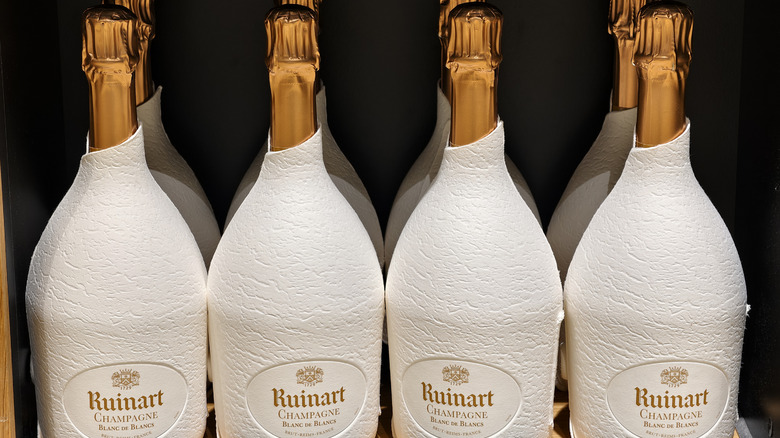
Cheap Champagne worth a pop is hardly in short supply, but if you'd rather your bubbly come with a few centuries of history, grab yourself a bottle of Ruinart, a brand so steeped in Champagne history it's regarded as the world's first.
It all began in the early 1700s, when Benedictine monk Dom Thierry Ruinart caught wind of a growing appetite for sparkling wine in Paris. He passed the idea along to his nephew, textile merchant Nicolas Ruinart, who turned it into a promising side hustle. By 1735, the business had grown enough that Nicolas abandoned his cloth trade to focus solely on Champagne. Business continued to thrive under his son, Claude Ruinart, who expanded the house's reach through connections beyond France.
One of Ruinart's most enduring assets came in 1877, when the house acquired crayères — ancient underground chalk quarries — and began using them to mature its Champagne. These cool, subterranean galleries proved a handy place to stash bottles and continue operations during World War I, when heavy bombardment damaged Ruinart's properties in Reims.
The business got a new lease on life following World War II, when Gérard Ruinart and then Bertrand Mure revived it with a renewed focus on Chardonnay. One of the fruits of that shift was the prestigious Dom Ruinart Blanc de Blancs 1959, named in honor of Dom Thierry Ruinart. Today, Chardonnay remains etched into the brand's identity, with a luxurious portfolio.
Moët & Chandon
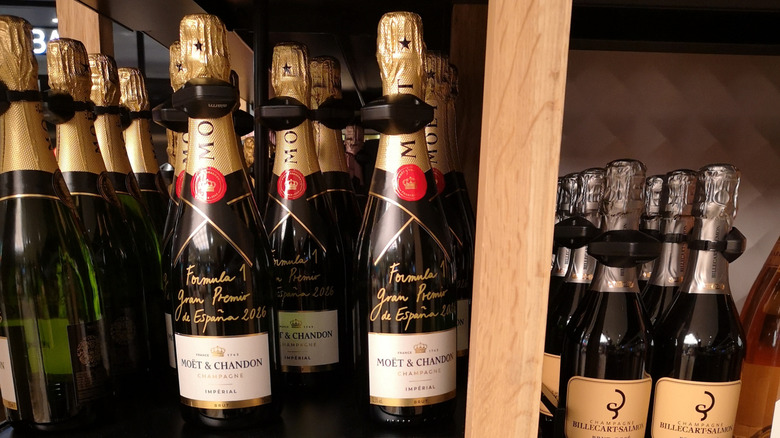
Real Champagne doesn't come cheap, especially if you're eyeing the ultra-prestigious bottles from legacy luxury houses, like Krug, Salon, or Dom Pérignon. But, it doesn't have to be. One brand proving as much is Moët & Chandon, currently the biggest player in the bubbly business. It wasn't always that accessible, though.
When wine merchant Claude Moët founded the business in 1743, his clientele consisted largely of aristocrats and members of the French court. And, while the nobility's appetite for sparkling wine was certainly a marvel, it wasn't enough to keep a brand going for centuries. Enter Jean-Rémy Moët, Claude's grandson and the family's resident expansionist, who took the reins in the late 18th century.
Determined to take Moët beyond France's borders, Jean-Rémy cultivated connections with royalty and other influential figures who passed through Épernay. By the early 1800s, his guest list was looking decidedly imperial, with Napoleon Bonaparte and members of his family reportedly frequenting the estate.
With the foundations of an international market in place, Moët & Chandon expanded at lightning speed, eventually exporting more than 3 million bottles annually and employing a vast workforce of growers, masons, stable boys, and wine merchants. Today, Moët & Chandon has undergone a couple of major corporate makeovers, first merging with cognac heavyweight Jas Hennessy & Cie to form Moët Hennessy in 1971, then joining forces with Louis Vuitton in 1987 to create luxury conglomerate LVMH.
Château Lafite Rothschild
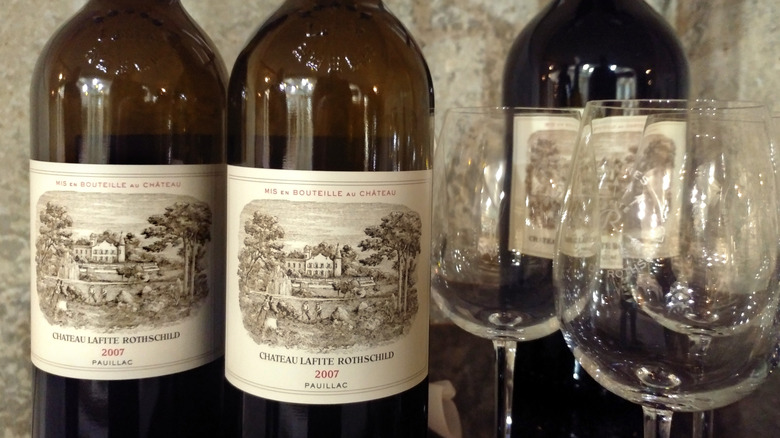
You've got plenty of affordable wine options if all you're after is something to help you wind down after an eventful weekday. But, if you're after something so prestigious it holds the coveted Premier Grand Cru Classé, then take out a massive loan and splurge on a bottle of Château Lafite Rothschild.
This ultra-luxury brand traces its roots to the 1200s, but it didn't begin acquiring the bones of its present-day prestige until it fell into the hands of the Ségur dynasty. Jacques de Ségur expanded the existing vineyards, while his descendant Nicolas-Alexandre de Ségur, with a little help from the Duke of Richelieu, marketed Lafite so successfully among European nobility that it eventually found its way to the court of King Louis XV at Versailles.
Though the French Revolution effectively booted the Ségur dynasty from the helm, Lafite continued producing wine under new owners, including Dutch merchants, before Baron James de Rothschild snapped up the estate at auction in 1868. The coming decades brought plenty of trouble for the now Château Lafite Rothschild, from the phylloxera epidemic and fungal diseases to the economic upheaval surrounding two world wars.
The brand made a comeback after World War II under the stewardship of Baron Élie de Rothschild, who oversaw its restoration and helped expand its reach into international markets, particularly the United States. Today, Château Lafite Rothschild remains one of Bordeaux's most prestigious wine names.
Château Margaux
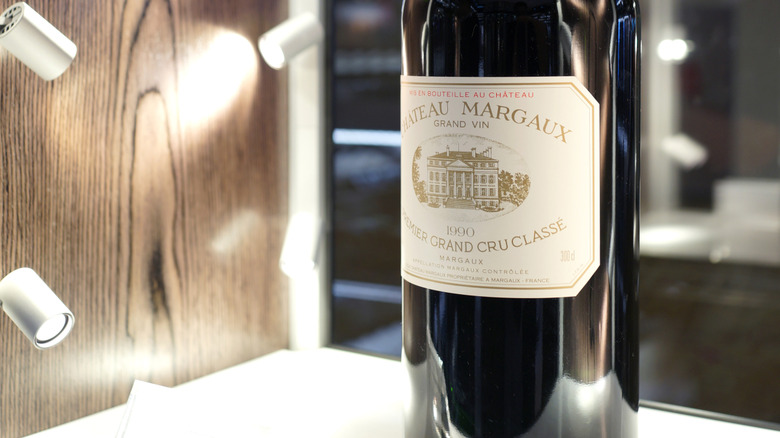
Bordeaux wines don't come cheap, as proves their most elegant poster child: Château Margaux. Its story begins in the 12th century, though its grape-growing days came much later, in the 1500s, when Pierre de Lestonnac uprooted the estate's original cereal crops and replaced them with vineyards.
By the 18th century, Château Margaux had become a darling of wealthy wine drinkers, including British Prime Minister Sir Robert Walpole and American ambassador to France, Thomas Jefferson. Then came the French Revolution: The estate was confiscated, and its owner, Élie du Barry, was executed. A glimmer of hope arrived in 1855, when Château Margaux earned First Growth status, but the accolade couldn't shield it from the agricultural disasters that followed.
By the late 19th century, mildew and phylloxera were ravaging vineyards across the Médoc. A broader economic downturn, compounded by poor vintages, pushed the estate further into financial trouble. Its knight in shining armor came in the form of André Mentzelopoulos, a Greek-born businessman who acquired the estate in 1977 and set about restoring its fortunes.
When the estate passed to his daughter, Corinne Mentzelopoulos, following his death in 1980, the groundwork for a revival was already in place. Soon, global demand for Bordeaux picked up, with markets expanding across the United States, Europe, and Asia. Today, Château Margaux remains one of Bordeaux's leading First Growth estates, with a diverse portfolio.
Sandeman
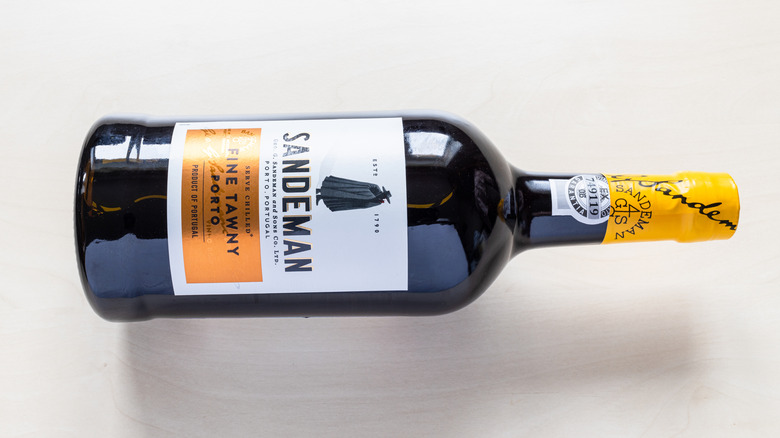
Few brands are as emblematic of Port's rise to global acclaim as Sandeman. Its story begins in 1790 with 25-year-old Perth-born Scotsman George Sandeman, who started out with £300 borrowed from his father and a seat at a coffee house on Birchin Lane in London. At a time when merchants shipped their wines in nondescript barrels, George began branding his casks with the initials GSC, standing for George Sandeman & Co. With business thriving, he went on to acquire a Port-wine aging cellar in Vila Nova de Gaia in 1811, expanding his foothold in Portugal while the Napoleonic Wars were throwing a wrench into European trade.
The brand gained further momentum in the mid-19th century, reportedly shipping nearly 5,000 pipes of Port annually and accounting for roughly 12% of total Port shipments at the time. By the early 20th century, Sandeman had gone global. Like many businesses of the era, Sandeman was battered by the political and economic turmoil of the 20th century, but it continued to evolve, producing notable wines, such as its 1945 Vintage Port and introducing its white Port expression, Porto Branco, in 1964.
The brand has undergone plenty of changes since then, going public in 1952 and changing hands several times before being acquired by Portuguese wine group Sogrape in 2002. Today, Sandeman remains one of the world's most recognizable Port brands, with a broad portfolio.
Brotherhood
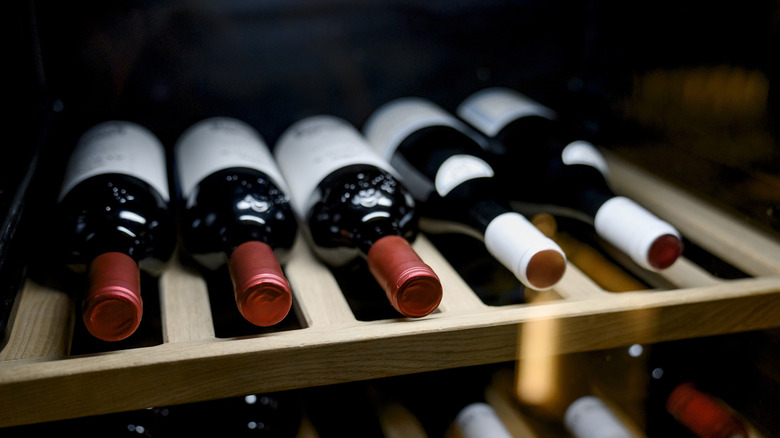
Wine may not have been invented in the U.S., but that doesn't mean the countr doesn't have centuries of wine-making tradition under it's belt. One of its shiniest examples is Brotherhood, an age-old New York winery you need to visit at least once. Its story begins with cobbler and shopkeeper John Jaques, who started selling grapes in 1835 before pivoting to sacramental wine in 1839 after grape prices tanked.
Business picked up considerably after Jaques transferred the winery to his three sons, John Jr., Oren, and Charles. The trio renamed it Jaques Brothers Winery and ramped up production to more than a dozen styles of wine. Expansion remained front and center even after the brothers bowed out and sold the business to wine merchants Jesse and Edward Emerson. New buildings went up, storage vaults expanded, and production grew to include table wines, sherries, spirits, and even sparkling wine.
Then came Prohibition. While many folded, Brotherhood managed to cling to life by producing sacramental and medicinal wines under strict regulations. Its next golden age came under new owners Francis and Eloise Farrell, who tapped into a largely overlooked opportunity: Wine tourism. At its peak, Brotherhood reportedly welcomed as many as 6,000 visitors on busy days.
A rather fiery wrinkle appeared in 1999, when a massive fire damaged several of the winery's historic buildings. Recovery came rather quickly. By 2005, restoration was well underway, alongside a modern makeover that brought expanded vineyards, updated winemaking equipment, and improved hospitality facilities.
Charles Krug
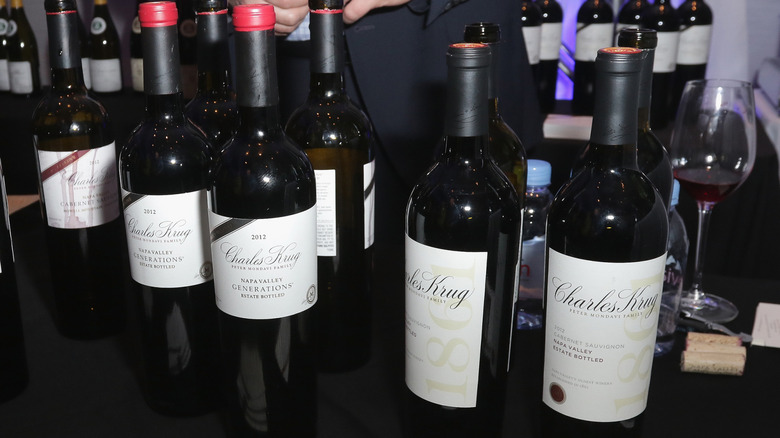
You don't have to trek to New York to get a taste of America's winemaking heritage. Napa Valley has centuries of history of its own, thanks in part to trailblazers like Charles Krug Winery. Its story begins with journalist-turned-winemaker Charles Krug, who was already dabbling in wine before 1860, when he received a dowry of approximately 540 acres of land after marrying into the Bale family.
He established his namesake winery in 1861, laying the groundwork for a winery that would gradually become a beacon for other aspiring winemakers in the region. Things fell apart amid Prohibition. By the time repeal rolled around, Charles Krug was a shadow of its former self. It lay dormant and in disrepair until 1943 when the Mondavi family acquired it from James Moffitt.
The Mondavis ushered the winery into a new era, marked by winemaking innovations, such as cold fermentation for white wines, using imported French oak for aging red wines, vineyard expansion, and focus on classic red Bordeaux varietals. Another huge milestone came in 1956, when the estate earned formal recognition as a California historic landmark. Nearly two decades later, it earned a place at the National Register of Historic Places.
Today, Charles Krug remains under Mondavi family leadership, though the winery has had something of a makeover, with restored historic spaces, upgraded hospitality facilities, and a portfolio spanning Sauvignon Blanc, Chardonnay, Merlot, Cabernet Sauvignon, and Bordeaux-style blends.
Gundlach Bundschu
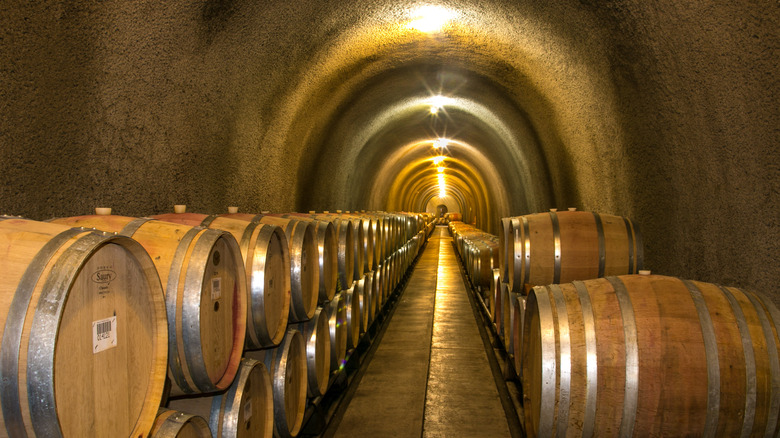
California's wineries might be facing a rough patch, but there was a time when the Golden State was practically the Mecca of American winemaking. Among its earliest trailblazers was Gundlach Bundschu, whose story began in 1858 when Bavarian immigrant Jacob Gundlach snatched up 400 acres of land in Sonoma Valley. The estate's first full Rhinefarm vintage followed in 1861, laying the groundwork for a wine business that would eventually span generations.
The brand's first golden age came in 1868, when Charles Bundschu, Jacob's future son-in-law, joined the business with his sights set on expansion. With Charles at the helm, the winery spread its roots across the country, opening up a new branch in New York.
Disaster struck in the early 20th century, when an earthquake and fire destroyed the Bundschu family's San Francisco home and winery. Just as the business was trying to regain its footing, Prohibition dealt another blow. The company shuttered its offices. Then-owner Walter Bundschu pivoted to selling grapes for juice and to other wineries, keeping Rhinefarm's vines in commerce even when making wine under the family name was no longer an option.
The winery's comeback eventually came courtesy of Jim Bundschu, who persuaded the family to return to winemaking after decades away. The first new vintage was produced in 1973, with wines released commercially in 1976. Today, Gundlach Bundschu remains in family hands, with a portfolio focused on showcasing the best of its historic Rhinefarm estate.
Schramsberg
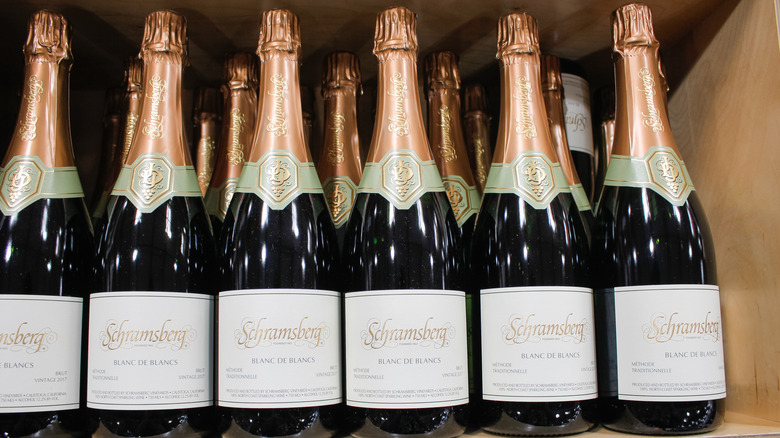
Just because your bubbly's grapes didn't grow in France's Champagne region doesn't mean you're settling for second best. Schramsberg, a Napa Valley gem, is proof. Its story begins in 1862, when German immigrant Jacob Schram snapped up more than 200 acres on Diamond Mountain.
The winery steadily put down roots, with vineyards expanding, hillside caves carved out for wine storage, and production climbing to more than 20,000 cases annually by the late 1800s. And, while Schramsberg is practically synonymous with sparkling wine today, its original portfolio was anything but one-note, spanning Zinfandel, Burgundy, Hock, Riesling, and Sauvignon Vert.
Things hit a snag in the early 1900s with the death of Jacob Schram. His son Herman inherited the property and sold it off in 1912, ushering in decades of changing ownership and relative obscurity. Schramsberg's second act began in 1965, when Jack and Jamie Davies bought the neglected estate and set about reinventing it as a sparkling-wine powerhouse.
Their early releases included the 1965 Blanc de Blancs and the 1967 Blanc de Noirs. But the brand's defining moment came in 1972, when its 1969 Blanc de Blancs was poured at a state dinner in Beijing during President Richard Nixon's historic visit to China. Today, Schramsberg remains under Davies family control, with a portfolio that includes its vintage-dated Schramsberg Reserve sparkling wine and the prestigious J. Schram range, featuring Blancs, Noirs, and Rosé.