

The Popular '70s Pizza Chain That's Now Confined To The Midwest In The US
Godfather's Pizza was born in America's heartland, Omaha, Nebraska, in 1973. A brand that started with a single location grew quickly and spread its wings far beyond the borders of the Midwest, reaching as far as the Pacific Northwest. By the end of the 1970s, Godfather's was the third largest pizza chain in the United States, outsold only by Pizza Hut and Domino's, a position it would maintain until the late 1980s. By 1988, Godfather's had slid to fifth place and was closing low-performing stores by the hundreds.
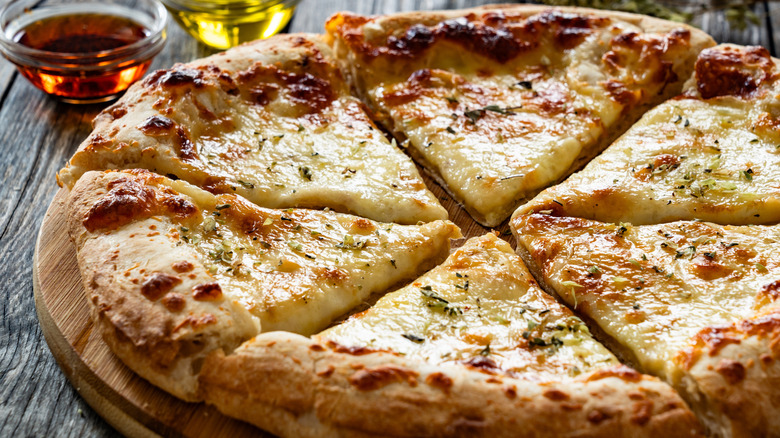
Forty years after its heyday, Godfather's may no longer be ranked highly against competitors, but it's a fighter, and today, it holds on firmly to the territory that first nourished it, America's Midwest. You can still find Godfather's Pizza and Godfather's Pizza Express locations scattered throughout Middle America, stretching from Nebraska to Ohio and Missouri to Minnesota. The menu is limited, concentrating mostly on what Godfather's has always done best: crafting thick-crust pizza that's loaded with high-quality cheese sourced from local farms.
What went wrong with Godfather's Pizza?
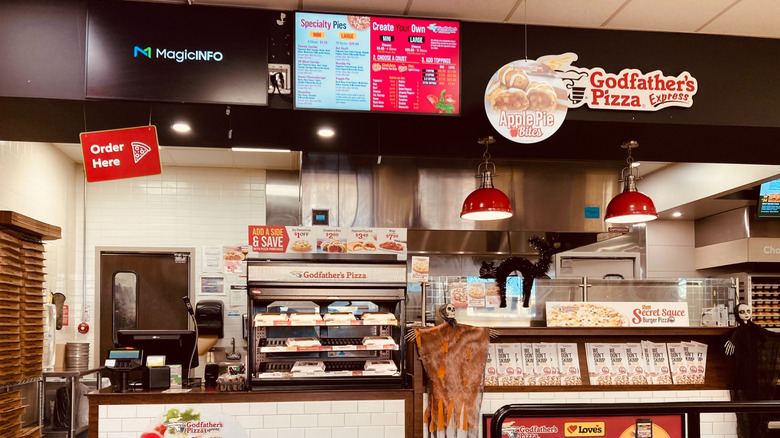
During its peak in the mid-1980s, Godfather's Pizza had over 900 restaurants located all across the United States. What made Godfather's stand out in a fiercely competitive market was their thick-crust pizzas and dedication to using the highest quality pizza ingredients. But it may have been a victim of its own success, rising too high too quickly only to come crashing down just as fast.
Godfather's Pizza began offering franchise contracts almost immediately. Its first franchise location opened in Lincoln, Nebraska, in 1974, just one year after the brand was founded. Over 600 franchise locations had already been opened by the early 1980s. Godfather's also changed structure in the form of a merger with Chart House Inc. that created Diversifoods in 1983. Mismanagement led to friction between the company and its franchise owners, some of whom withheld royalties while others sued.
The Pillsbury Company purchased Godfather's in 1985 only to sell it a few years later. The pizza chain's new president, Herman Cain, settled the lawsuits, closed underperforming locations, and aggressively re-focused the brand. However, the pizza market remained mercilessly competitive, and customers shifted to a preference for delivery and carry-out pizza over dining in. Cain may have eased Godfather's decline, but he could not bring back its former glory.