

3 Disadvantages Of Using Charcoal Grills
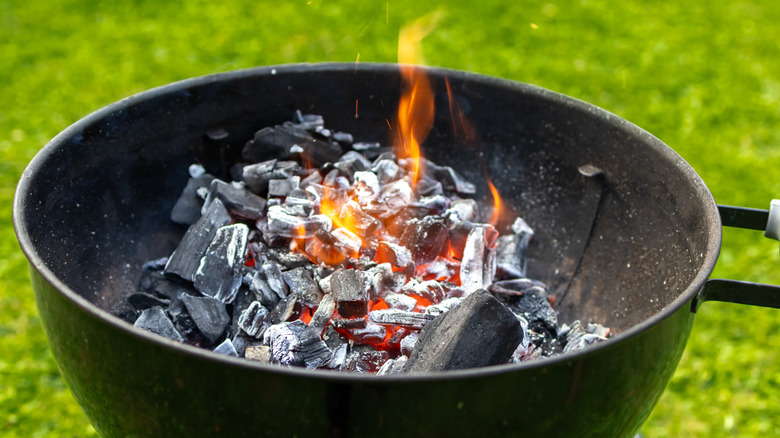
There is nothing quite like the visceral delight one gets from cooking food over a live fire. And when it comes to the real differences between gas grills and charcoal grills, the latter seems to have it all: crackling flames to set the mood, wonderful scents wafting through the air, and the promise of a delicious meal to come. But just as there are many mistakes everyone makes with charcoal grills, there are also disadvantages to this age-old method of cooking, and they can be quite significant.
First of all, it can be much harder to control the temperature on a charcoal grill than with a propane grill. A lot of practice is required before one gets good at cooking with charcoal, and if you are not planning to be a grilling aficionado, charcoal might not be the most efficient choice. It is also messy and hard to clean, as ash can get everywhere and be a potential safety hazard. Charcoal grills can also be the cause of more environmental concern in general, from the pollutants it produces to the production of its fuel. Let us get into these disadvantages one by one.
Temperature can be hard to control
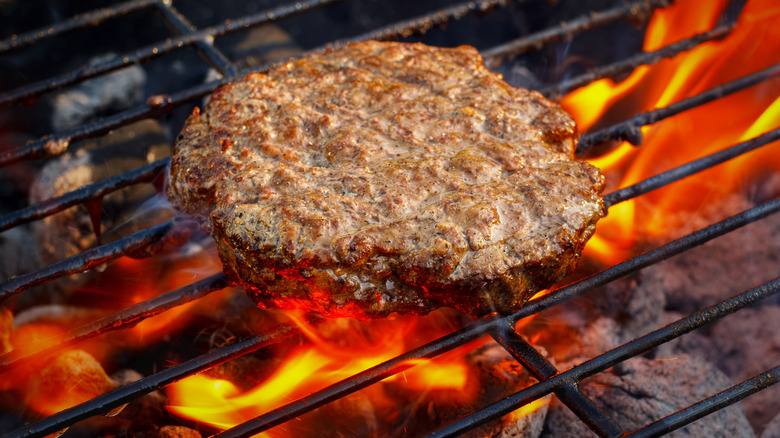
Temperatures on a charcoal grill can be difficult to control, especially for cooks new to grilling. It can get extremely hot, with temperatures reaching up to 650 degrees Fahrenheit (343 degrees Celsius) right above the coals when the lid is on. That said, because of its finite source of fuel, it can also cool down relatively quickly compared to propane grills. You have to be vigilant about maintaining a steady temperature for an even cook, making sure to add and move the charcoal as you go along.
There are different kinds of charcoal you can use on your grill, and different ones have their own advantages and disadvantages. When it comes to temperature control, standard lump charcoal may not be the best choice for beginner grill masters. Even within a single bag, coals can come in a range of different sizes. Only with time and experience in handling charcoal will you learn exactly how much to add and when, which can add to your overall cost. This can be offset by purchasing charcoal briquettes, which are more uniform in size, but that comes with its own significant disadvantage in terms of pollution (more on that later).
Cleanup can be messy
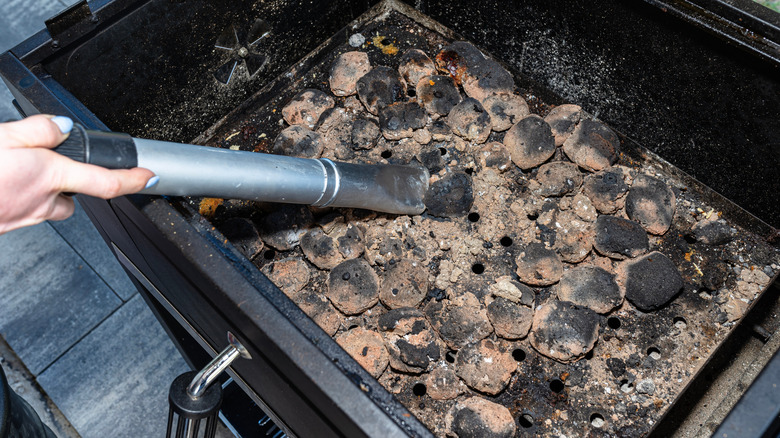
From not cleaning your grill immediately after cooking to not covering the grill when storing it outside, experts warn against making these big mistakes when cleaning your grill. One of the biggest things to manage when cleaning charcoal grills is the mess they make. Ash builds up over the course of cooking, which compromises airflow between the pieces of charcoal. On a windy day, this hot ash can potentially blow about, which is a safety hazard especially when there are young children at the party. Cleaning up after cooking can also be a pain, and you often have to wait several hours for the ash to cool completely before dealing with its disposal.
Of course, you can purchase an ash catcher, which does pretty much what its name says. It can help greatly with cleanup, but even then, you need to be careful to deal with the ash in a non-drafty location to make sure the mess is contained. And if you are using charcoal briquettes instead of lump charcoal, they can produce even more ash, as they are made from a combination of different materials, including sawdust and wood chips, compared to the pure carbon of lump charcoal.
Charcoal grills can be an environmental concern
Charcoal, whether in the form of standard lump charcoal or briquettes, produces a significant amount of carbon monoxide, carbon dioxide, and particulates compared to propane grills. Eric Johnson, an environmental consultant based in Switzerland, told the New York Times that the average charcoal grilling session emits about 11 pounds of carbon dioxide per hour, or the equivalent of driving a car for 26 miles, which can really add up during grilling season. Seeing as about 90 million Americans own a charcoal grill, that is a lot of potential emissions! And as previously mentioned, because briquettes are made with materials beyond just wood carbon, they can cause even more pollution on average compared to lump charcoal.
The production of charcoal is also notoriously unsustainable. It can contribute to forest degradation, especially in tropical regions. And unfortunately, it is energy-rich countries like the U.S. that are major importers of charcoal for recreational grilling, though the U.S. is not the single largest. For those concerned about environmental sustainability, the charcoal grill may not be the best choice.