

The Rise And Fall Of Popeyes Explained
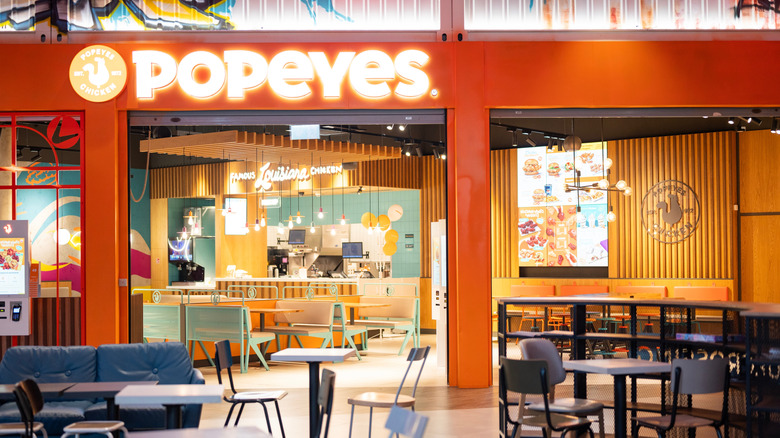
Fast food chicken has been a fast-growing staple in American dining, and Popeyes Louisiana Kitchen has been served on customers' tables for more than 50 years. Its story has been a dramatic one at times, from surges of fast-paced growth to periods of instability and bankruptcy.
Founded in New Orleans, Popeyes and its menu have gone through several reinventions over the years. But nearly since the beginning, its fried chicken has stood out thanks to a unique and proprietary Cajun-inspired spice blend. The chain's popularity peaked in the late 2010s when a new recipe and glib tweet sparked a nationwide chicken sandwich war. Nevertheless, a delayed response toward customer affordability concerns in recent years has caused major financial issues for Popeyes. A recent bankruptcy of a large franchisee in the Southeast is ringing even more alarms.
Whether you've always loved Popeyes' fried chicken and buttermilk biscuits or are a recent convert thanks to its chicken sandwich launch, find out how the chain went from social media darling just a few years ago to a tired brand struggling to stay relevant to today's customers.
Popeyes starts out in New Orleans
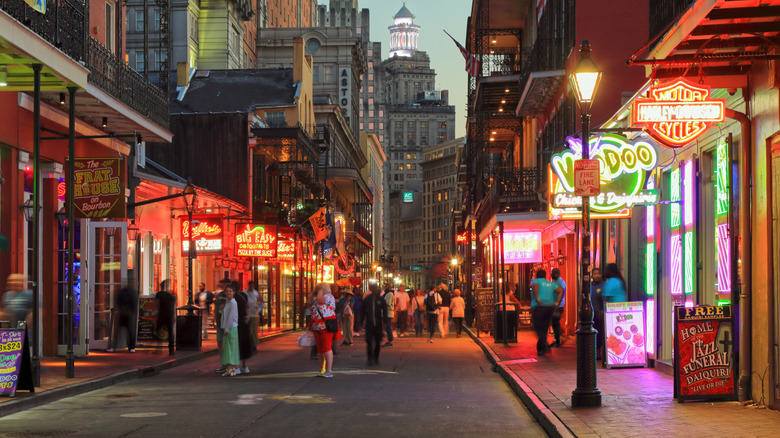
Popeyes began as a fried chicken restaurant in the New Orleans suburb of Arabi, Louisiana, in 1972. But you wouldn't recognize it as the Popeyes everyone knows today. The first iteration was called Chicken on the Run and its menu focused on Southern fried chicken. While that may seem like a treat in many parts of the country, a traditional Southern menu wasn't enough for Chicken on the Run to stand out against the competition in Louisiana.
Within months, founder Al Copeland Sr. rebranded the entire restaurant with a new name and signature flavor. It was called Popeyes, named after a character in the 1971 film "The French Connection," according to the company's website. And instead of serving up standard fried chicken, Copeland reimagined the menu to feature a spicy, New Orleans-style seasoning that may have saved Popeyes.
Other original menu items from Popeyes included clams, livers, gizzards, and rice dressing. While many of those are gone now, you'll still see classics like beans and apple pie if you visit today. In the 1970s, the brand continued to grow, even though other now-famous chicken chains had a head start. For context, KFC opened its first franchise in 1952 and the first Chick-fil-A restaurant entered the scene a decade or so later in 1967. So another quick-service fried chicken restaurant like Popeyes needed a special touch to bring in customers, and the New Orleans twist did the job.
Franchising goes nationwide and beyond
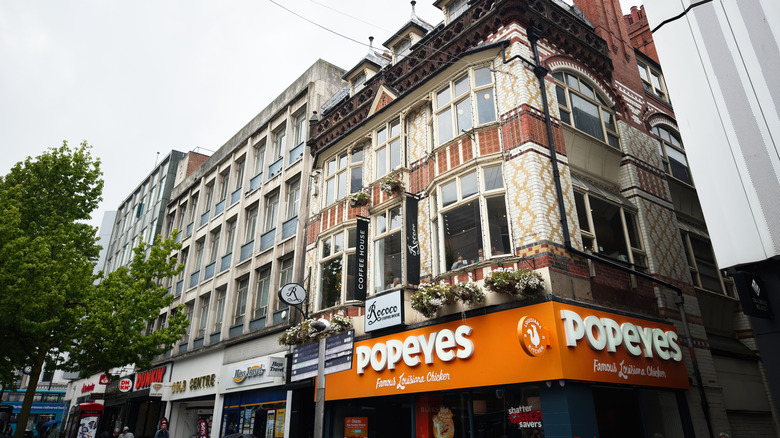
In 1976, Popeyes' first franchise opened in Baton Rouge and growth exploded from there. The brand expanded beyond its original Louisiana footprint, and by the mid-1980s, Popeyes had 500 restaurants delivering its popular fried chicken across the country. The chain's first international franchise opened around the same time in Toronto, Canada, and 200 more locations were added by 1989.
Skipping ahead to the early 2000s, Popeyes had solidified its reputation by becoming the second-largest quick-service chicken chain in the U.S. and celebrated its 30th anniversary in 2002. Its recipe focused on moist meat with a crunchy coating and a Louisiana-inspired spice blend that added a kick. As seen in ads and on menu boards from this era, a classic dinner meal included two pieces of chicken, coleslaw, red beans and rice, and one of Popeyes' famous biscuits. You could also get seafood combos featuring popcorn shrimp and whitefish. Whether you were grabbing a meal for yourself or looking to feed a family, Popeyes was an easy stop that offered hearty entrees and multiple sides to choose from. Today, the brand has a presence in over 30 countries with around 98% of its nearly 5,000 restaurants owned by franchisees.
An expansion attempt goes awry
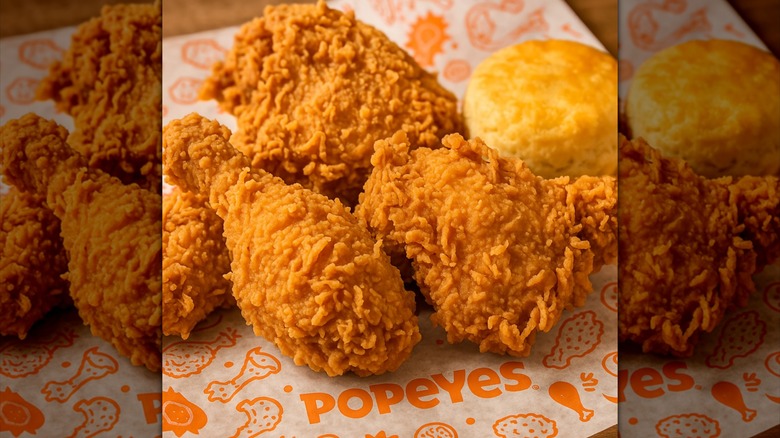
Pressing rewind back to the '80s, Popeyes was experiencing continued growth, and by the end of the decade, the chain was looking for a new way to expand. Its target was Church's Fried Chicken, the nation's second-largest chicken chain at the time, compared to Popeyes' third-place position. Although Popeyes strategy was to buy out Church's and run each brand separately, it didn't work out as the leadership team had planned.
While the acquisition amounted to over 2,000 locations combined, many Church's restaurants were in competitive range to Popeyes. On top of that, financing became an issue because both brands' assets were used as collateral for the original financing deal. Al Copeland, Popeye's original owner, planned to sell junk bonds to cover the loan payments, but the market for junk bonds tanked before that could happen. By 1991, Popeyes was in trouble: It owed close to $400 million to creditors, who wound up filing an involuntary petition for Chapter 11 bankruptcy. Copeland was forced out as a new parent company was formed. In 1992, ownership of both Popeyes and Church's was handed over to America's Favorite Chicken Company.
Copeland still remained involved in the company, however, thanks to his ownership of a separate manufacturing company, Diversified Foods and Seasonings. It owned the recipes to several of Popeyes' signature seasonings and received an annual royalty of more than $3 million (Popeyes would eventually buy the recipes for $43 million in 2014).
Branding shift marks substantial growth
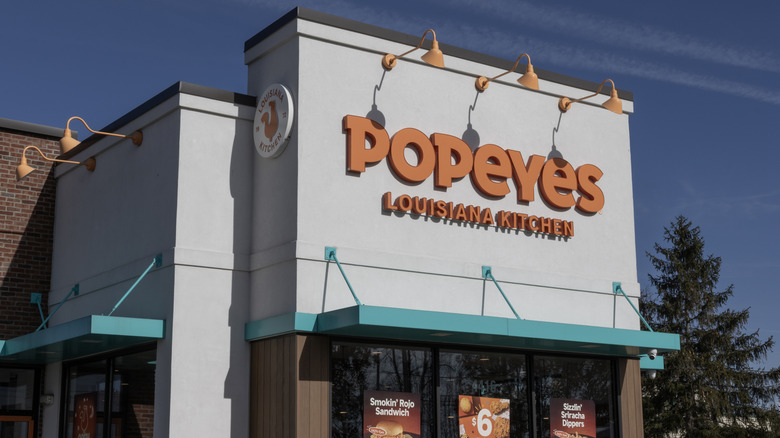
In 2007, a new CEO, Cheryl Bachelder, brought in a revamped branding concept that worked — which was good news after multiple leadership replacements didn't pan out. The company switched its name from Popeyes Chicken and Biscuits to Popeyes Louisiana Kitchen in 2008. This shifted the focus from fried chicken to a broader appeal, especially during a time when consumers were becoming more concerned about nutritious eating (although Popeyes will probably never offer a "healthy" menu.)
Bachelder also worked on strengthening franchisee relationships, and the corporate level launched its first national ad campaign. Its new slogan, "Louisiana fast," drilled in the branding of a unique regional cuisine available worldwide. The marketing strategy worked. Over a 10-year period, Popeyes sales increased by a whopping 45%, doubling profits for investors. The chain expanded its footprint in the chicken quick service category to around 2,700 locations, a 50% increase from the previous 1,800 locations.
As a result, the company was purchased in 2017 for $1.8 billion by Restaurant Brands International (RBI). The restaurant behemoth was no stranger to the fast food market, with brands like Burger King and Tim Horton's already in its impressive portfolio. The transaction bought out shareholders at a 27% premium. Franchisees retained control over their locations, but some critics at the time wondered if RBI was ready to incorporate a new brand after acquiring Tim Horton's just a few years before.
The chicken sandwich wars kickstart a new era
Popeyes reached a new level of cultural relevancy after quietly launching a fried chicken sandwich in August 2019. The new menu item took three years to develop and included a brioche bun toasted with butter, buttermilk-breaded chicken, a tangy pickle, and mayo. Popeyes' chef worked with local bakeries and continually tested the chicken coating and pickle texture until the team had a winning combination.
The hard work paid off. Although the new Popeyes chicken sandwich wasn't immediately a hit, that changed when a sparring match began on X (still known as Twitter at the time). Chick-fil-A published a side-eye post referencing its own chicken sandwich as the "original." Popeyes clapped back, asking, "... y'all good?" This caused other chains, including Wendy's and Shake Shack, to jump in the conversation and hype up their own sandwiches. All of the online trash talk inadvertently sparked the chicken sandwich wars and piqued interest in Popeyes, with even more people wanting to try the new sandwich. It was so good that The New Yorker published a piece titled, "The Popeyes Chicken Sandwich is Here to Save America."
The chain's online presence also benefitted from the exposure. In mid-August 2019, Popeyes' X account had just over 100,000 followers. But it added over 25,000 in a single day following its Chick-fil-A scuffle. Other restaurants didn't want to be left out of the fight. Within a year, several quick-service restaurants were adding or upgrading chicken sandwiches on their menus. Golden Chick, KFC, Fatburger, Church's, Zaxby's, and Wendy's all launched sandwiches in 2020. Even Chick-fil-A offered an updated honey pepper pimento chicken sandwich.
The hype leads to sandwich shortages
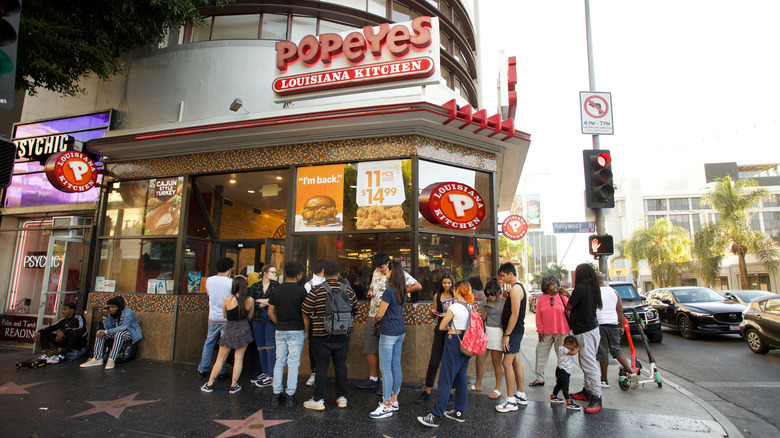
All press may be good press, but the brand faced a problem after the chicken sandwich wars began: Local restaurants didn't have enough supply to meet the demand for Popeyes' delicious chicken sandwich. News outlets and individuals posting online fueled the fire with glowing reviews and taste tests giving the win to Popeyes over Chick-fil-A.
In less than 10 days after the social media exchange, locations across the country ran out of sandwiches. The initial stock was meant to last through September, but Popeyes completely ran out by late August. Rumors flew that the chain was purposely withholding sandwiches, and it even faced a lawsuit for deceptive business practices from a man who couldn't find a sandwich after driving hours between locations. To try and cool the tension (and capitalize on the hype while lacking supply), Popeyes recommended that customers make their own sandwich by purchasing chicken tenders and sticking them on a bun.
Nearly three months later, in November 2019, Popeyes relaunched the sandwich. Maintaining its tongue-in-cheek attitude, the chain opted to release the item on a Sunday when Chick-fil-A restaurants were closed. But the drama led to some extreme situations. Some locations saw violence break out, with a knife fatality in Maryland and a fist fight in Florida. From January 2017 to November 2019, Popeyes foot traffic increased a staggering 299%, and sales rose 42% in the fourth quarter of 2019. While the chicken sandwich brought customers to the restaurant, they actually wound up spending more on other Popeyes items, delivering well-rounded growth for the brand.
Popeyes misses the mark on value items
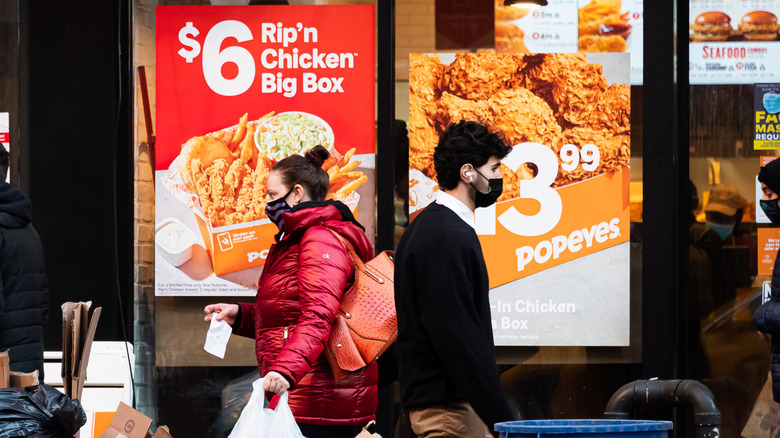
Despite its period of remarkable growth during the chicken sandwich era, Popeyes took a turn for the worse by ignoring weakening consumer confidence in the economy. Persistently rising prices and concerns over tariffs increased Americans' financial concerns in 2024. In the quick-serve industry, these issues ended the chicken sandwich wars and started a new one: the value wars. That's when Popeyes made a big mistake. The brand didn't take this one seriously.
Some chains, on the other hand, went all in to capture budget-conscious customers feeling the financial pinch, like McDonald's $5 Meal Deal that included four items. KFC, Taco Bell, and several other restaurants also added affordable options to continually drive traffic. But Popeyes took too long to participate. The chain finally began to address value needs in September. It offered a $5 three-piece chicken deal and a $6 Big Box. Even so, sales dropped nearly 4% in the third quarter that year, which was a sharp decline from 6% growth in the first quarter.
Things turned around briefly in the fourth quarter, with a 0.1% same-store sales increase. But the slight uptick didn't last long. In 2025, Popeyes locations experienced negative same-store sales every single quarter of the year, despite offering a $20 family meal deal later in the year.
Popeyes pushes marketing and remodels to spur interest
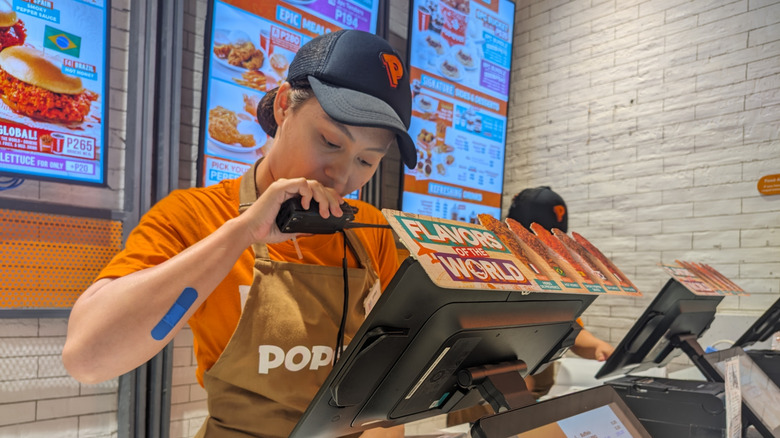
Popeyes incorporated some changes in 2025 to try and turn around its sales slump, but the impact wasn't enough. The first move was a new deal struck between the corporate brand and most franchisees. It required local owners to boost their ad spend in exchange for royalty credits. Each participating restaurant was to receive $4,000 in credits, an investment totaling $10.5 million for the Popeyes brand.
Restaurant kitchens were also scheduled to get glow-ups with a target completion date of 2030; however, it's a move that requires the corporate arm to convince franchise owners to make the investment. By 2027, Popeyes also plans to streamline operations and increase speed at each location. The upgrades will include some customer-facing technology, such as ordering kiosks and boards letting customers know how close their order is to being ready. There will also be some back-of-house changes, like better hot-holding units and digital drop charts to help employees increase order production and accuracy.
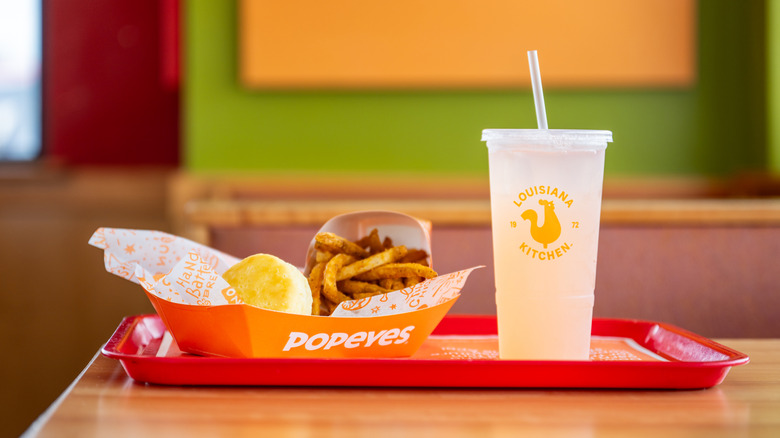
It's unclear just how much these upgrades will help Popeyes. In the meantime, the restaurant continues to strive for improvements to its menu by offering limited-time value meals more frequently. Popeyes is also trying to compete with Taco Bell and Chick-fil-A by offering new pineapple drinks, including pineapple lemonade, frozen pineapple lemonade, and pineapple iced tea. The crafted drinks trend is meant to attract Gen Z customers and get more people to add drinks to their order.
Major franchisee files bankruptcy
As Popeyes struggled to rekindle the love it received during the chicken sandwich war era, one franchisee with 136 locations filed for bankruptcy in early 2026. The company, Sailormen, had an $18 million net operating loss the previous year, despite annual sales of $223 million. Financial pressure mounted, with the company citing challenges like COVID-19, inflation, high interest rates, and workforce issues. All of these headwinds combined with the restaurant's decreasing sales hurt the franchisee's financial health.
Before filing, Sailormen attempted to sell 16 locations to liquidate assets, improve its financials, and address concerns from creditors and lenders. The deal was meant to provide a lifeline as the franchisee faced lawsuits from an IT services company and a lender due to outstanding payments. But the sale didn't work out and despite its efforts to sue the company that backed out of the deal, Sailormen still couldn't afford lease payments for many of its Popeyes locations.
On top of that, the franchisee had a $112 million outstanding loan balance, plus interest and fees exceeding $17 million. With court approval, the company closed 39 restaurants in Georgia and Florida and sold nearly 100 others later in 2026. While this bankruptcy is limited to one franchisee, it could serve as a warning bell to other Popeyes locations across the country. Increasing rent prices, food costs, and other operating expenses will continue to take their toll on profit margins if Popeyes can't reverse poor sales performance.
Sales slump continues as competition widens
The bankruptcy of a major franchisee reveals the importance of Popeyes turning around its sales numbers. Nevertheless, the chain is still struggling to reverse the decline. Through September 2026, it saw seven straight quarters of sales decreases. The second quarter of 2026 experienced a 5.2% drop in same-store sales and 2.2% in the third quarter.
That may seem like an improvement, but Popeyes was still the worst performing chain in parent company Restaurant Brand International's portfolio. Leaders hope to see a reversal and the brand is working hard to overcome consumer spending issues with more value items. It brought back the $6 Big Box, but that didn't deliver as much sales growth as anticipated. Plus, the restaurant chain is trying to improve sales by narrowing down the menu focus. It reduced its chicken wing offerings, causing what is hoped to be a temporary drop in sales.
Another issue for Popeyes is the increased competition in the chicken field. Brands like Raising Cane's and Dave's Hot Chicken have gained popularity. In just 10 years, the number of chicken fast food restaurants has increased 46%, and even chains like Wendy's and Taco Bell are adding more chicken entrees to their lineups. That means there are more options than ever for customers who have a craving for chicken.
While there are many problems contributing to the decline of Popeyes, its corporate owner continues to look for solutions. In October 2026, it fired the brand's newest chief marketing officer after less than a year on the job. But only time will tell if fresh leadership is enough to turn around a beloved American brand.