

What An Orange Flame On Your Gas Stove Could Mean
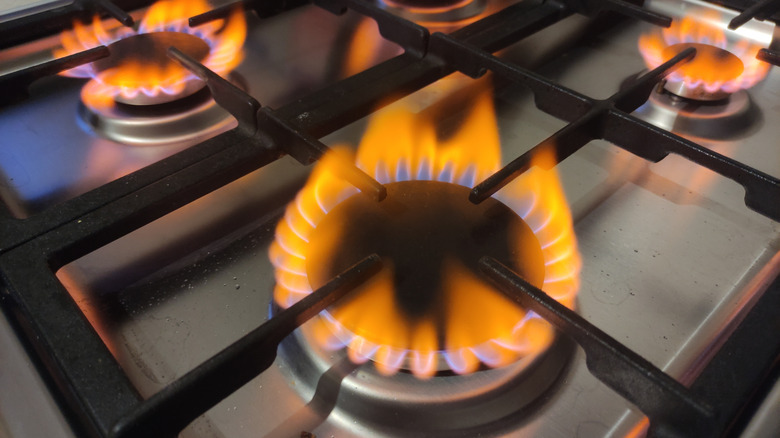
Imagine this: It's the end of a busy weekday and you are getting ready to prepare dinner for your household. You have all your ingredients prepared and ready to go and then you turn the flame on your gas stovetop and notice bright orange and unsteady flames coming out of it. While you might know some of the tips for cooking on a gas stovetop, the science of combustion is not exactly within your purview. However, you have heard that an orange flame on your gas stove may not be the best idea. So what could it mean?
To explain the orange light, let us look at how gas stoves ignite in the first place. Three things are needed to start a fire: a spark, the fuel source, and oxygen. When the knob of the gas stove is turned, it creates said spark (often by an electric current) and simultaneously releases gas from the hob. When the gas meets the spark, it creates a flame, which is fed by the oxygen in the surrounding air. An orange flame often means that the fuel is not combusting completely. Some common reasons for this include dirt or blockages along any point of the gas line, or not enough air is mixing with the gas, due to too much gas being released or a high level of humidity in the air.
How to maintain a gas stovetop
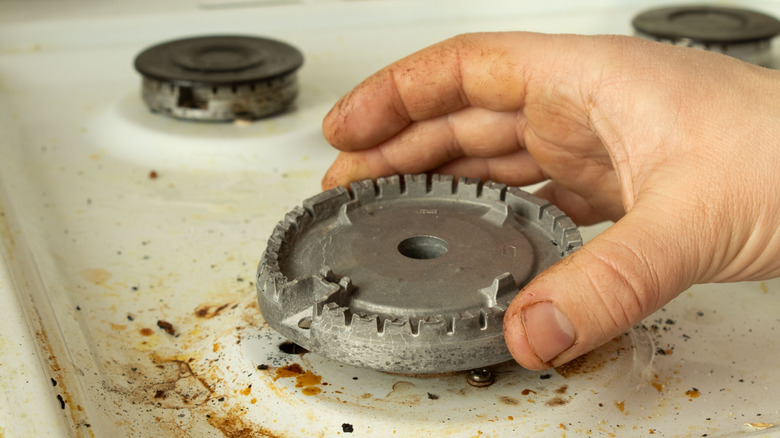
While an orange flame is characteristic of an outdoor campfire, it is definitely not ideal for indoor cooking. Improper combustion of fuel can cause a buildup of carbon monoxide, which in turn causes a multitude of health issues (and even death). Additionally, it can lead to inefficient cooking and increased gas bills in the long run. Prevention is the best cure, so here's how you should be cleaning your stove burners. At least once a month (or more often if you cook regularly), remove all the grates and burner caps from the cooled stovetop and place them in a tub or sink. Scrub them thoroughly with warm and soapy water, before rinsing and patting off as much water as possible. Thoroughly air dry all the parts before reassembling and using the stove again.
If you are doing all of the above tasks regularly and the flame on your stovetop is still mostly orange, you will need to contact a service to inspect the gas line for any issues or blockages. Ideally, the flame on your stovetop should be a steady blue, which indicates complete and efficient combustion of the gas. To mitigate the effects of high humidity, turn off the humidifier when cooking and do not open the windows on a damp day. With diligent maintenance, the lifespan of a gas stovetop can reach up to 15 years, giving your family many delicious homemade meals and memories.