

Red Vs White Potatoes: How They're Different (Aside From Color)
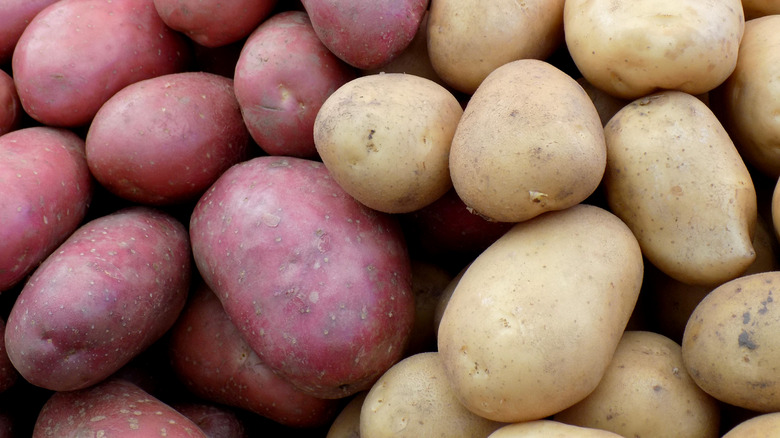
If you've ever wondered when to choose a red versus white potato, you're not alone. Shopping for the right potatoes can sometimes feel like a challenge. After all, the more than 4,000 worldwide (via CIP International Potato Center) come in sizes and colors beyond those two, like yellow, blue, and purple. But a potato's still a potato, right? Well, mostly. Fans of "The Lord of the Rings" movies might recall Samwise Gamgee's famous line about spuds: "Boil 'em, mash 'em, stick 'em in a stew." Potatoes are certainly versatile veggies, but which type you choose really can make a difference in how a recipe turns out.
Some differences between red and white potatoes can affect the taste and feel, as well as how they cook. Aside from color, red and white potatoes also differ in texture and skin thickness, the types of antioxidants they contain, starch content, and flavor. But despite these differences, potatoes are generally similar nutritionally. They're rich in potassium, an essential mineral and electrolyte; are high in vitamin C, providing immune support; and are a good source of vitamin B6 — especially skin-on — benefiting a person's brain and central nervous system function.
Of course, how you cook and prepare red and white potatoes will impact just how healthy they are. So while they have plenty in common nutritionally, understanding their individual traits can help you decide which one is best for your next recipe.
Red potatoes
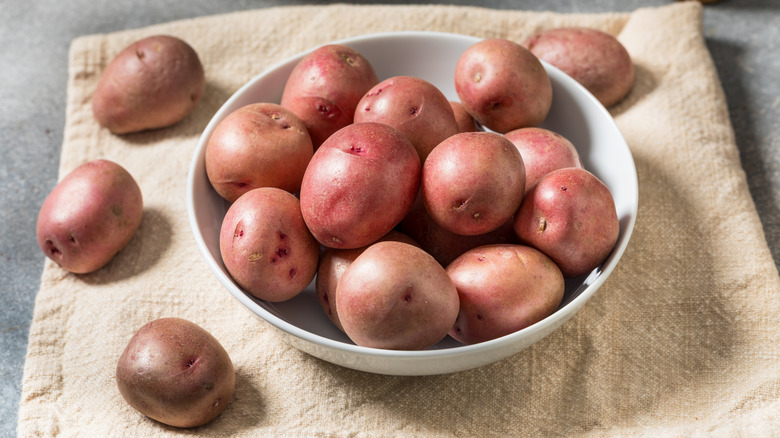
Color isn't the only thing that differentiates red potatoes from white ones, but that rosy hue has more to it than meets the eye. Red potatoes get their color from antioxidants called anthocyanins, which also appear in other red foods like raspberries and red onions and are anti-inflammatory. Aside from the color, red potato skin also appears waxy and thin, in contrast to its high-moisture white or reddish flesh on the inside.
There are dozens of types of red potatoes, but some of the most popular in the U.S. are Chieftain, Norland, Red La Soda, Pontiac, and ruby. In general, red varieties are on the smaller side — ranging from small to medium size — and are sometimes called 'new' potatoes, meaning they were harvested before reaching maturity.
While all potatoes contain starch, red varieties are generally low in starch compared to others, allowing them to hold their shape better while cooking. Because of that and the firm flesh of red potatoes, you have a lot of options when it comes to cooking them. They hold up well when baked, boiled, steamed, or grilled. With such thin skin, they're usually left intact in recipes such as potato salads, soups and stews, or as an oven-roasted side dish.
White potatoes
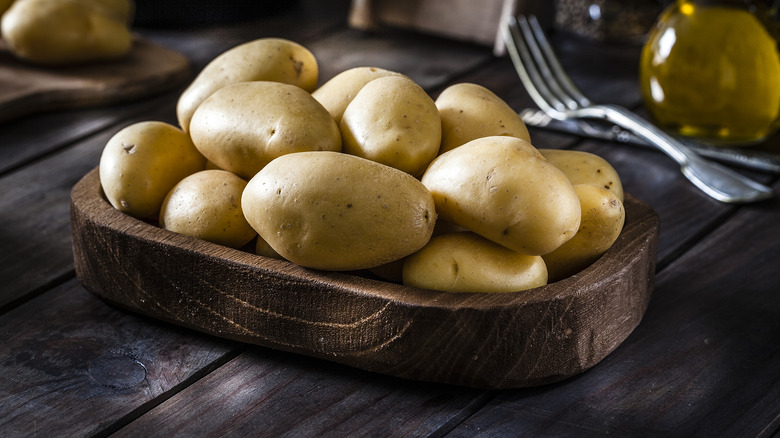
There's a common misconception that white foods are devoid of nutrition. While that may be true of processed foods like white bread or pastries made with white flour, that doesn't apply to whole foods like white potatoes. Aside from the nutrients all potatoes share, white ones also contain anthoxanthins, a type of flavonoid or antioxidant, which may benefit heart health and could possibly reduce the risk of stomach cancer. Those benefits may have something to do with the higher resistant starch levels in white potatoes. They're considered medium-starch potatoes, due to a balanced amount of both starch and moisture in their flesh.
White potatoes are often larger than red ones, with an oval or oblong shape, although some varieties are rounder. Their skin ranges from a light tan or off-white color and is relatively smooth and thin. Like red potatoes, white ones come in many different varieties, including the popular potato chip and french fry variety Kennebec, as well as Superior, white rose, cascade, and cobbler.
Aside from being cut up and fried to make junk food, white potatoes also work well sautéed or steamed. They have a creamier texture than red potatoes when cooked and can even be mashed, although russets are still the preferred type for mashed potatoes. Use them in hearty potato soup, or try them au gratin or scalloped for an even richer taste. Whether red or white, we've never seen a potato, or potato recipe, that we didn't like.