

5 Disadvantages Of Grocery Shopping At Kroger
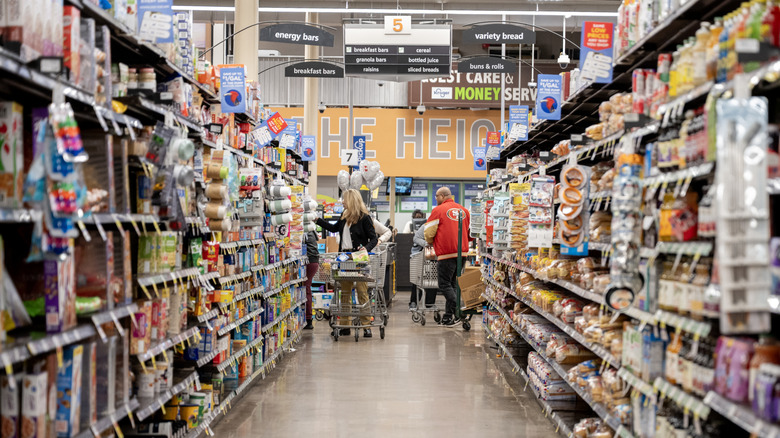
According to Numerator, around 7% of money spent on grocery in the United States from 2024 through 2026 was spent at supermarkets owned by Kroger. That might not look like a lot compared to Walmart's commanding market share of nearly 21%, but that translates into a revenue of almost $150 billion in fiscal year 2026. In other terms, Kroger reports its stores see more than 11 million customers a day. For the company's sheer scale, it must be doing something right — but customers say there are things Kroger could do better.
For one, Kroger has come under fire for alleged using personalized pricing or customer-specific data to set different prices for different shoppers. Kroger also tends to be more expensive than some other popular grocers, and more than that, the chain has overcharged customers on sale items. Customers and employees agreed on social media, too, that labor cuts have resulted in dirtier stores, and in further cost-cutting efforts, Kroger has been quick to pull popular products off the shelves when the chain disputes suppliers.
For these reasons and more, Kroger has actually lost market share from 2024 through 2026. It's not just Kroger, though: That trend is solidly in line with other mainstream, full-service grocery chains, like Albertsons Companies and Ahold Delhaize. They continue to lose shoppers to specialty markets, discounters like Aldi and Lidl, and warehouse clubs like Costco (which increased its market share by about 9% from 2024 to 2026). Here are some of the reasons shoppers have turned away from Kroger.
Kroger is often more expensive than other grocers
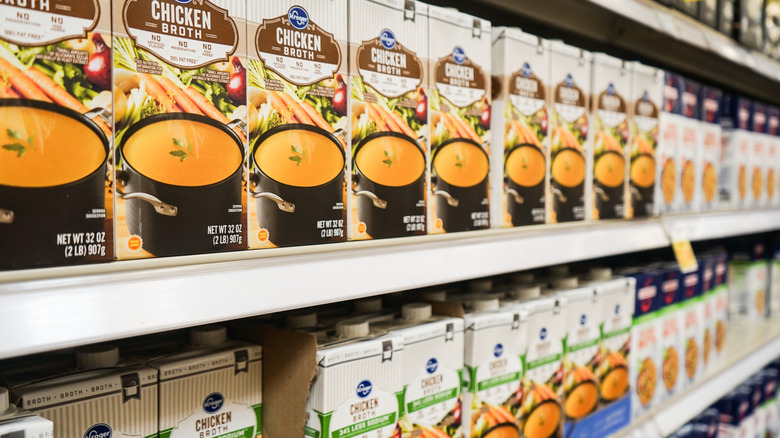
Many Americans are well-versed in ways to spend less at the grocery store, but at baseline, you're generally beholden to the prices your particular grocer offers. Kroger doesn't tend to be at the top of the pack, nor at the bottom, but its stores are often priced higher than some of its direct competitors. A survey conducted by Consumer Reports in early 2026 found Kroger was generally priced around 15% higher than Walmart, placing it between California standby Stater Bros. and New England favorite Hannaford. Multiple supermarkets came in lower than Kroger on the same survey, such as Meijer, H-E-B, WinCo, and Safeway.
However, there's significant variation among Kroger brands. King Soopers, Kroger's Colorado chain, was priced just 7.9% higher than Walmart. In the Midwest, Mariano's was over 27% higher than Walmart. Notably, all of the Kroger brands surveyed came out to be more expensive than Walmart, with only a handful of grocers (such as Costco, BJ's, Lidl, and Aldi) significantly below Walmart pricing.
Customers have noticed the difference, too. A Reddit post pointed out the widening gap between Kroger and Walmart in 2021. "The same item at Kroger, which costs $4, will cost $3.25 at Wal-Mart," wrote the customer. "I SWEAR it used to be the same at both." Another Redditor suggested one way to save, "You have to shop Kroger's ad, otherwise, yeah, they can be pricey."
Prices might ring up higher than you expect
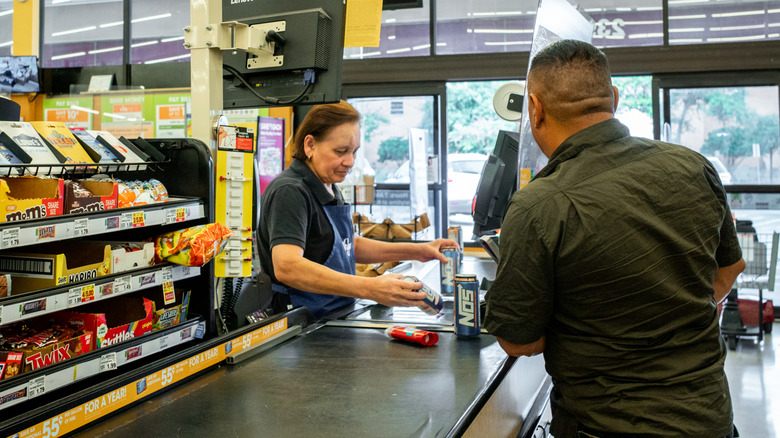
The advice to stick to sale items at Kroger is sound, but even that might come with some problems. Kroger customers have noted that discounted items don't always ring up for the right price at the register. In 2025, Consumer Reports investigated and found overcharges on more than 150 food items across 26 Kroger-owned stores, averaging 18.4% per item. The culprit: expired sale tags, advertising a limited-time discount that had passed.
The differences weren't occasional cents here and there, but whole dollar amounts on multiple items. Kroger, for its part, told Consumer Reports the pricing inaccuracies were not part of a widespread problem and said it would hire more employees (possibly with the goal of ensuring pricing accuracy, though the supermarket chain didn't specify the exact purpose).
In September of 2026 — more than a year after the Consumer Reports investigation — another report came out (via Kroger Hurts Families), this time from a Pennsylvania-based organization called the Center for Responsible Food Business. It again accused Kroger of overcharging customers (averaging around 20%) in as many as a third of the chain's Ohio locations. Kroger denied this study's claims, too, telling Spectrum News 1, "[The study] combines selective data with unverified claims and does not accurately reflect the experience of customers in our stores every day." But another possible explanation: carelessness. "Everything that the study complained about is not necessarily Kroger trying to exploit consumers, but it's more executional incompetence," a supply chain management professor at Miami University, Henry Jin explained.
The chain might use your data to set prices
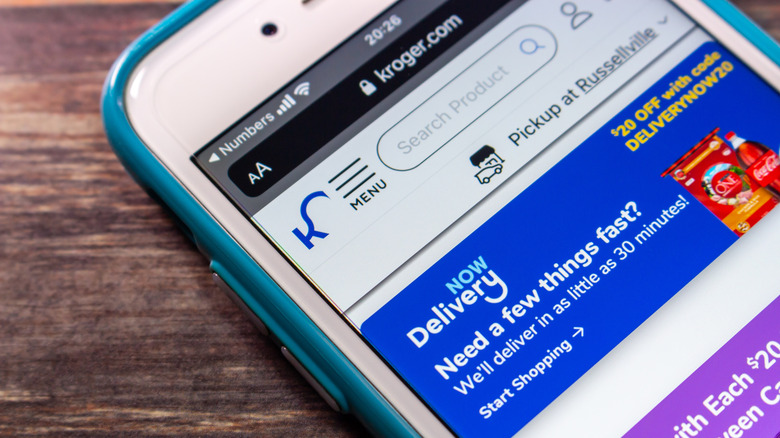
Two methods grocers have used to raise or lower prices in real time are dynamic and personalized pricing. Grocery chains that use dynamic pricing use digital tags inside the store for immediate price changes rather than regular tags that take longer to change. At Kroger, it's called EDGE, or Enhanced Display for Grocery Environment. On the one hand, it allows the store to change prices displayed at a moment's notice for more efficiency. On the other, it has the potential to target certain customers.
Using cameras and Bluetooth sensors, this digital signage system can display different ads and promotions based on a customer's purchase history and even read shopping lists stored in smartphones. In 2024, Senators Elizabeth Warren and Robert P. Casey, Jr. sent a letter to Kroger calling out the way this system could be used to price-gouge some customers, stating, "[It's] a corporate profiteering capability that would be impossible using a mere paper price tag."
Kroger has strongly denied using EDGE to raise prices for some or all customers. "Kroger does not and has never engaged in 'surge pricing,'" the chain said in a statement to Inc. "To suggest otherwise is not true." Still, the company has used personalized pricing for certain customers based on their profiles for online or app purchases, Consumer Reports found in 2025. The same investigation found those profiles are sometimes wrong, meaning customers might miss out on promotions or better prices the app's data assumes they wouldn't use.
The stores' conditions suffer with labor cuts
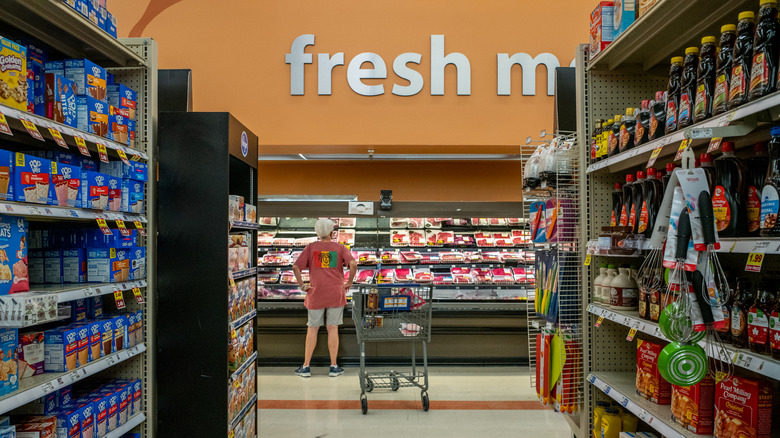
Over 3,000 agencies nationwide are responsible for inspecting restaurants, grocery stores, and other food service establishments to ensure health and safety. While that built-in accountability is helpful, keeping supermarkets in good shape on a regular basis involves a lot of work. Customers and employees have taken to Reddit to share examples of subpar store standards, which they reported is related to staffing cuts.
"White mold and drains are a big problem and Kroger will not fix the issue," wrote one poster. "All meat and dairy departments are filthy with moldy shelves and pushers." Self-reported employees came forward with similar stories. "When I worked in the meat department (I was a Seafood Lead) our walls looked like this, and the senior guys who worked there in the department had no idea the last time it was cleaned," said one Redditor. "It was awful. White mold, brown-green slime. Smelled like refrigerated death and vinegar." Multiple employees chalked it up to labor cuts: Fewer people working fewer hours simply isn't enough to clean properly.
Labor cuts aren't just happening at the store level. In October 2026, Kroger announced a three-year plan to lay off around 3,000 corporate employees, which would represent over a third of the chain's corporate staff. It's still unclear what effect this will have on the stores, but precedent exists: Kroger's current CEO, Greg Foran, also oversaw layoffs of over 7,000 corporate employees as president of Walmart U.S. That move was designed to reduce office staff while renewing a focus on in-store staffing, but it's not clear if Kroger will follow the same path.
Kroger stores might be dropping your favorite brands
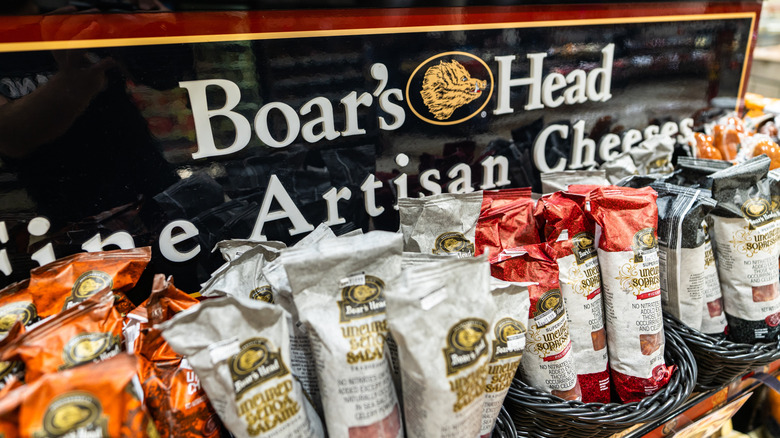
Kroger supermarkets aren't generally like Aldi or Lidl, where the selection of big brands is limited and the focus is on private label items. Kroger-owned stores tend to be heavy on name brands — but even that has changed. Due to disputes with suppliers, Kroger stores stopped carrying Red Bull energy drinks and Boar's Head deli items, and management said there would likely be more as the chain tries to discourage suppliers from raising prices. In fact, signage posted in place of Red Bull items stated, "We're currently out of stock while we work with our suppliers to keep prices affordable for you," reported WCPO. (Boar's Head items have come back, apparently after successful negotiations.)
Some theorize the real disputes, though, aren't about price increases. "Kroger violated its contract with Boars Head by displaying Murray meats and cheeses in the display case," wrote one Redditor. "So Boars Head is pulling its products out of the seven stores who broke contract." The issue might even be more complicated than that, however. "That's part of it, but also Kroger pulled the Boar's Head sandwich business and gave no heads up to BH about that either and p***ed them off with that, too," chimed another Redditor, pulling no punches around how they feel about it. "Kroger's really shooting itself in the foot lately," the concluded. But Kroger has not confirmed either of these claims.