

What's The Difference Between Pinot Noir And Zinfandel Wines?
It's just wine, right? Stumbling across 15 different types of red wine at your local grocery store may cause you to rethink that belief. Each type of wine has its own texture, body, and tasting notes, which can make it difficult to choose a bottle for the dinner party. Pinot noir and zinfandel are two widely sold varieties with defining characteristics. Here, we'll shed some light on the distinctions between these popular reds.
The most obvious difference is that pinot noir and zinfandel come from two different grapes with their own core qualities. Zinfandel has a dark, lush quality and jammy, currant-like taste, while lighter-bodied pinot noirs offer more cherry-forward notes with earthy undertones. The processing decisions of the winemaker will always create nuances. For example, a pinot will reveal a lighter color if grape skins are removed earlier. Zinfandel grapes held on the vine longer can run sweet, yielding a post-harvest dessert wine.
In short, pinot noir is a starter, while zinfandel is a finisher. Pinot offers a softer note perfect for any appetizer or light meal, while zin can carry you through the main course or post-meal treat. Of course, some wine "rules" are meant to be broken. The most reliable method to find the right wine will always be experimenting for yourself, but we'll offer some quick tips for deciding whether to pick up that pinot or zinfandel bottle.
Pinot noir is a complex wine made from temperamental grapes
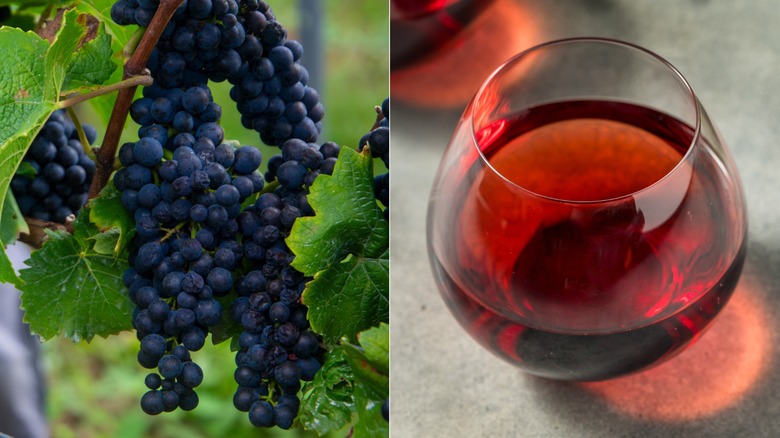
The name "pinot noir" translates to "black pine," an apt description of the varietal's dark color and pine-cone-looking clusters. Pinot grapes, which originated in Burgundy, France, require very specific temporal conditions: mild, constant, and cool — ranging between 55 and 59 degrees Fahrenheit. Too much heat could cause the thin-skinned grape to shrivel, while too little doesn't allow it to grow. Thus, pinot grapes thrive in coastal climates, like the valleys of Oregon. Being finicky to grow is why pinot noir often costs more than other bottles.
A hallmark feature of the pinot grape is its tendency to pull notes directly from the environment. Some grape varieties, like the highly versatile and thick-skinned cabernet sauvignon, can hold their identifying characteristics through almost any soil (clay-based, volcanic, sandy) and temperature. Pinot is much more absorbent — likely to reflect minerals in the soil or salt in the air.
Pinot noir traditionally carries berry-based notes (such as cherry or strawberry) with a subtle backing of herbs. It has a dry, light to medium finish and pale garnet color. But don't let its delicate attributes fool you! Pinot has moderate alcohol content, ranging from 13 to 14%. This is slightly higher than its white counterpart, pinot grigio (at 12 to 13%). Pinot is pliable and pairs nicely with most meals. For ultimate success at a dinner party, enjoy it with a charcuterie plate or a light, fresh meal, like salmon with basil and tomato.
Zinfandel is a bold red with an American identity
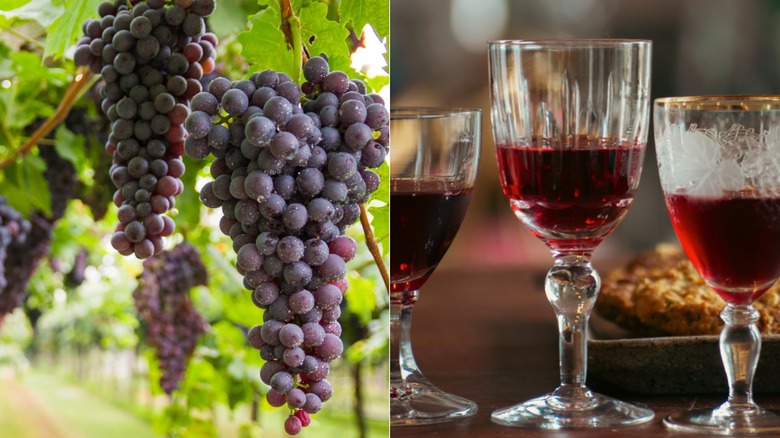
Often referred to as "America's Grape" and grown primarily in California, the first records of zinfandel can actually be traced back to 1300s Croatia. It's no wonder it's managed to survive thousands of years, though. Zinfandel's thick vines and (for some) century-old roots offer more resistance to nature's challenges — withstanding warmer temperatures, adapting to unpredictable weather conditions, and producing robust-tasting wine.
Zinfandel's hardiness provides longer growing seasons for this thin-skinned grape and therefore deeper ripening. In fact, the most identifiable zin characteristic is its propensity to ripen unevenly on the vine. This grape notoriously grows with ripe clusters living among shriveled, raisined ones. Raisined grapes carry more concentrated sugar, which ferments into more alcoholic wine. This is why Zinfandel wines widely range from 13.5 to 16 % ABV (alcohol by volume). The discrepancies in alcohol content are due to these anomalies.
Raisined grapes don't just increase the alcohol content. They're also what gives zin its intense concentration of flavors. Its jamminess is accompanied by spice-forward notes — think peach preserves with tobacco — and this is zin's thing. Food-wise, it is best serveded with spicy, bold, or dense dishes such as beef stews or barbecue.