

What's The Difference Between Single-Pot And Single-Malt Irish Whiskey?
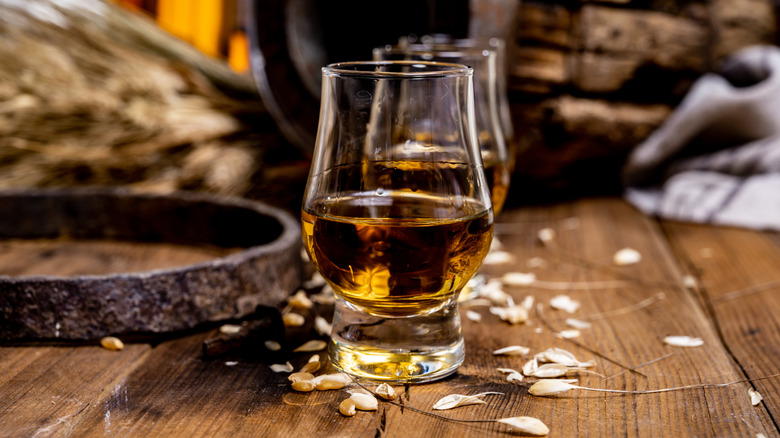
Walk into a Dublin distillery that makes single malt and single pot still whiskey, and the mash tuns will tell two completely different stories. One tank processes only malted barley (soaked in water and allowed to sprout) into an elegant, fruity single-malt whiskey. Another tank is filled with a mash of both malted and raw, unmalted barley (not soaked or sprouted) to create a spicy, creamy single pot still whiskey. Each has a distinct flavor profile and a history worth discussing. But before unpacking the differences between these whiskeys, here's what they have in common: They're both made in Ireland from a fermented mash of cereals, matured at least three years in wood, and bottled at 40% ABV or higher. They're also both made in pot stills, and they get the term "single" because each is made in a single distillery.
To put the distinction simply, a single malt whiskey is made from 100% malted barley, while a single pot still whiskey is made from at least 30% malted and 30% unmalted barley. And while this is the key difference that sets them apart, each variety's texture and dramatic past make it a compelling story worth discovering. Maybe even one that makes you want to visit Dublin just to see it in action.
Single pot still survived near-extinction to become Ireland's signature whiskey
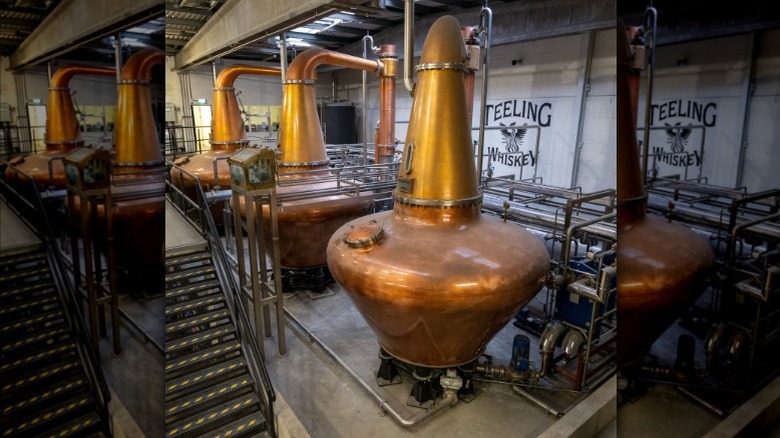
In 1785, Britain levied a tax on the malted barley used in whiskey production. To avoid paying heavy fees, Irish distilleries began using a portion of unmalted (aka untaxed) barley in their mash bills. This gave birth to a distinct creamy, spicy Irish whiskey called the pure pot still. This malt tax was repealed in 1855, but by then, the pure pot still was already a beloved Irish staple.
It's historic relevance didn't end there. In the 20th century, distillery closures and a mix of geo-political conditions like trade wars and U.S. Prohibition nearly pushed it to extinction. It wasn't until the turn of the millennium that pure pot still was brought back and dubbed single pot still, and even now it's gaining popularity as a premium whiskey.
A single pot still Irish whiskey is a lot more than the type of barley it contains. Brands like Teeling from Dublin and Dingle from the small town of the same name often opt for their own ratios of barley, which directly affects the taste of their single pot stills. Malted barley gives whiskey its sweetness while unmalted barley adds spice, weight, and that creamy mouthfeel. Teeling keeps it at a simple 50/50 while Dingle opts for a 60/40 blend. Other brands like Redbreast don't disclose their mash bills, but each single pot still comes with a unique flavor ratio.
Irish single malt whiskey is older and tastes lighter
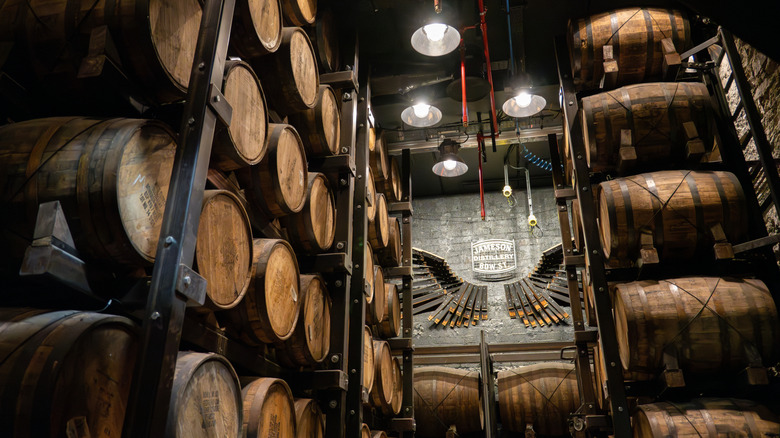
Bushmills in Northern Ireland was granted a whiskey distilling license back in 1608 and is now the oldest whiskey distillery in the world. In the 1850s, when England imposed a tax on distilling using barley in Ireland, other brands switched to non-barley grains. Bushmills, however, continued making single malt whiskey.
Made entirely out of malted barley, this variety comes with its own specific flavors that are generally sweeter, and it's not actually unique to Ireland. Other countries like Scotland, the U.S., Japan, India, and Australia make it, too. Some Irish examples include Bushmills, Teeling, Dingle, and The Tyrconnell. For a single-malt to count as an Irish whiskey, it must be made in Ireland. So, while global brands like Macallan and Westland follow the same core idea, they don't count as Irish whiskeys.
Single-malts often feature notes of honey, milk chocolate, vanilla, and citrus. They're usually light and smoother on the palate while single pot stills are creamy and spicy. The best judge of that distinction, however, is your own palate. So if you ever get the chance, walk into a Dublin distillery and try both. Each tells a different story, but both are worth a sip.