

What's The Difference Between Miller Lite And High Life?
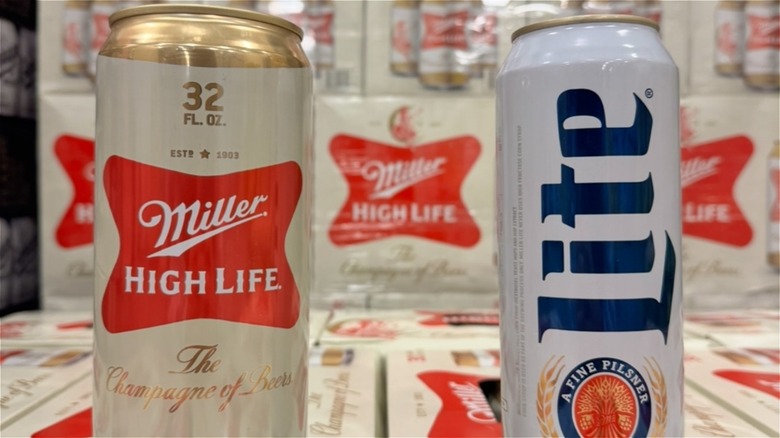
The Molson Coors Milwaukee Brewery — the historic home of the Miller Brewing Company facility — produces 42 different brands of beer and beverage products. Two of the most recognizable are Miller Lite and Miller High Life. Though they share the same Wisconsin roots, the beverages have their own backstories and were introduced decades apart. High Life debuted as Miller Brewing Company's flagship beer in 1903. Nearly three-quarters of a century later, in 1975, Miller Lite launched nationally. Based on the recipe for the now-defunct Meister Brau Lite, it propelled the company to greater prominence and market dominance with the help of a highly successful two-pronged marketing campaign that emphasized celebrity endorsements and the less-filling nature of the drink.
While both brews are well-known, they appeal to different types of drinkers. Reddit users are divided on which Miller beer is better. One commenter favored High Life "hands down" because it "has more body and flavor," while another shared that Miller Lite was "undoubtedly one of my forever go-to domestics." The contrasting preferences make sense considering beverages belong to different beer categories. High Life is an American lager, which categorically tends to be more malt- and hop-forward. Miller Lite is specifically a light beer brewed in pilsner style, featuring a drier body and low calories. We take an even deeper dive into the differences between these two classic American beers below.
What makes Miller Lite a true American pilsner?
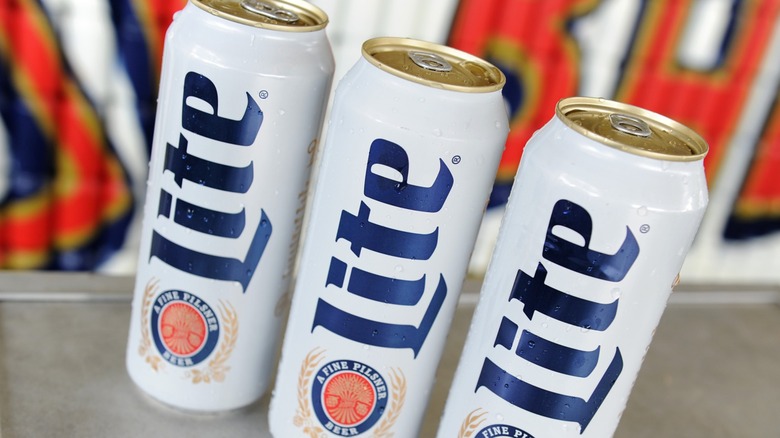
Miller Lite combines the lower calorie count that's signature to light beers with the specific ingredients of a traditional pilsner. It's produced using two-row barley malt, German lager yeast, and Galena and Saaz hops. Saaz is a noble hop native to the Czech Republic that provides the signature subtle spicy, herbaceous, and floral notes typically found in a pilsner. Nutritionally, Miller Lite has a lower alcohol content (4.2% ABV), fewer calories (96 calories per 12 ounces), and less carbohydrates (3.2 grams) than traditional American lagers.
Though Miller Lite is marketed as highly refreshing, crisp, and easy to drink, BeerAdvocate.com scores the beer a 55/100, labeling it as "awful." One reviewer shared that the light lager "pours overly thin, tastes watery," and has "zero substance to the flavor." In an interview with Mashed.com, Michael Murdy, beer expert and founder of Robust Kitchen, included the beer's "high carbonation" as one of the factors on the list of everything that's wrong with Miller Lite. However, not everyone rides on the Miller Lite hate train. According to Beer Marketer's Insights' 50 Years in Beer report, every decade from the 1980s onward, this product has earned a spot on the top 10 list of bestselling beers. No other brew has that distinction.
How is High Life different from Miller Lite?
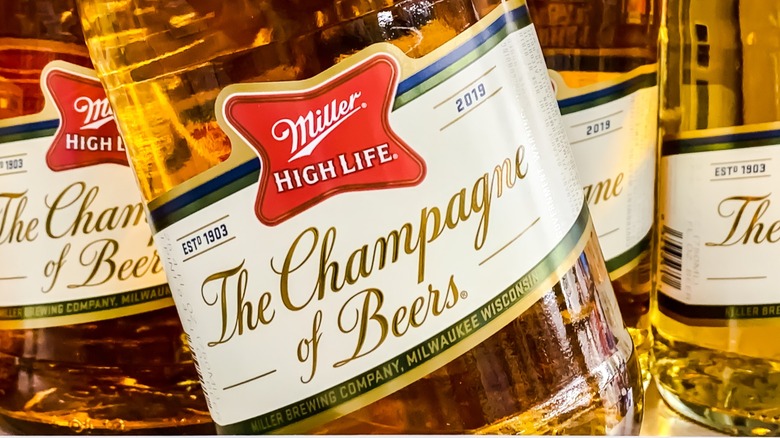
Although its popularity has ebbed and flowed throughout the years, Miller High Life has consistently remained a favorite beer among bartenders, brewers, and drinkers. It is known for its high carbonation and sweet malty palate. The beverage is brewed with a proprietary blend of malted barley and Pacific Northwest Galena hops, with the latter ingredient helping to offset the sweetness. Miller High Life has a slightly heavier and richer profile than Miller Lite. It boasts a 4.6% ABV along with 141 calories and 12.2 grams of carbohydrates, contributing to its fuller and sweeter profile.
Miller High Life received its famous "Champagne of Beers" nickname due to its Champagne-shaped glass packaging. The timing of the brew's debut also fit with the luxe moniker, since the brand launched before New Year's Eve on December 30, 1903. While it works as a standalone beverage, Miller High Life serves as a foundational ingredient in several cocktail riffs as well. The popular dive bar take on an Aperol Spritz, dubbed the Spaghett cocktail, calls for this American lager in its recipe. Miller High Life can even take the place of Champagne in classic cocktails such as the French 75 and Kir Royale.