

The Seals You Should Check For Before Buying Olive Oil
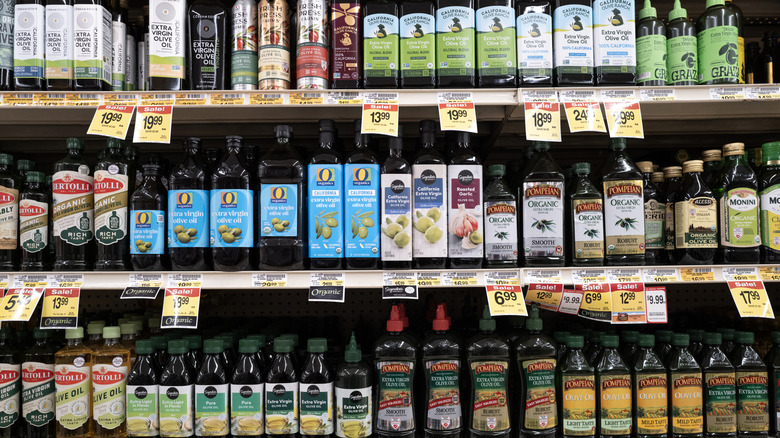
Bottle color, material, country of origin, and terms like "cold-pressed" can all help you identify the best olive oil at the grocery store. Some of the most important things to look for, however, are third-party certification seals. These help verify oil quality, purity, and geographical origin. By checking for these seals, shoppers can rest easy knowing they're getting an authentic product rather than relying solely on manufacturer or marketing claims.
In the U.S., the two main seals to look for are North American Olive Oil Association (NAOOA) Certified and the California Olive Oil Council (COOC) Seal. Brands with the NAOOA seal undergo random testing from bottles pulled from grocery store shelves. The association assesses both purity and quality with regard to physical and chemical standards set by the International Olive Council (IOC). The COOC seal also certifies that the ingredient has undergone stringent testing, ensuring proper handling, processing, and sensory quality. Bottles with this seal are top-tier, 100% extra virgin oil made only from California-grown olives.
Additional seals you may want to look for on international olive oil sourced from Spain, Italy, or elsewhere involve the country or geographical region of origin. Both the Protected Designation of Origin (PDO) and Protected Geographical Indication (PGI) are European quality seals verifying that the olive oil comes from a specific region and meets established production standards.
Where to find high-quality olive oils with certification seals
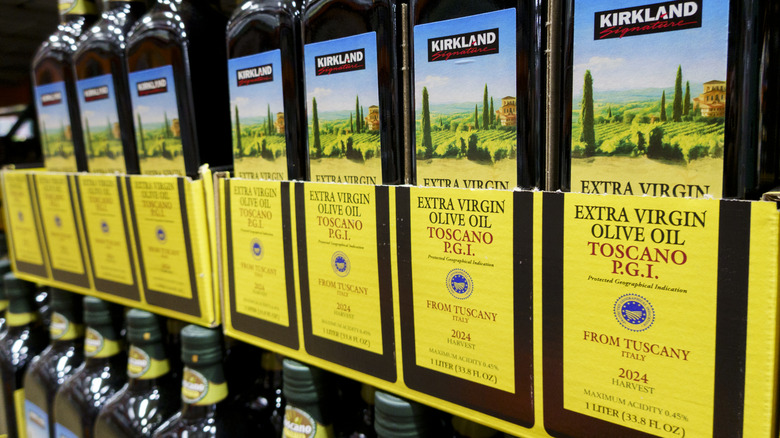
Just because one type of olive oil from a particular brand features a seal doesn't mean they all do. Both COOC and NAOOA maintain lists of certified olive oils on their respective websites, allowing shoppers to check for specific products. The PDO and PGI certifications don't offer lists of products, but they do have searchable records of the regions with those designations.
When shopping, you're much more likely to find olive oils with a NAOOA seal. Recognizable brands like Filippo Berio, Goya, and Pompeian all make NAOOA-certified bottles. Many store brands found at Sprouts, Costco, Aldi, Sam's Club, and Whole Foods also have olive oils with this seal. While some COOC-certified options are available at major retailers like Walmart, others are only sold online or at smaller markets.
But even with a certification seal, there are a few other details worth checking. For starters, rather than just looking for a best-by date, check for a harvest date to gauge the oil's freshness. This inclusion is required on products with the COOC seal, and according to the council's website, it's best to use extra virgin olive oil within 18 to 24 months of this date. Olive oil grades also point to quality — those labeled "extra virgin olive oil" meet stricter requirements than virgin or regular. Checking for both a certification seal and these additional label details can help you choose the highest-quality bottle.