

What Is The Difference Between Extra Virgin And Extra Light Olive Oil?
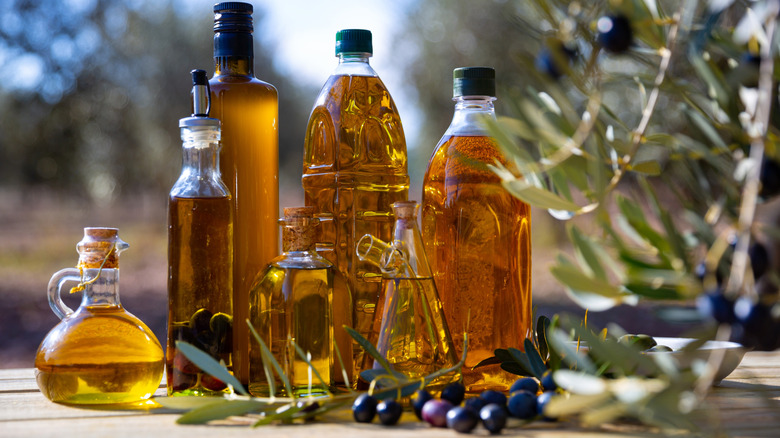
Olive oil has become an indispensable ingredient in millions of kitchens, but what can be tricky for new cooks or someone just discovering this ancient oil is that there are a tremendous number of brands and types in every supermarket. For example, you might find a bottle of extra virgin olive oil right next to a bottle of extra light olive oil. Although they're both made from olives, you really don't want to swap these for each other because they have incredibly different flavors and uses.
If you're looking for the highest quality, best-tasting variation (and really, who isn't?) then you'll want to seek out extra virgin olive oil. These oils retain the best flavor and higher antioxidant amounts because they are minimally processed, and are pressed without heat or chemicals. This method also helps the oil retain a green or vibrant yellow color, and wonderful fruity, grassy flavors.
Extra light olive oil is not code for low calorie olive oil. In fact, both this version and extra virgin have the same calorie count. For the most part, extra light refers to the color of the oil, which is much lighter than that of extra virgin. It is also refined and mixed with other oils. Although one might be considered superior to the other, both extra virgin and extra light olive oil have their value. Depending on the dishes you cook or bake, you might find that having both types in your pantry suits your culinary needs. A quality olive oil even make a surprisingly excellent topping for ice cream.
Extra virgin olive oil must meet certain standards
In order to be classified as "extra virgin," olive oil must meet specific standards that are set by the International Olive Council, which is based in Madrid, Spain. Those factors include: the oil must come from the first cold press of olives (no heat is used to extract the oil); it must contain less than 0.8 grams of acid per 100 grams of oil; and the oil cannot have any unsavory smells or flavors.
A good extra virgin olive oil is definitely not neutral in flavor. Some of the descriptors used to characterize a quality oil include fruity; not sweet peach or red berry fruity, but more like green apple, artichoke, or green tomato (even tomato leaf) fruity (this is also where the "grassy" descriptor comes in). It can be described as bitter (as in not sweet), and even spicy or peppery, although the sensation doesn't linger like a hot chili pepper.
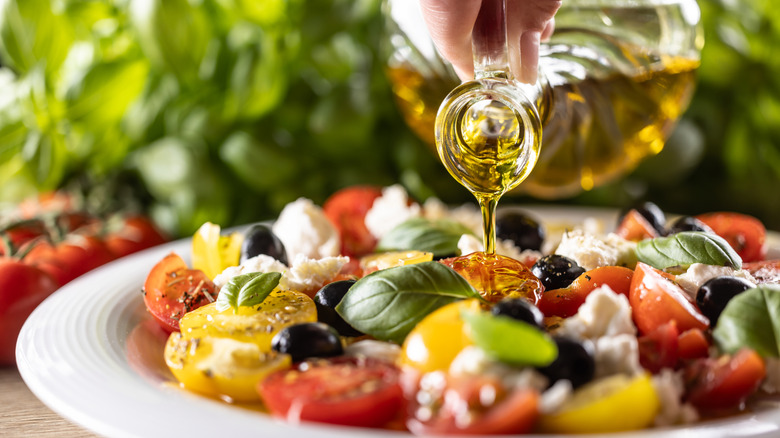
Because extra virgin olive oil tends to be more expensive than other olive oils, it's best to really enjoy the flavors and aromas it contains. Yes, you can cook with it, but if you want to savor it to its fullest, use it as a dipper for bread or drizzle it generously on top of bruschetta, vegetables, salads, soups, and pastas.
Extra light olive oil is much more neutral
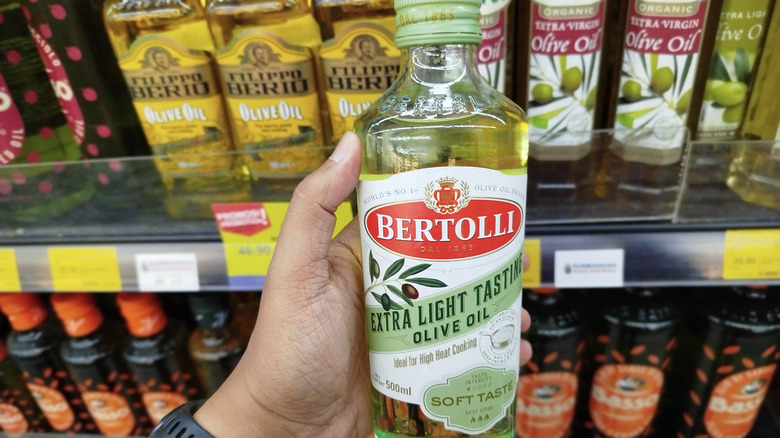
Compared to the assertive flavors of extra virgin olive oil, extra light olive oil tastes downright bland — but it's supposed to. While the former is extracted solely from olives, the latter is often a blend of virgin and refined olive oil, or oil that has been processed to take out much of the flavor and color. The refining process also gives it a higher smoke point, which means it's a much better oil to use for certain cooking methods, like deep frying and baking. In fact, baking a cake with olive oil makes it super moist and tender; and when you opt for extra light oil, you won't get a competing olive flavor.
And that's really what is most useful about this oil — its neutrality, which makes it great for everyday cooking. Many people may save their extra virgin olive oil to use for finishing oils when they really want to taste it, and use a lighter one for things like sauteing vegetables, browning meat, and frying eggs. You can even combine olive oils in certain recipes. For instance, use extra light olive oil to cook your vegetables in easy ribollita soup, but when you serve it, drizzle a healthy glug of extra virgin olive oil into each bowl.
Extra light olive oil does retain some of the natural antioxidants that come from olives, but not as much as its extra virgin counterpart. Still, if you're looking to cut back on seed oils, any type of olive oil can be an excellent substitution.