

Wine Experts Say This Fruity Red Is Worth Trying If You Love Pinot Noir
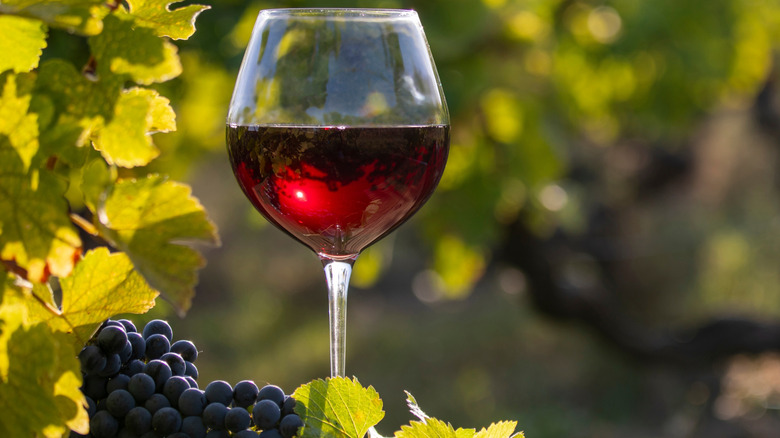
Pinot noir may be one of the world's most popular red wines, but its grapes are also among the most temperamental to grow. Their thin skins makes them particularly delicate and susceptible to disease, pests, and weather extremes. All of this adds to the price tag of the bottle you see at your local wine shop. Pinot noirs often cost more than other bottles, which can lead shoppers to look for comparable alternatives. Mashed writer Lauren Corona interviewed six wine industry experts, and four recommended gamay as a great wine to try if you like pinot noir. It's also a light-bodied red, but leans a bit more on the fruity flavor profile than many pinot noirs.
Gamay received similarly positive mentions from Decanter Magazine editors, who describe the varietal as a "deliciously, gushingly juicy everyday red with a refreshing nip of acidity and flavors ranging from strawberry and cherry to hints of banana." But these flavors aren't the only notable facet of gamay; some growers ferment the grapes in wooden vats before aging for a few years. Jancis Robinson explains that this creates "a much deeper-colored, more tannic, long-lived wine ... more like red Burgundy."
The difference between gamay and pinot noir
Gamay comes by its similarities to pinot noir naturally. The two grapes have a shared history in France's Burgundy region, where gamay noir became an offspring of pinot noir and the white grape gouais blanc. The Duke of Burgundy banned it in 1395 so that the region could focus on growing pinot noir. Gamay survived the ban by growing in Beaujolais, where the granite-rich soils suit the grape well.
Growing in Beaujolais gives gamay grapes a lighter flavor profile, focusing on berry and floral notes, while pinot noir has more earthy undertones of mushroom and spice. These differences also come from the fermentation process: gamay uses semi-carbonic maceration (whole-bunch fermentation) for its young, fruity profile, while pinot noir uses conventional fermentation and is aged in oak for that distinct earthiness.
The time- and space-consuming aging of pinot noir (sometimes for decades), along with the aforementioned vulnerabilities, leads to higher price tags. Since gamay is usually drunk young and the grape is easier to grow, prices can stay much more affordable. That said, high-end Beaujolais crus like Morgon and Moulin-à-Vent can be aged for around 5 to 20 years and have a higher price (though still dramatically cheaper than many pinot noirs). Whichever gamay you decide to try, sommelier Doreen Winkler recommends an interesting pairing: patty melt sandwiches.