

Not A Mixer — This Is Martha Stewart's Go-To Appliance For Smooth, Creamy Mashed Potatoes

The holidays are one of the coziest and most delicious times of the year. From incredible side dishes like sweet potatoes, stuffing, and green beans to all manners of pie — not to mention the golden, juicy turkey — there are so many great foods to enjoy during the holiday. But that means nearly endless possibilities when it comes to recipes. Even with seemingly simple mashed potatoes, it's best to trust the experts; one go-to source for Thanksgiving dinner hacks you'll wish you knew sooner is Martha Stewart. And she has a secret to making the best mashed potatoes: using a ricer as your primary tool.
Traditionally, mashed potatoes require a hand mixer or potato masher for a smooth texture. But according to Stewart, this is one of the mistakes everyone makes when making mashed potatoes. When she shared her tips on the TODAY show, she recommended boiling peeled and cubed potatoes, letting them cool, then running them through a ricer to create thin, spaghetti-like shapes. From there, you can continue with your preferred recipe, like traditional mashed potatoes with butter and milk, loaded mashed potatoes with bacon and cheddar, or even fancy cacio e pepe mashed potatoes.
Why does a potato ricer work for mashed potatoes?
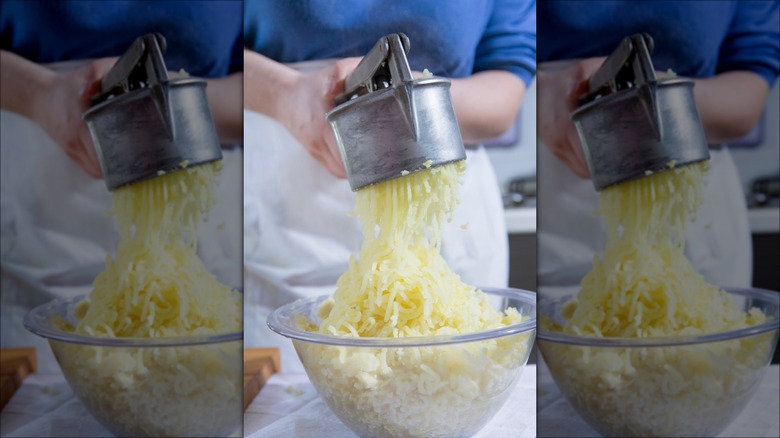
The reason a ricer works better than a mixer or masher when masking mashed potatoes is because it stops the starch from becoming overworked. Handling potatoes too much creates an undesired gluey or gummy consistency, but a ricer breaks up the potatoes in one go — rather than a masher, which requires multiple go-arounds — to keep the potatoes silky and soft. Stewart recommended the cooling step to allow excess water to evaporate, further avoiding the chance of a gluey texture. Of course, if lumpy mashed potatoes are your preferred texture, an old-school potato masher might be the way to go.
There are a few great ricers available online. Trusted brands like Oxo, Joseph Joseph, Chef'n, and Norpro come with many recommendations and cost anywhere from $20 to $77. And while it's valuable for making mashed potatoes, the ricer doesn't need to be a single-use tool. It's handy for mashing many other items, like avocados for guacamole, yolks for deviled eggs, and pumpkin for puree. You can also use it to remove excess moisture from vegetables like spinach and zucchini so they don't water down dishes, extending its use far beyond making excellent mashed potatoes.