

17 Mistakes Everyone Makes At Fancy Restaurants
A fancy restaurant is probably somewhere in your near future if you've got big dinner plans for a romantic anniversary coming up, or you just want to have a night out somewhere without paper napkins. And since it probably isn't your first time getting all gussied up and eating gourmet fare, you may think you have a pretty solid handle on how to behave. But here's the thing: There are certain mistakes you're probably making when you dine at upscale establishments.
We're all perpetual students of this thing called life, so what's the harm in another lesson or two (or, in this case, 17)? If you think about it, beefing up — sorry, had to sneak at least one food pun in somewhere — your fancy restaurant etiquette is a worthwhile endeavor. You're dropping some serious dollars to enjoy fine dining; you want it to be a seamless experience. Bonus? It's less likely you'll inadvertently offend the chef who's cooking your gourmet meal.
In that spirit, here are a few common mistakes most of us make at fancy restaurants, along with a few tips for avoiding them.
Dousing a dish in standard condiments
If you want to go to your favorite diner, order a pork chop, and bathe it in ketchup, that's your prerogative. For that matter, it's your prerogative to eat the food you want any way you want to. But let's be clear: If you go to an upscale restaurant, order a gourmet dish, and then ask for a run-of-the-mill condiment to pour all over the meal, you're going to earn the ire of the chef.
In 2017, The Independent picked the brains of top chefs to determine some of their biggest diner-related pet peeves. Not surprisingly, taking liberties with condiments or other seasonings turned out to be a repeat offender. According to Helena Puolakka, chef patron at the Savoy in Helsinki, diners should never "ask for Tabasco in a fine dining restaurant." Why? "It's just blasphemy," Puolakka insisted. Richard Bainbridge, chef and proprietor of British restaurant Benedicts, also had a proverbial bone to pick with patrons using table condiments to season their food. "The worst thing a diner can do is put salt and pepper on their food before they have even tried it," he explained. "Seasoning is individual to palate but they could at least give it a go first."
Bottom line? If a dish's seasoning just isn't hitting the spot for some reason, let the chef know so they can meet your expectations and their own.
Leaving your napkin on the table
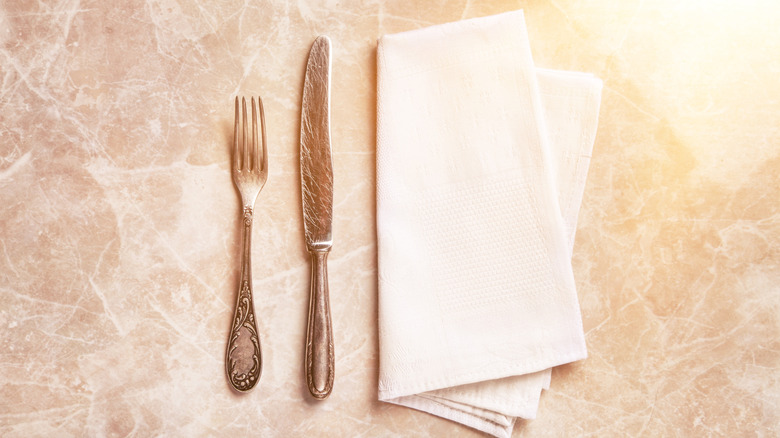
Some (read: many) of us don't even remember to grab a napkin before we sit down to eat at home or, well, anywhere else. So, figuring out what to do with the fancy linen napkin at a fine dining restaurant can be surprisingly perplexing. "Most people don't have a clue about napkin etiquette, except when someone at the table blows his nose in a napkin. Everyone knows that's rude (except for the person doing it)," etiquette expert Jacqueline Whitmore told Forbes in 2013. But spoiler alert — napkin etiquette is a thing, and you're probably defying at least one or two tenets of it.
For starters, there's one non-negotiable. "The basic rule: put it in your lap and don't leave it on the table," Whitmore said. There's even a specific way you're supposed to arrange your napkin when you place it in your lap. "A large napkin is folded in half with the fold facing the waistline, while a smaller napkin is opened completely. In upscale restaurants, a server may drape the napkin on your lap," elaborated Whitmore. If you need to excuse yourself for any reason during the meal, the rule about not leaving your napkin on the table still stands. "If you leave the table during a meal, place your napkin, loosely folded, on the seat of your chair," Whitmore added.
Putting your elbows on the table
Who among us can say we've never been guilty of this fine dining faux pas? You're enjoying a nice meal, you get lost in conversation, and, before you know it, you're leaning in with your elbows atop the table. Still, just because we all do it doesn't mean it's considered entirely acceptable.
In fact, Maralee McKee — a modern manners and etiquette expert — says that although etiquette softens over time, some situations always call for the customary rule to be observed. "Manners aren't set in stone; they're written in sand. They evolved with the times to meet our needs and sensibilities. We're less formal now than back in our grandmother's time," McKee says on her website, The Etiquette School of America. Still, putting anything on the table that's not used for eating is frowned upon. She added, "Plus, when your elbows are off the table, you're sitting up straighter. Research has shown again and again that the taller you sit (or stand), the more people pay attention to you and place additional authority and value into what you're saying."
There are other practical reasons to keep those elbows by your side, too. Think about it; if you're leaning so far into a conversation that your elbows are on the table, it'll make it that much more likely that you'll knock something over — another serious no-no in a fine dining setting.
Not consuming soup properly
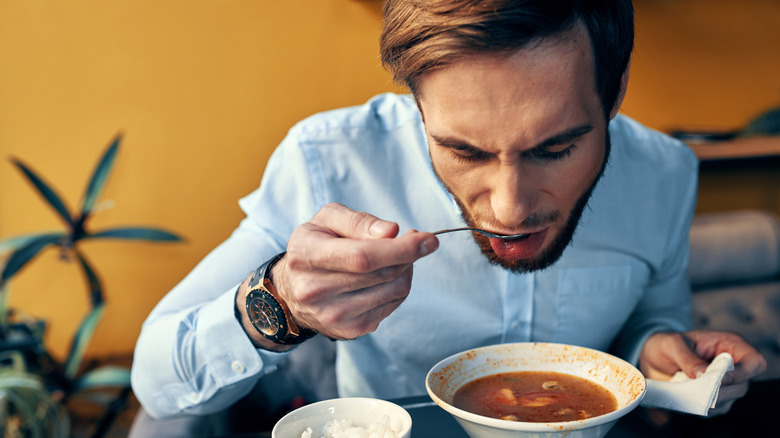
When you're hungry and a server sets down heaven in a bowl in front of you, it's totally understandable if you get a little overzealous in eating it. You want to eat it and you want to eat it ASAP, so, of course, you're going to blow on it if it's hot. And sure, you might accidentally make a slurping noise when you're trying to get every lost drop. However, etiquette experts have plenty of advice on how to avoid doing those things when you're out to eat at an upscale restaurant.
As far as slurping goes, the Etiquette Scholar blog points toward mastering the proper technique. "Hold the soup spoon by resting the end of the handle on your middle finger, with your thumb on top. Dip the spoon sideways into the soup at the near edge of the bowl, then skim from the front of the bowl to the back. Sip from the side of the spoon, avoid improper table manners and do not slurp," the blog reads, underscoring that one should never put the bowl to their mouth. "To retrieve the last spoonful of soup, slightly tip the bowl away from you and spoon in a way that works best." Proper soup-eating etiquette doesn't end when the soup does, though. When the last drop is gone, make sure you don't set your spoon down on the table — it should be placed inside of your now-empty bowl, per Fine Dining Lovers.
Using the wrong fork (or spoon)
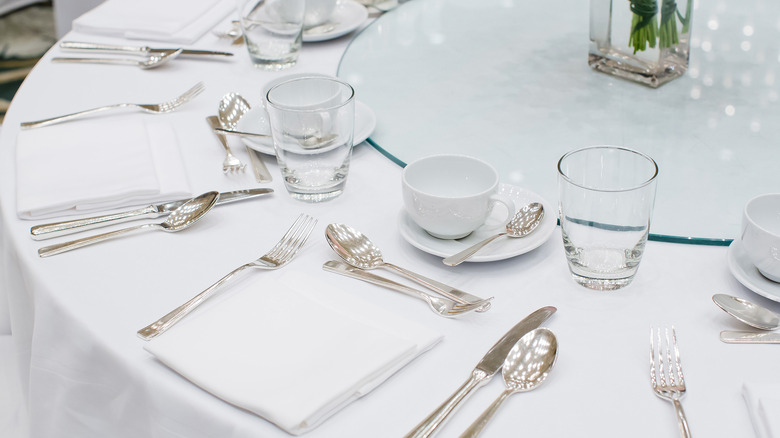
Oh, those pesky rules of silverware! Are they really that important? Well, they are when you're at a fine dining establishment. Fancy restaurants do go through all the trouble of setting out the whole array of utensils, after all. If you've never really been confident in your ability to navigate a formal place setting, have no fear — all you need to do is remember a few key components.
The easiest rule to remember? "Use the silverware farthest from your plate first," reads a post on What's Cooking America. The post noted, "Starting with the knife, fork, or spoon that is farthest from your plate, work your way in, using one utensil for each course." Basically, that means your salad fork will be the one on your outermost left, with the dinner fork next to it. On the outermost right is your soup spoon, preceded by your teaspoon and then, closest to the plate, your dinner knife.
Then there's the matter of what to do with your silverware when you're done. Inexplicably, it seems somehow logical to place silverware in the shape of an "X" on your plate. However, you should actually leave your fork and knife on the plate parallel to each other in the 4:20 position, as on a clock. This indicates that you've finished eating.
Canceling reservations at the last minute — or just not showing up
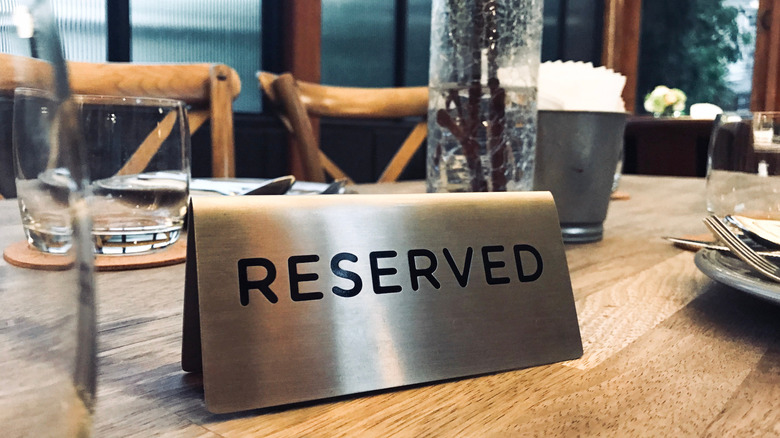
It might not seem like a huge deal to cancel on or ghost the restaurant at which you have reservations. And, yes, sometimes life happens, and skipping out is unavoidable. Still, you should always give the restaurant a heads up in the event that something prevents you from keeping your allotted dining time.
Michael Voltaggio, a celebrity chef and restaurateur, partnered with OpenTable (via PR Newswire) on an initiative explaining why being a no-show is such a no-no: "It might seem harmless to bail on a reservation, but if you can't make it, letting us know ahead of time makes a world of difference." He explained, "If we're constantly working to address no-shows on a daily basis, our business suffers. That's why we're asking diners to book responsibly."
What diners take for granted is all of the work that goes on behind the scenes to prepare for patrons at a restaurant, not to mention the financial impact that comes from restaurants being left unable to fill an empty table at the last minute.
Ignoring the dress code
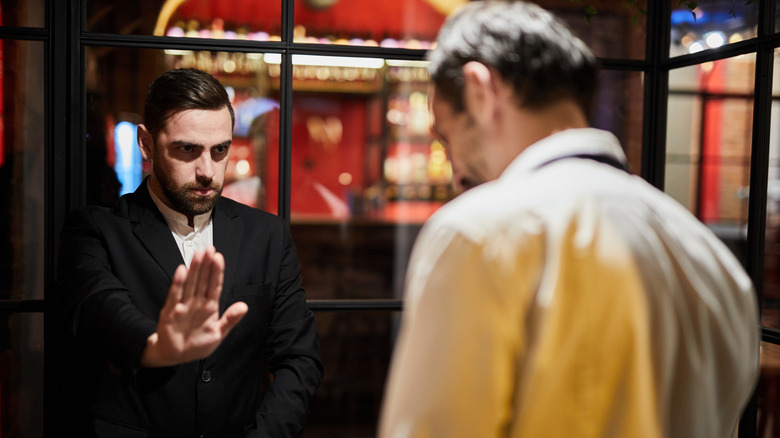
Although there is some flexibility here depending on the restaurant you're dining at, if a restaurant states the dress code is formal, it's disrespectful for guests not to follow it. John Winterman, owner of Brooklyn's Francie, told Town & Country of dressing up for dinner according to a restaurant's dress code, "I break it down into self-respect and respect for others." Winterman also noted an unspoken reason restaurants still institute dress codes, saying, "If someone comes in making an effort and looking fabulous and glamorous, and they know they're in for a premium experience at a premium price, you give them a fabulous table in the middle of the room. And people react to that, when they see a crowd that's well-dressed and beautiful and sparkling."
And while there are certainly fine dining restaurants that have evolved to accommodate a more business casual crowd, Winterman — in a separate interview with Forbes — pointed out that dress codes aren't going away entirely. "There are examples in almost every major city of establishments that adhere to at least some dress code tradition — requiring [dress] pants, for example, or banning baseball caps," he said, adding that formal dress codes aren't relegated to major culinary hubs like New York City. "New Orleans, Dallas, Savannah all have venerable institutions that demand proper attire. Tradition often carries respect."
Calling out to your waiter
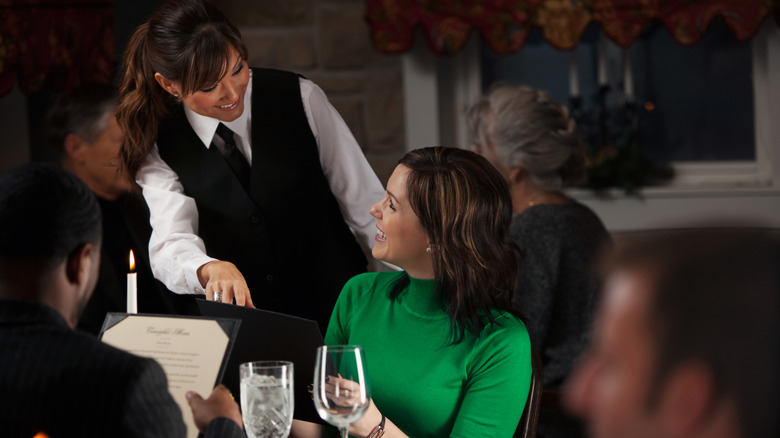
If you're at a boisterous family-style buffet where you can't communicate without hollering out, go for it. But if you're at a fancy restaurant, there's a more suitable way to summon your server. Hint: It does not involve yelling across the room. "You should use eye contact or put up your index finger of your right hand, ever so slightly," Patricia Napier-Fitzpatrick, founder and president of The Etiquette School of New York, told BestLife in 2018. "The person hosting the meal is the one responsible for getting the attention of the waiter so that they can order. If his clients or anyone he's entertaining isn't happy with their food, he's responsible for getting the waiter to come over and change it."
In general, you should strive to keep the volume of your voice at a lower decibel level when in a fine dining situation. Or, as lifestyle expert Maura Sweeney told BestLife, "Don't rattle the carefully created, understated atmosphere of quiet cultivated by the proprietors."
So, what do you do if you're in a fancy restaurant and, assuming you're hosting, need to summon your waiter? According to the blog The Waitress Confessions, you have several acceptable options. For starters, try raising your hand. However, this will work best if your waiter is actively walking the floor and is in tune with your table. To help with the latter, try to be a memorable table by learning your waiter's name and always treating them with respect.
Noshing bread the wrong way
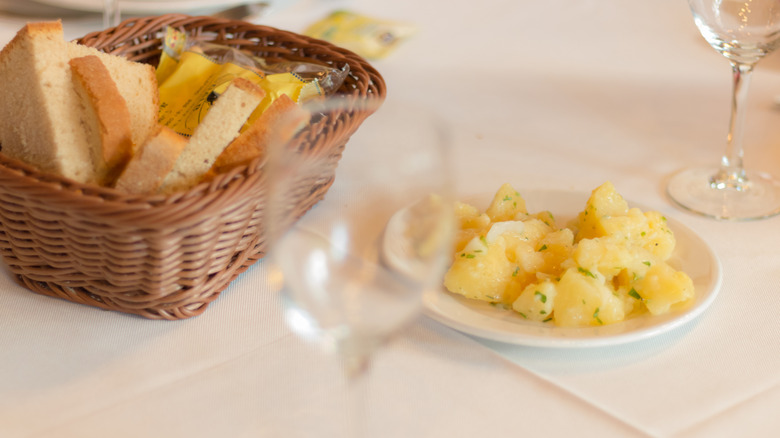
Who doesn't love it when fresh bread is brought to the table before a meal? This feels especially true at upscale restaurants, where the bread is often artisanal — think a thick, slightly chewy crust covering a light, airy, warm center. Yum. It's no small wonder that most people cut off (or, let's be real, tear apart) a big chunk of bread, generously butter it, and then store the piece on their bread plates between bites.
But that's not proper bread etiquette. Instead, you should use a butter knife to place a pat of butter from your butter dish on your bread plate. Then you tear off and butter individual pieces of bread as you go along.
The reason is surprisingly simple: In formal dining, it's customary to eat any food you bring to your mouth at once. Therefore, you want to keep whatever you bring to your mouth small enough to be manageable. Plus, doing this with bread ensures you always have just the right amount of butter without potentially adding your germs to the communal butter dish by re-buttering.
Pre-bussing your own table
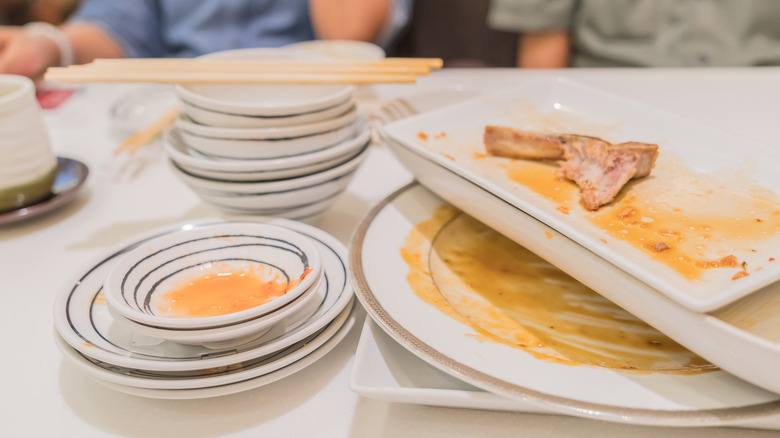
It's said the path to hell is paved with good intentions, and proprietors of fine dining might just be inclined to agree. Apparently, diners are always doing things in an attempt to be helpful or polite — but which can actually be a nightmare for restaurant staff. Need an example? Pre-bussing your own table. Your table is finished eating, and you'll be leaving soon, so you decide to help out by corralling all of your dishes, utensils, and napkins.
But according to Suzanne Perry, co-owner of Datz Restaurant Group, you'd do better to leave your table as it is. It's a nice thought, Perry told Food & Wine (via Yahoo), but "handing a server a stack of plates, layered with food and silverware that isn't balanced — and plopping a wad of napkins on top — is a little insulting and messier than it really needs to be."
Besides, you may not realize it, but servers have a system that enables them to be more efficient in keeping tables clear. "I might want to stack three entrée plates on my arm and then put other small plates and silverware on top of that," explained one Redditor, as reported by Fox News. "If everyone stacks things, I can only bus two people's plates. If I stack, I can get many more."
Talking with food in your mouth
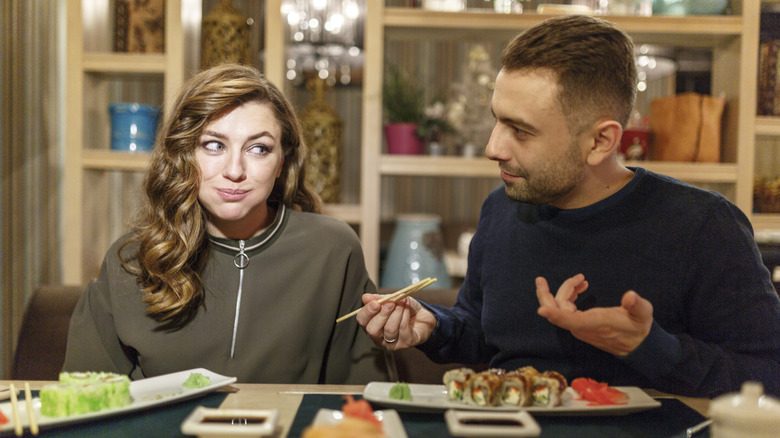
In casual dining situations, jumping into the conversation when you still have a bite of food in your mouth is more of a pet peeve for many people than it is a taboo. After all, it's not likely anyone is going to take you to task for talking with food in your mouth at a backyard BBQ. But if you're at an upscale eatery, that same behavior will definitely be considered poor form.
In an interview with HuffPost, Patricia Napier-Fitzpatrick — founder and president of The Etiquette School of New York — singled out that unrefined habit. "There are a number of 'sins,' but I suppose the worst would be talking with food in your mouth," she said. Interestingly, correcting someone for doing just that is also improper etiquette. "It is considered rude to correct or embarrass someone in front of other people," she added.
If you're out to eat at an upscale restaurant and someone asks you a question, just remember this tip from Napier-Fitzpatrick. "If someone asks you a question when you have just taken a bite, the best thing to do is simply raise your finger as in 'just a minute' to let them know you will answer their question as soon as you have finished chewing and swallowed the bite of food," she said.
Making a big deal out of the bill
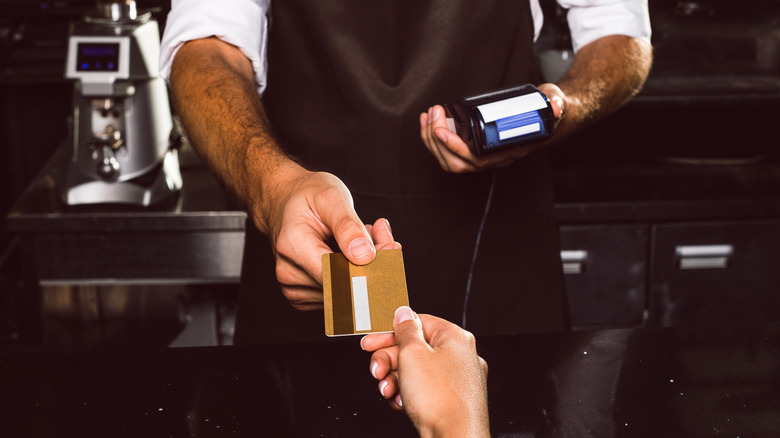
Paying the bill at a fancy restaurant should be a non-event. The most favored way to do this is to give your card to the maître-d' at the start of the meal and inform them you'll sign the check on the way out, per BestLife. There are other ways to handle the bill discreetly, though. Jonathan Cook, a Quora commenter with over a decade of experience as a fine dining server, suggests one alternative. "Rather than the 'pretend to go to the bathroom and hand your card to the waiter approach,' I recommend calling ahead of time and putting your credit card on file with the restaurant," Cook wrote in a 2018 Quora thread.
When you visit a fine dining establishment with a group and you don't drop your card off at the beginning, your server will bring the bill to your table. So, if you don't want paying the bill to be a distraction, make it clear you are the host. "In a fine dining environment, when a server delivers the bill to a table, he or she will either place it nearest the host or hand it directly to him/her if the host reaches out for it, or place the bill in the center of the table if the host is not clearly certain (for example, if more than one person orders wine or food for the table as a whole)," KQED writer Michael Procopio shared in 2009.
Splitting the check multiple ways
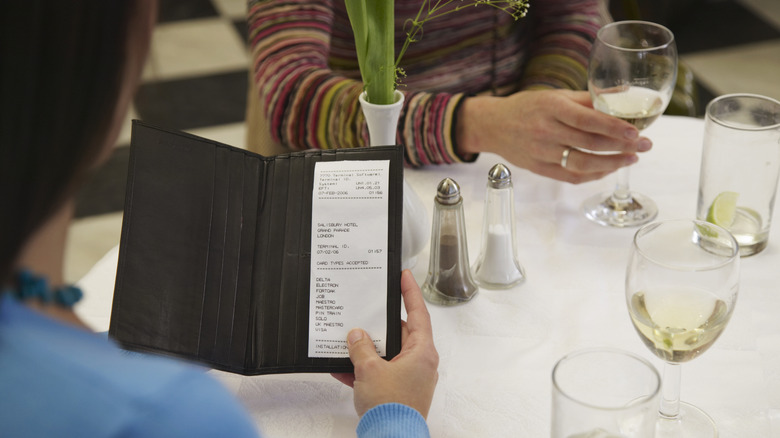
Fighting over who will pay the bill is mildly acceptable at a fine dining restaurant, and it's almost expected depending on who is sitting at the table. Splitting the check is a different story, though. It's one thing if you need the check split down the middle or request to split the check two ways; that's usually not an issue. However, don't ask your server to split appetizers between four checks. Not only does it take a lot of time, but it can also come off as the customer being purposely difficult.
Some restaurants actually have an explicit rule that they will not split the cost of items, and some have a limit on how much you can separate a check. If you're splurging, make sure everyone in your party knows the plan and the restaurant has the capability to split your check before someone gets hit with the whole bill. If possible, an easier alternative is for one customer to cover the bill, then everyone calculates how much they owe that person once they've left the restaurant. That way, you pay for what you ordered without getting the server involved in your post-meal math problems.
Not silencing your phone
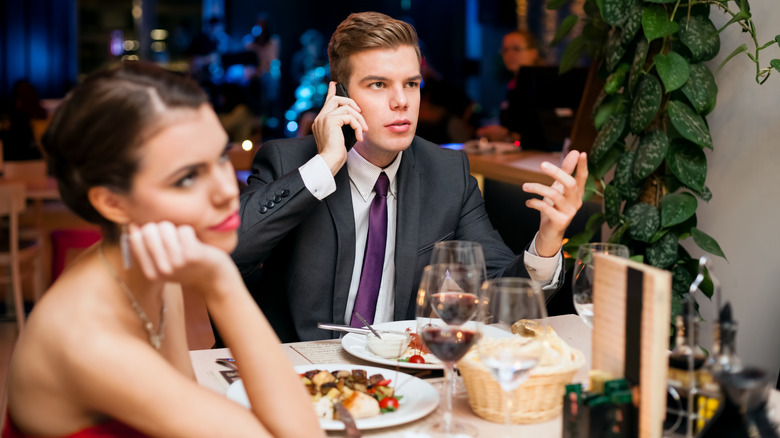
The business mogul who can't turn off their phone, even for a nice dinner out, is a cliché as old as cell phones themselves. It's becoming quite outdated, as one of the greatest luxuries in life is being able to go off-grid for an evening and really enjoy yourself. While there will inevitably still be those people who answer their phones at a nice restaurant, it's really an unspoken rule that the phones remain away when dining out at pretty much any restaurant.
No one wants to dine with someone who is attached to their phone, especially if you're splashing out at a fancy restaurant. The other diners are paying a pretty penny for a nice, peaceful meal. There's nothing like that overly familiar sound of the marimba ringtone to sour the vibes of a classy establishment. Imagine that there's a proposal happening two tables over, and the highly anticipated answer is interrupted with the same sound to which the potential bride-to-be wakes up every day. Not so romantic.
Being ignorant of wine etiquette
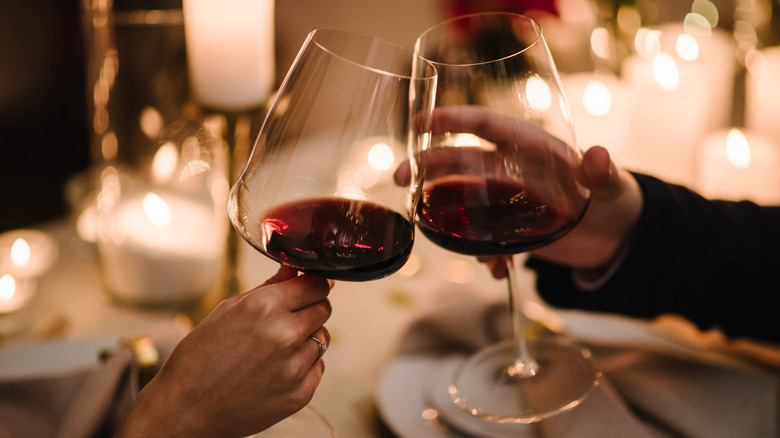
Wine and fancy restaurants typically go hand in hand. If you're dining with others, it's not uncommon to share a bottle of wine. The head honcho of the table is typically the one who orders the wine, and if you're trying to be that person, you should know what you're doing. There's actually quite a lot that goes into wine service at a fancy restaurant. Your server will handle most of it, but there are a few things you should know if you want to look experienced (and to keep within your budget).
The person who ordered the wine will typically be the one offered the first taste and expected to approve the server pouring the glasses for everyone else at the table. This means your server should present you with your sample first, then fill everyone else's glass. A good server will ensure that the bottle is shared among everyone, even if that means each person doesn't receive a full serving of wine. They'll often top off your glass last, and, when the bottle is empty, ask if you'd like to order another. One of your responsibilities as the table's wine taster is to determine whether or not the wine is spoiled, which can happen.
Ordering the wrong drink
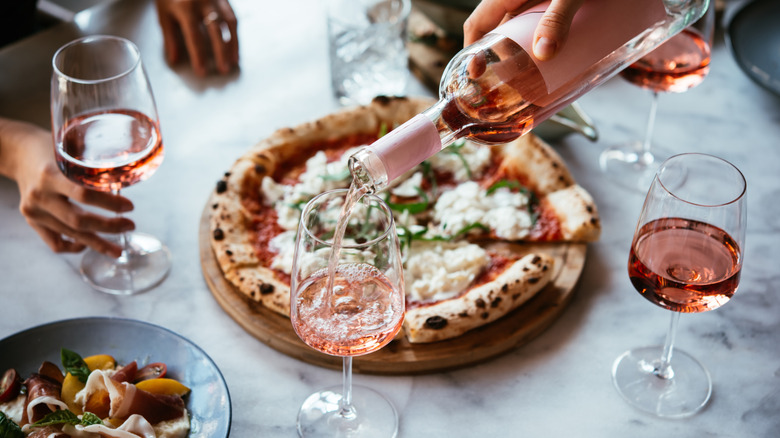
If you're shelling out money at a fine dining restaurant, you may want to elevate the experience with your beverage of choice. Paying for a nice, juicy steak prepared by a trained chef is arguably wasted on someone who chases it with a glass of milk. After all, some things just shouldn't be served with steak.
Just as some beverages can ruin a meal, others can take it to a whole new level. Certain foods just pair well with certain drinks, and finding the right match can make or break an experience at a fancy restaurant. For example, white wine goes well with fish and chicken, and red wine pairs nicely with bolder flavors, like red meat and rich greens. Beer famously goes well with burgers, but the family of beer is extensive, and specific pairings can be kind of tricky. A lamb burger with goat cheese may go well with an amber ale, while an IPA will pair well with rich, fatty foods. The world of food and drink pairings is vast, but it can be rewarding for your inner foodie.
Not taking advantage of your server's knowledge
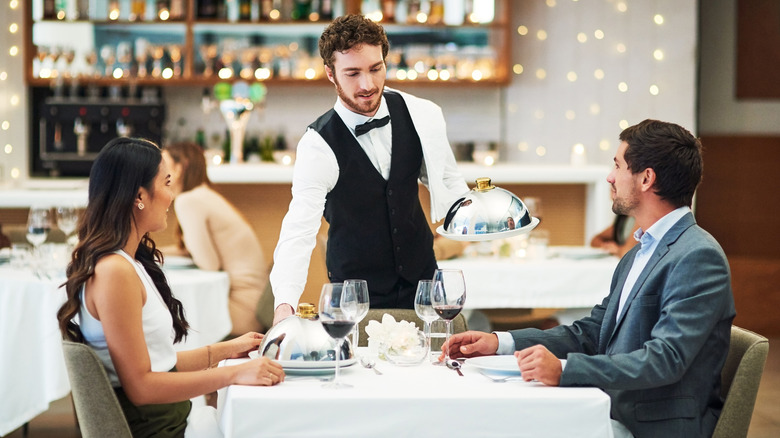
Servers who work in fine dining are typically very well trained. Not only do they study and taste test the menu, but they are often trained by brewery representatives and sommeliers. They're given this training to help answer any questions the guest may have, and it's a wasted opportunity to order blindly off a well-curated menu. Ask questions, even if it's just what the server would recommend. They know what pairs well and how certain flavors do or do not blend, so let them know what you like, and they'll hook you up.
I've spent a lot of time working in fine dining restaurants as a server, as well as at a platinum country club. A good fine dining restaurant will have a chef who understands that servers are an extension of the back of house and provides them with training on every meal on the menu. Fine dining servers should know the menu and specials, right down to the ingredient that gives the sauce its subtle flavors and where the tomatoes on the salad were grown.
With that being said, the majority of guests order off gut instinct or stick to what they are comfortable with. Branching out or asking your server to drop some knowledge could completely change your experience for the better.