

Mistakes Everyone Makes With Snickerdoodle Cookies
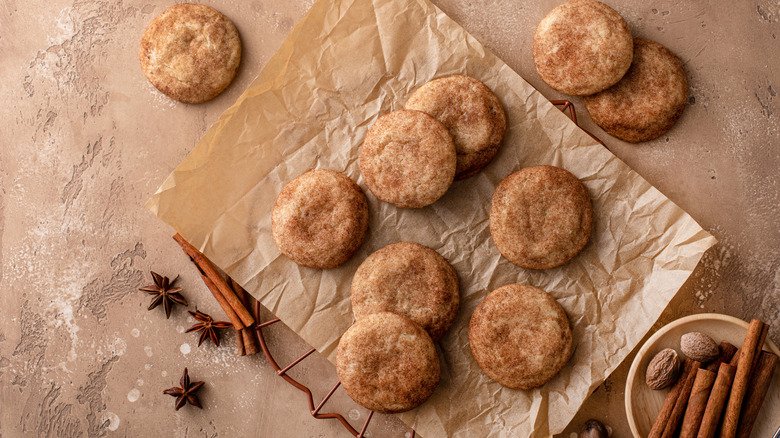
If you're wondering why your snickerdoodles aren't up to scratch, you're not alone. You might think they're easy to nail, but that's not always the case. There are some common mistakes people make with snickerdoodle cookies that might be standing between you and the perfect cinnamon-spiced morsel. Luckily, once you know what you're doing wrong, it's easy to fix it.
Although snickerdoodles are classic holiday cookies — perhaps because of the cinnamon — they're also popular throughout the year, so it's never the wrong time to make them. You might not know that, around the turn of the 20th century, they used to have raisins in them. Today, adding raisins would be a big error. Instead, what you're looking for is a simple soft and chewy vanilla cookie with a crackly cinnamon sugar coating.
It sounds simple but even the best bakers mess up a snickerdoodle cookies recipe now and then. In fact, it's because they're so straightforward that there's nowhere to hide. You can't make up for any shortfall with gooey caramel or melty chunks of chocolate. So, learn about the common snickerdoodle missteps and you'll soon be making the best ones on the block.
Skipping cream of tartar in snickerdoodle cookies
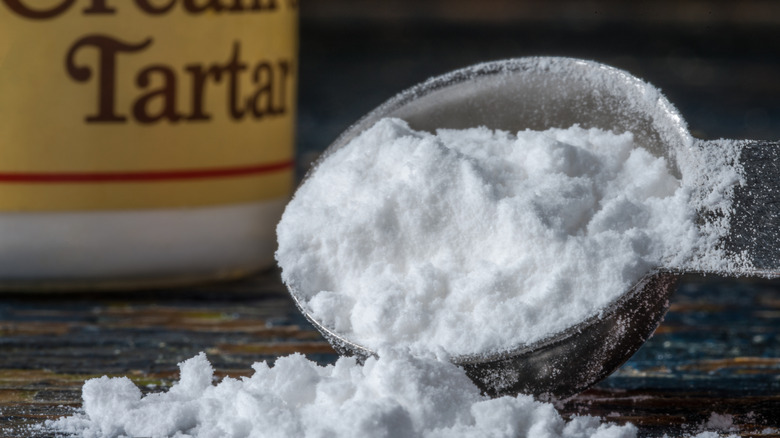
It's common for bakers to look at a snickerdoodle recipe, see cream of tartar on the ingredient list, and balk. You might wonder what cream of tartar is and if you really need it in your snickerdoodle recipe. As one of the less common leavening agents, it's not necessarily something that everyone has in their pantry. Folks are more likely to have baking powder or baking soda, but skipping cream of tartar and using these instead is a mistake.
It might seem like all raising agents are interchangeable, and we get that. But it's not as simple as that. Cream of tartar and baking soda are used together to create a chemical reaction that causes the cookie to rise. And, while you could use baking powder in other recipes to get a similar effect, cream of tartar is essential in snickerdoodles.
First of all, snickerdoodles aren't just regular sugar cookies covered in cinnamon sugar. They have a signature tang that's brought to you by the cream of tartar. Without this slight tangy flavor, you've still got a tasty cookie, but it isn't a snickerdoodle. It also gives the cookies a large initial rise followed by a fall that causes the crinkled surface. Plus, it contributes to the softness of the cookie and the slight chew. So, cream of tartar is not optional, and if you skip it, you'll notice the difference.
Using a flour that's too high in protein

One of the hallmarks of a great snickerdoodle is that soft, ever-so-slightly chewy texture. If yours are coming out tough, dry, or very chewy, you might be wondering what you're doing wrong. Assuming you're following a reliable recipe (so you know all the ingredient quantities are correct), the culprit might be using a flour that's too high in protein.
The protein content in flour is the amount of gluten it contains. Any keen baker knows that gluten is what gives baked goods their structure. But, when too much gluten forms, it can make bakes tough or dry. You might think that following the recipe and using all-purpose flour will give you the same results every time. However, the protein content of AP flour can vary widely.
Depending on who you ask, it can range anywhere from 8 to 12%. And you're going to get quite different results from an 8% protein flour and a 12% protein flour. We'd recommend avoiding anything of 11% and up, as this veers into bread flour territory. It might be fine for some cake and cookie recipes, but it will make your snickerdoodles too tough.
Getting the cinnamon sugar ratio wrong
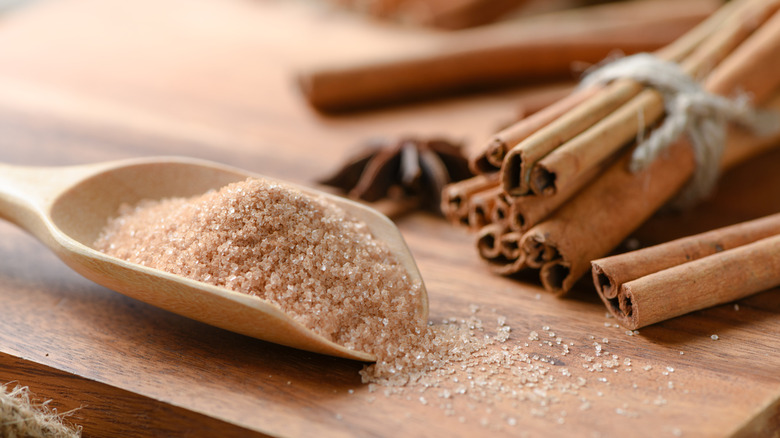
Cinnamon is the major draw of snickerdoodle cookies. So, if you get the cinnamon sugar ratio wrong, it's a big deal. Too much cinnamon and they can be unpleasantly spicy. Too little and they'll end up overly sweet without that fragrant cinnamon warmth. Everyone's golden ratio of cinnamon sugar can be different, though, which makes it tricky.
A cinnamon to sugar ratio of 1:4 generally gives you a good balance of sweet and spicy. However, it's worth experimenting with the ratio if you aren't happy, as it can be subjective. Some people like loads of cinnamon, so a ratio of 1:3 might give you the results you're looking for. On the other hand, anyone who likes mild flavors may prefer to use a 1:5 or 1:6 ratio. Don't be afraid to take initiative and make tweaks to your go-to recipe to make it more to your taste. While making big changes can affect the outcome in ways you don't want, you should always consider recipes as templates with some room for maneuver and customization.
It's also worth considering how fresh your cinnamon is. If you only just broke the seal, you might need to use less, whereas a jar that's been open for a while will have lost some of its potency, so you'll need to use more to get the same effect.
Not considering grating cinnamon for snickerdoodles

If you want to make your snickerdoodles extra special, you might want to consider grating the cinnamon rather than just using the ground stuff. This adds depth and complexity that you don't get from ground cinnamon alone and can elevate your cookies. While there's nothing wrong with using ground cinnamon — it's the most common choice — if you really want to up your game, you should consider grating it.
But, how exactly do you grate cinnamon? It's as simple as taking a cassia cinnamon stick and grating it on a microplane grater or zester. And, if you're wondering why, it's all in the flavor. As soon as spices are ground, they start to lose some of their flavor and aroma. This means you get a much richer, punchier cinnamon flavor from freshly grated sticks.
Using grated cinnamon alone, however, might be a bit much. Use roughly half the quantity of grated cinnamon to ground, by volume. If your recipe calls for three teaspoons of cinnamon, perhaps use two of ground and one of grated.
Not experimenting with other spices
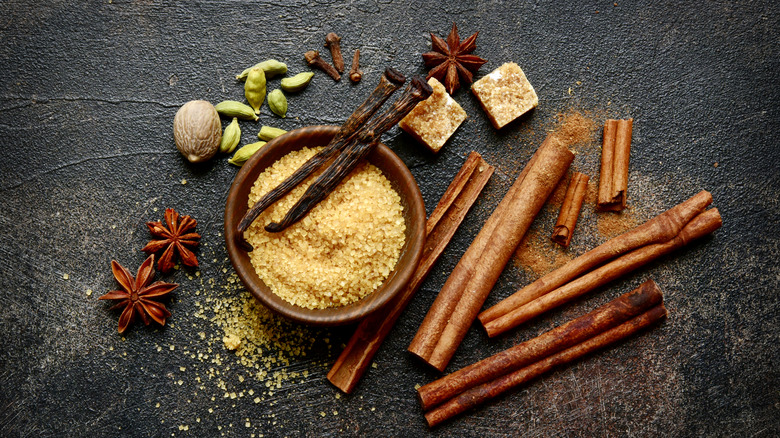
Normally, snickerdoodle cookies have a coating of cinnamon sugar and nothing else. But, always sticking to tradition is a mistake. If people didn't tweak and innovate dishes, we'd all still be eating grain porridges and foraged berries. If you've never experimented with other spices in your snickerdoodles, you're missing out. There's absolutely still a place for the classic cinnamon version, but when you branch out, you might find something new to love.
Chai spice snickerdoodles are a great place to start. They use a blend of spices usually found in chai, such as cinnamon, ginger, cloves, and cardamom. You could also use pumpkin spice or mixed spice. Basically any blend of sweet spices, as opposed to hot ones or those usually used in savory dishes. And, if you're wondering the difference between mixed spice and pumpkin pie spice, pumpkin spice is usually cinnamon heavy (which can work well for snickerdoodles), while mixed spice may contain spices that are a bit more on the savory side, like coriander seed. However, they blend in well alongside the other sweet spices.
While there is a classic way of making snickerdoodles, there's no objective right or wrong here. You can play with spices however you like. Use just cardamon. Blend your favorite spices and leave out the ones you don't like as much. Add a kick with a pinch of cayenne. These are your cookies and you can make them just how you like them.
Failing to chill the dough
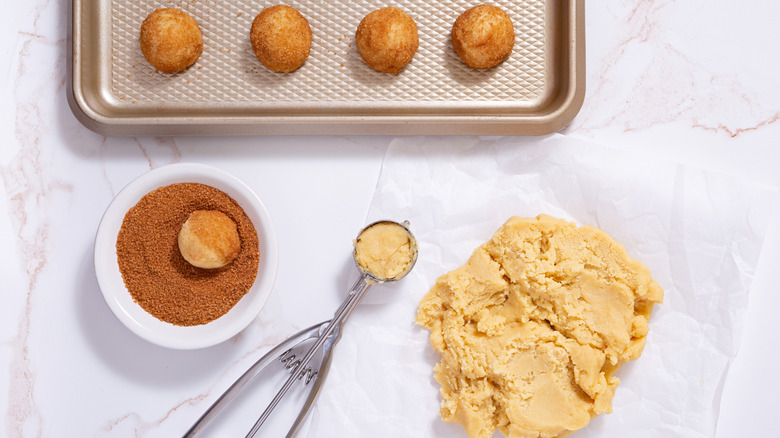
To chill, or not to chill. This is the question that haunts a lot of bakers when making snickerdoodles. While general advice says it's a good idea to chill cookie dough to keep it from spreading too much in the oven, many snickerdoodle recipes don't have a chilling step. This can leave people wondering whether to trust their judgement and prior knowledge or to follow the recipe exactly.
Well, results vary, but even when no chill time is stated in the recipe, some people find their snickerdoodles benefit from a little while in the refrigerator. It doesn't have to be long. Celebrity chef Duff Goldman suggests chilling snickerdoodle dough, noting even just 15 minutes in the fridge can keep them from spreading too much and coming out flat. But, don't assume that your recipe is gospel.
It can depend on your preferences and how your cookies have turned out in the past. If you've never chilled your dough and you're perfectly happy with the texture, keep doing what you're doing. But, if your snickerdoodles come out overly flat, tough, or crunchy, give the dough a chill before baking it. This can particularly make a difference on a hot day or in a warm kitchen, as the cookie dough ends up warmer than it would in a cold environment.
Getting an uneven coverage of cinnamon sugar
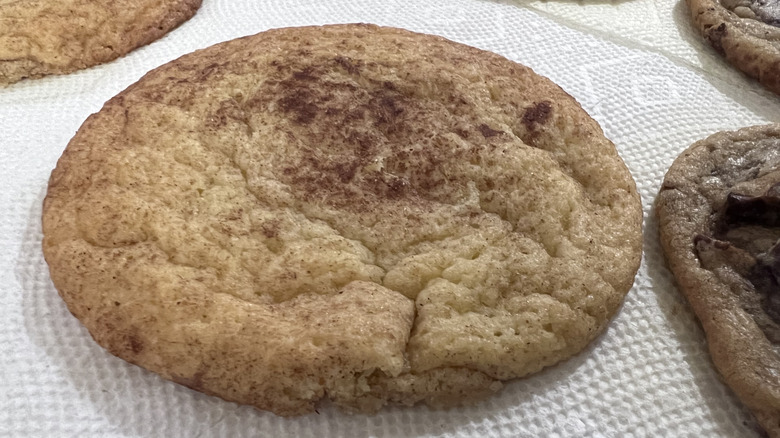
The best part about snickerdoodles is that crackly coating of cinnamon sugar. Without this, you've just got a plain vanilla cookie, which is nice but not all that exciting. If your cookies get a patchy, uneven coating of cinnamon sugar, they're just not the same.
An uneven coating is often down to technique. Once you've got the method down, getting a good coating is easy. Start out by readying a plate or shallow bowl filled with cinnamon sugar. If you use a small container or a high-sided bowl, it'll be much trickier. Then, get a scoop of dough and roll it into a ball between your palms. Once you have a ball of dough, roll it in the cinnamon sugar until it's evenly coated all over. This gives you a full coating of cinnamon sugar on top and on the underside.
If the best part of snickerdoodles is the cinnamon, once you've shaped your cookies, give them an extra sprinkle before baking. This will give you a slightly thicker layer on top to help you get that iconic crackle.
Flattening the balls of snickerdoodle dough too much or too little
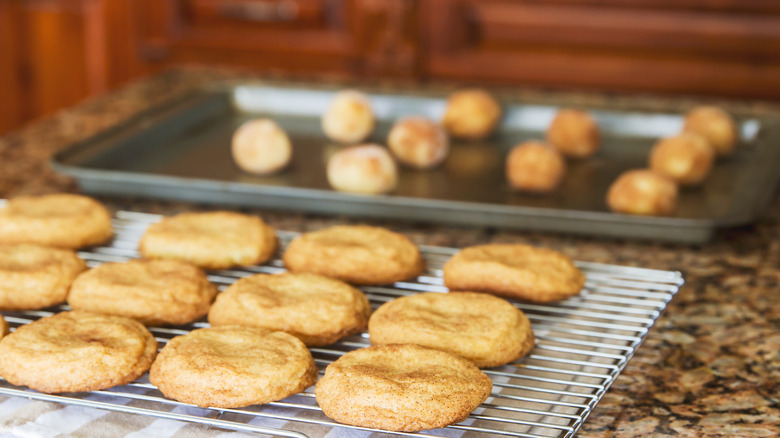
There's a Goldilocks zone for shaping snickerdoodles. You shouldn't flatten them too much or too little, you need to get it just right. Pressing your balls of cookie dough down too flat will cause them to spread too much and come out thin. Leaving them unflattened means you won't get the same crackle and they may come out too doughy in the middle.
Once you've rolled the cookie dough into balls and covered it in cinnamon sugar, put the dough on your lined baking tray and press it down to roughly ½ inch thick. If you like particularly puffy snickerdoodles, you can get away with a little thicker, up to around ¾ inch, but any thinner will leave you with too-flat cookies.
Some people press the cookies down with a fork to get that iconic criss-cross pattern, or make an indent with their thumb. Others use the bottom of a clean drinking glass for a more even effect. But, whatever you use, it creates slight fissures around the edges of the cookie, which adds to the classic snickerdoodle appearance. Making the surface flat (rather than leaving the dough in balls) gives you the opportunity to add more cinnamon sugar for that signature crackle.
Using a hot cookie sheet
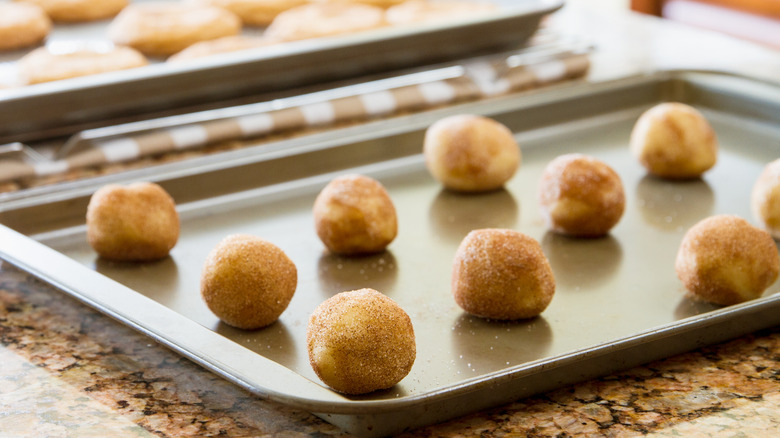
When you're baking a lot of cookies, you'll usually end up putting several batches into the oven, since it's a bad idea to crowd the tray unless you want to make one big snickerdoodle. This means you might take a hot tray out of the oven, remove the just-baked cookies, and use it again right away. However, putting your snickerdoodle dough on a hot cookie sheet can impact the outcome.
Naturally, a hot baking sheet will heat up your cookie dough. This gives the opposite effect to chilling your dough: It makes it spread more and gives you flatter cookies. So, all the other hard work you've done to get puffier, softer dough will be reversed and they may come out tough or overly chewy.
Ideally, you should have a couple of cookie sheets on the go. When one's in the other, you can load the cool one up with dough, so your next batch is ready to go right away. And, while the next batch bakes, the hot tray will cool down so you can use it again. Don't attempt to run hot cookie sheets under cold water to cool them off, as this can cause the metal to warp.
Baking snickerdoodles at too high a temperature

Naturally, you don't want to put your snickerdoodles in a raging hot oven that will cause the outside to burn before the inside cooks. That's just common sense. But, beyond that, the temperature you bake them at can have an impact on their texture. Baking snickerdoodles at a higher temperature might give you cookies that are perfectly good but still miss the mark slightly.
For instance, baking them at 350 degrees Fahrenheit leads to softer cookies with the perfect level of chew compared to baking at 375 degrees Fahrenheit. Those baked at the higher temperature will still be good. They won't burn or overbake, but they won't be quite as good. If the recipe you're using calls for a higher temperature, don't worry. You can tweak it yourself. You don't have to follow the recipe to the letter.
The only thing to remember is that when you reduce the temperature, you also need to increase the baking time. For an average-sized cookie, add one to two minutes when baking at 350 degrees Fahrenheit rather than 375 degrees Fahrenheit.
Overbaking your snickerdoodle cookies
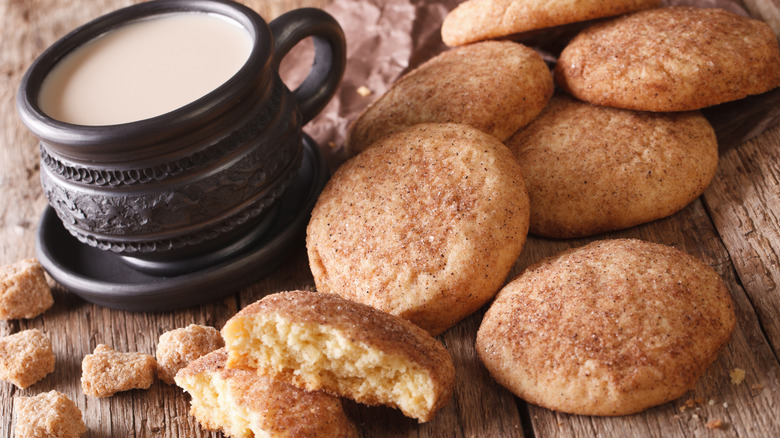
When you've spent time perfecting your recipe, it's beyond disappointing to fall at the last hurdle and overbake your cookies. Even if you don't overbake them seriously enough that they come out burned, they can still be dry, tough, or crunchy, which is not what you want from a snickerdoodle.
The secret to getting that perfect snickerdoodle texture is to intentionally underbake them slightly. In fact, this is part of how to make any cookie soft. The internal heat and the heat of the cookie sheet means that your snickerdoodles will keep baking and firming up slightly even once they're removed from the oven. So, if you remove them when they're perfectly baked, they'll actually turn out overdone.
For a standard snickerdoodle around 10 to 11 minutes is the sweet spot. This will be longer for extra-large cookies, so check the recipe for advice. When you take them out of the oven, they should look very soft and puffy. If it seems like the center is raw, don't be alarmed. Leave them to sit on the cookie sheet for around 10 minutes to help them firm up, and then transfer them to a wire rack to fully cool.
Not considering double-dipping snickerdoodles
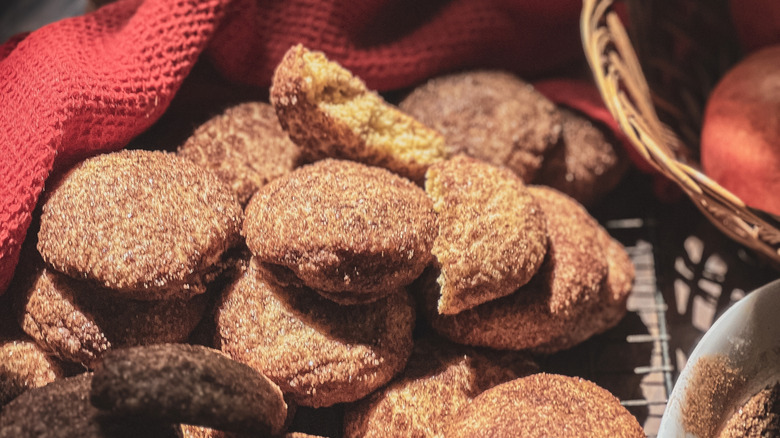
Why dip your snickerdoodles in sugar just once when you could do it twice? If you find the coating on them lacking, you might want to consider going in for a second round. It gives them more flavor and a pleasing crunch.
If you want to double-dip your snickerdoodles, coat the raw dough in sugar and bake them as usual. While the cookies are in the oven, prepare a fresh bowl of cinnamon sugar. Once baked, leave them to cool just until they're a comfortable temperature to handle and have set enough that they won't fall apart when you pick them up. Then put them in the fresh cinnamon sugar, dunking them on each side until they're coated.
This gives them a second layer of raw cinnamon sugar on top of the baked ones. Some people love this and others prefer them the regular way. But, it would be a mistake not to at least give it a try. Why not double dip a few from your next batch to see if you like it better? If not, you'll still have the rest to enjoy.