

How To Identify The Best Olive Oil At Your Grocery Store
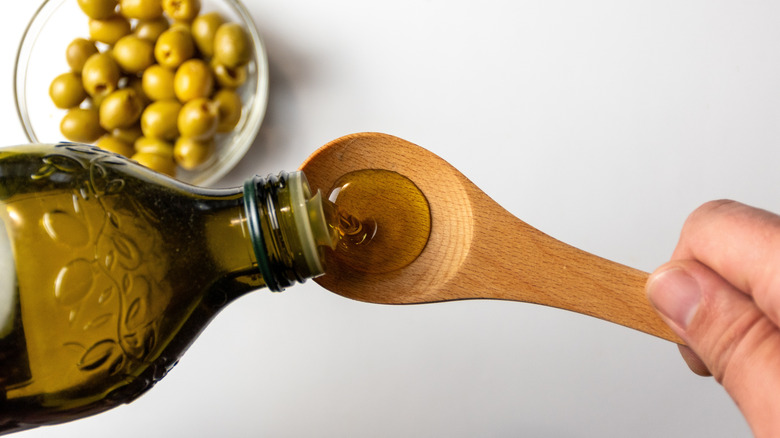
You don't have to be a connoisseur to know that olive oils run the gamut in regard to quality and flavor. If you're not sure where to start on landing a quality olive oil, we ranked 12 affordable ones from worst to best to help you out. But, if you want to be able to find the best one at any grocery store you visit, you should know that olive oil bottles have a few tells that reveal a lot about the liquid inside them.
When it comes to olive oil, the littlest details matter, from the color of the bottle to the material the bottle is made of. Not only does this affect the oil's shelf life, but the taste, too — clear plastic bottles can produce some really funky olive oil! Plus, there are keywords, such as "cold pressed" and "harvest date," which you should be well acquainted with if you want the oil with the most health benefits. If you're looking to get the most out of your olive oil in regard to flavor, find something from a specific region or opt for the cloudy, unfiltered version.
Look for a dark-colored bottle
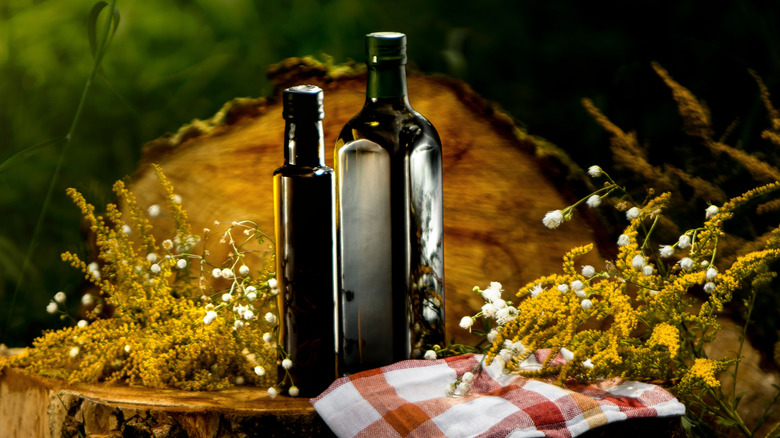
We are firm believers that you often miss out when you judge a book by its cover. But, when it comes to olive oil, we must judge the contents by the container — especially if it's clear (seriously, read this before ever buying olive oil in a clear bottle again). To understand why olive oil shouldn't be housed in a clear container, we have to dive into a little bit of chemistry. Olive oil contains chlorophyll, which is what gives it its lovely hue. However, when chlorophyll is exposed to ultraviolet and visible light, a chemical reaction called photooxidation begins to take place. This can happen when exposed to sunlight, or even the lights in the grocery store.
At the point when this chemical reaction starts to take place, important compounds in the oil — such as antioxidants, fatty acids, and vitamin E — have already begun to break down. Not only does this have a negative impact on the oil's healthful properties, it can also produce some rather unsavory flavors and act as a catalyst for spoilage. This is particularly true in the case of non-refined oils. Darker-colored bottles keep the light from affecting the oil at such a speedy rate, though don't prevent it entirely. To completely protect oil from light, a ceramic or tin container is best.
No plastic allowed
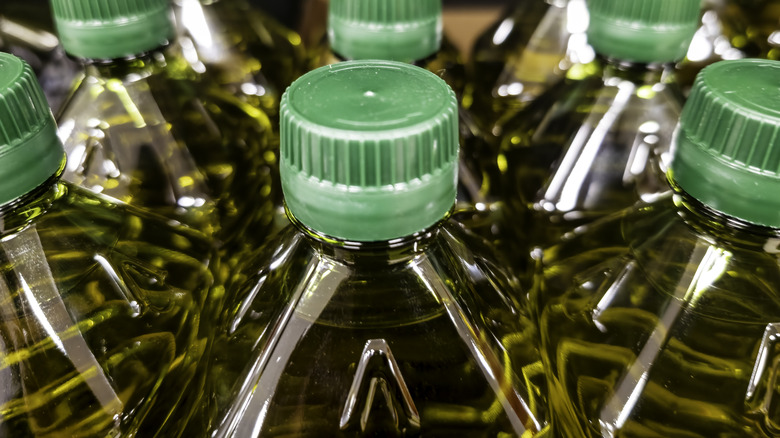
When you're on the hunt for the best olive oil, it might seem strange to immediately nix half the available options in one fell swoop. But, if it's stored in plastic, it should be an immediate no-go. See, oxidation doesn't just occur when the oil is exposed to light — it happens with oxygen, too. It may not seem like it, but plastic is permeable to air. That's especially true in regard to popularly used plastics such as high density polyethylene and polypropylene. Over time, enough oxygen can get through and do some damage to the bottle's contents. Plastic also transfers heat far easier than other materials, meaning the oil is exposed to temperature changes that can speed up the rate of oxidation.
Unfortunately, that's not all. As the oil becomes more and more oxidized, it also becomes more and more unstable. This has effects such as increasing acid levels and producing toxic byproducts such as peroxide. If that doesn't sound good to consume, you're right, but it also has consequences for the structure of the bottle. Acid and peroxide are corrosive to plastic, so as the oil sits innocently in its bottle, oxidizing by no fault of its own, it actually begins to degrade the plastic bottle, leaching chemicals and microplastics into your oil.
Single origin is important
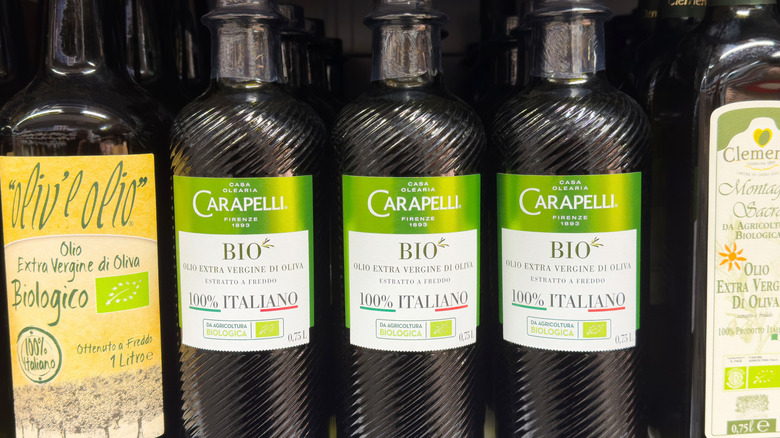
When you take a closer look at the label on your olive oil bottle, it tells you a few things about what's inside. For one, you get a rundown of where the olives originated. In some cases, it might have a combination of countries. Some companies blend oils from different places to achieve a flavor profile that can be easily reproduced. This is totally fine when you're looking for consistency over a standout olive oil experience. However, choosing an oil with a single origin lets you get a taste of one particular region's offerings. Much like wine, aspects such as climate and soil type can be deduced from the flavor of the fruit.
By tasting olive oils from different regions, you can get a better sense of what you like and don't like in an olive oil, and tailor your choices to your tastes. Not only that, but it feels pretty good to know exactly where you food comes from — especially when you find a producer you feel you can trust. That said, the single origin label can be equated to the free range label on eggs in the sense that it's largely unregulated. It doesn't necessarily mean you're getting olive oil from one farm or even one distinct region; it may just say product of Italy, or product of Spain, for example.
Cold-pressed or bust
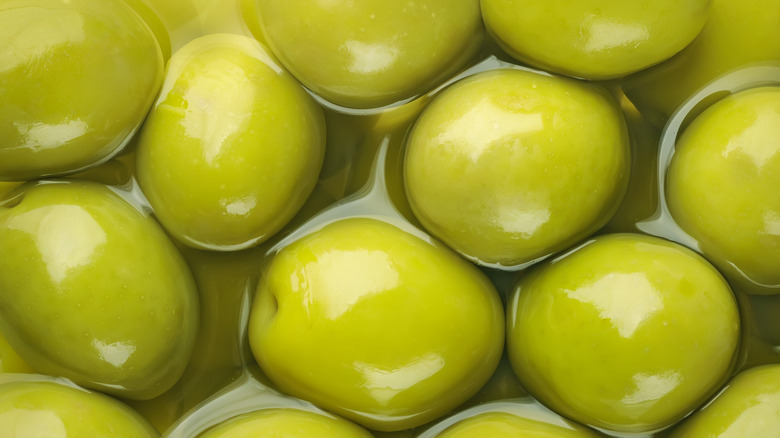
Olive oil has its own vernacular in the same way wine does. If you want to be an informed buyer, there are a few key terms you need to know. One important term to look for when buying a quality olive oil is "cold pressed," which means the oil is pulled from olives via maceration rather than heat or chemical extraction. Keeping the temperature below 81 degrees Fahrenheit during this process keeps the flavor and olives' many health benefits intact.
When you opt for cold-pressed olive oil instead of refined, which is treated with heat or chemicals to remove impurities, you're left with a much healthier oil. Cold-pressed oil tends to be loaded with healthy fats, antioxidants, and vitamins E and K. Prominently featured in the Mediterranean diet, some studies indicate it can improve heart health and contribute to healthy brain function. If you really want to take things a step further, find an unfiltered olive oil. Cloudier and typically having more of a greenish hue, unfiltered olive oil has bits of fruit in it. Not only does this make for a much more potent flavor, it also increases the healthful benefits.
Check the harvest date
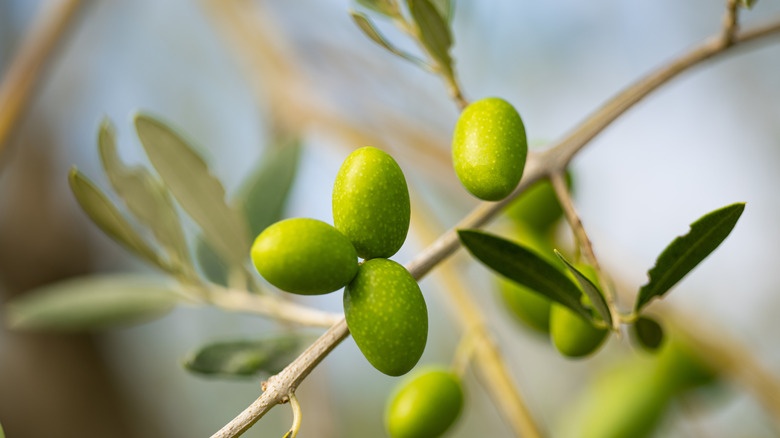
Since we're already being a little pickier about it, why not take it all the way and make sure you also get the freshest olive oil out there. Unlike wine or balsamic vinegar, olive oil doesn't improve with age. While olive oil can have a pretty long shelf life, with unopened bottles lasting between 18 and 24 months, it definitely starts to reduce in quality as time goes on. The flavor actually becomes less robust the longer it sits on the shelf. One way you can check to ensure you're getting the freshest stuff on the shelves is to look for a harvest date, which lets you know when the olives were actually picked from the trees. If it's there, it's often printed on the back of the bottle. This is different than the best-by date, which informs buyers when the oil's date of peak freshness ends.