

10 Brewery Red Flags To Look Out For
With roughly 10,000 craft breweries in the U.S., there's no shortage of indie beers to try or taprooms to visit. And, we'll be honest, they can't all be winners, but how can you tell the excellent ones from those that require improvement? We're here with some brewery red flags to look out for, so you can save your money and drink better beers.
I'm a beer fan and I spent time working as a bartender in my younger days, but I don't have all the answers. So, I interviewed four experts in the industry to learn more about what to watch out for. I spoke with Laura Hill, co-owner and brewer at KinderHill Brewlab; Jamie Hoffman, co-owner of SanTan Brewing Company; Lane Fearing, co-owner and head brewer at Roaring Table; and Eric Johnson, brewmaster and co-founder of Wild Heaven Beer. Thanks to their wealth of knowledge, I was able to get expert insights about what really matters in breweries and what's not such a big deal.
Especially at new or small breweries, some factors that could be considered a red flag deserve some grace. For instance, Hill tells us she doesn't judge when breweries don't have flawless interior design or have small tap lists. "I appreciate a brewery that is trying to focus on the beer and starting with a few well executed beers instead of a massive tap list that is mediocre," she says.
But, there's a line to draw. We're going to explore the warning signs that could indicate a bad brewery. These are indicators that something's not right and you might be better off finding a new spot to visit.
The style description not matching the beer
When you read the selection at a brewery, you should know what type of beer you're going to get. If the style description doesn't match how the beer actually tastes, this isn't a great sign. It doesn't necessarily mean that the beer is bad, but you should get what you expect to receive when you order.
KinderHill Brewlab brewer Laura Hill remarks that casual drinkers might not always notice when a beer's style description doesn't match the product. She says that on one hand "it doesn't really matter what they call it if the quality is good." That said, "it is usually an indicator that the brewer is not as experienced if they are missing the mark with their recipe creation," she adds. Yes, the beer might taste nice, but that's not really the point if you expected to get something else. You probably wouldn't be pleased if you ordered a Coke but got a glass of orange juice, even if it was excellent juice.
According to Lane Fearing of Roaring Table, you should expect to get "clear, stylistically accurate descriptions of the beer" at any brewery. He notes that this should include details about the brewer's intent when deviating from style guidelines. "For example, a Kölsch-style ale shouldn't be made with Chico yeast — details like that matter," he says. So, when there are notable differences, customers should be told why. Otherwise, it might be a sign that the brewery doesn't know what it's doing.
Taproom bartenders who are unwelcoming or poorly trained
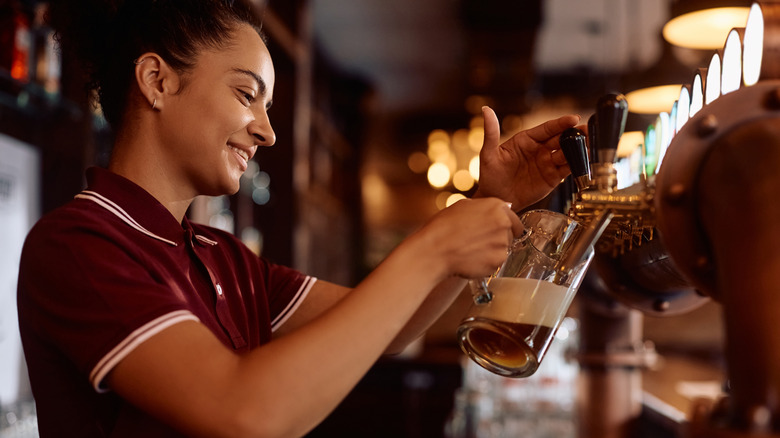
A great brewery taproom isn't just about the beer. The whole experience matters. You might enjoy your drinks, but if you're made to feel unwelcome or the staff don't know about the product, it's probably not the kind of place you want to go back to. Not to mention that issues with staff can signal wider problems with the brewery.
One of SanTan Brewing Company co-owner Jamie Hoffman's brewery red flags is bartenders who don't know about the beer they're serving. You should be able to ask questions and get enthusiastic, informative answers. "If employees are consistently on their phones, look disengaged, or appear sloppy and uninterested, that attitude often reflects the broader culture," Hoffman adds.
Eric Johnson of Wild Heaven Beer agrees that you can tell a lot from the staff. "I find that the breweries producing great beer have staff who are excited about the beer and eager to engage with customers and share their enthusiasm," he tells us. When employees seem like they don't care, it can be a bad sign about the beer. Great breweries care about training staff well and giving them the knowledge to answer customer questions and get into the nerdy aspects of brewing.
How you're made to feel in the space can also make a huge difference. "I think it is important to make everyone feel welcome, whether they are really into craft beer or not," says Laura Hill. It's important to Hill that everyone feels like they belong, regardless of their background and knowledge about beer. Breweries that don't prioritize this aren't such a fun place to spend time.
Off flavors in the beer

One of the mistakes people make when ordering craft beer is choosing varieties that they're not really into because it's a popular style or they think they should like it. This can be avoided by learning what varieties you enjoy, but the real red flag is genuinely off flavors in a beer. It can be hard to pick out when you aren't an expert, but there's a big difference between a beer you don't like and one that tastes off because of brewing errors.
According to Lane Fearing, that taste of diacetyl is a big red flag. "It can come from fermentation issues or neglected beer lines, but either way, it's not a good sign," he says. In fact, several of our brewers advised to look out for the diacetyl flavor, describing it as similar to butterscotch or buttered popcorn.
But, that's not the only off flavor you might come across. Jamie Hoffman explains that a "cardboard, honey-like dullness in hoppy beers" can be caused by oxidation, while "an unpleasant green apple or raw pumpkin character" comes from acetaldehyde.
"If one beer misses the mark, I don't assume there are issues, but if multiple beers have off-flavors, it tells me something isn't being executed properly," Laura Hill remarks. "It could either indicate a rushed process or microbial contamination." So, don't just write off flavors you're not a fan of. It might not be part of the style, but rather an issue with brewing or storage.
Dirty glassware at a brewery taproom
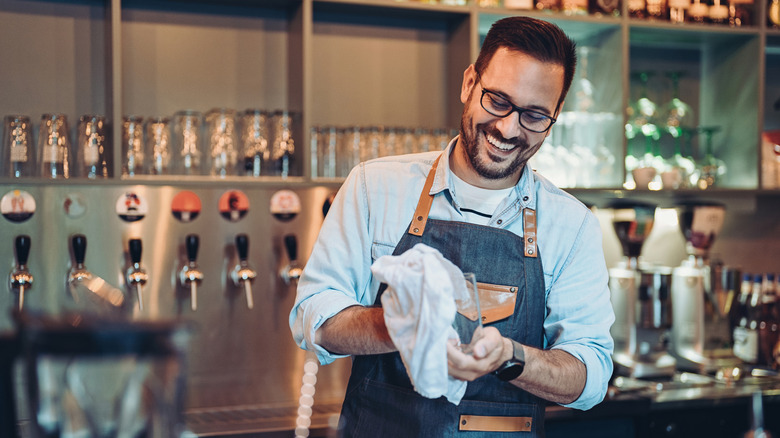
A great brewery taproom doesn't have to be spotless and it doesn't need flawless interior design. You can find great beer in unassuming locations. But one non-negotiable for all of our experts is clean glassware. If you're served beer in a dirty glass, that's a reg flag you shouldn't ignore.
"Dirty glassware is an immediate red flag, including soap residue, bubbles clinging to the sides, or lipstick marks, which all suggest a lack of attention to basic standards," says Jamie Hoffman. Laura Hill agrees, saying that when she can see proteins clinging to the glass, that's the sign of a brewery that isn't paying attention. According to Lane Fearing, when there's nucleation — that's bubbles to lay people — on the side of the glass, it might indicate that the glass isn't clean.
You might think that dirty glassware isn't ideal, but it's not necessarily a deal-breaker — but you have to look beyond the glasses themselves. Sure, any brewery could have an issue with their dishwasher that meant the glassware came out less than perfectly clean. But a brewery that really cares about the beer they put out and the customer experience wouldn't let that fly — they'd run the dishwasher again or wash them by hand. If a brewery doesn't care about the cleanliness of the glasses, what else is it overlooking?
Spot some dirty glassware and want to try a different taproom or beer? There are the best breweries in every state. You might find your new favorite.
Inconsistent results between batches

It's fair to expect consistency from a brewery, whether you're drinking in a taproom or buying beers from a store or bottle shop to drink at home. When there isn't precise consistency between batches, it's a red flag. If there's a particular beer you love, it should taste practically identical every time you drink it.
Jamie Hoffman tells us that some breweries go for novel brews before they've got the hang of repeatability. "A customer can forgive one experimental miss, but they won't forgive a flagship beer that tastes different every visit," he says. Breweries need to be consistent for drinkers to trust them. "Hype might bring people in once, but consistent quality is what brings them back," Hoffman remarks.
There are some craft beers you can't even find in stores because they're so special and limited. People have expectations for them and if one year's batch is different from the next, buyers wouldn't be happy. But, the same should go for any beer. It shouldn't taste different every time you buy it. That's the sign a brewery is highly inconsistent and you can't trust what they release.
Lack of information about ingredients and insufficient descriptions
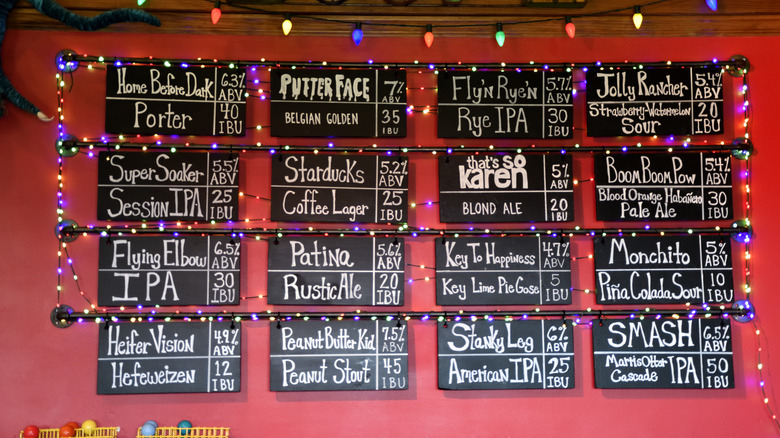
If you read a brewery menu and you're none the wiser about what each beer will taste like, that's a red flag. It doesn't necessarily mean the beer is bad, but it makes it tricky to know what to order. And the fact that the brewery isn't offering better descriptions of the beer and its ingredients could show it doesn't care that much.
Once you've read the description of a beer, you should have an idea what it might taste like, based on the style and the types of hops or the malt focus. Jamie Hoffman notes that describing a beer as an IPA, for example, isn't enough these days with all the sub-styles available and the difference certain hops make.
"I was at a craft beer bar recently where I wasn't familiar with a single IPA on tap, and the descriptions were so limited that I had to ask the bartender for her favorite non-hazy IPA," Hoffman tells us. "My son looked at me like I should be an expert, and wondered why I didn't seem to know anything about any of these beers." With a better tap list, this wouldn't have come up.
Listing yeast strains is a particular green flag for Eric Johnson. "Yeast has a greater impact on a beer's flavor profile than any other single ingredient, yet it is almost never highlighted," he says. It's common to discuss hops, but yeast is rarely mentioned. "There are hundreds of strains of yeast — all of them vastly different," he remarks. So, when you see the yeast strain mentioned, it's a sign the brewery really knows its stuff.
Glassware that doesn't match the style
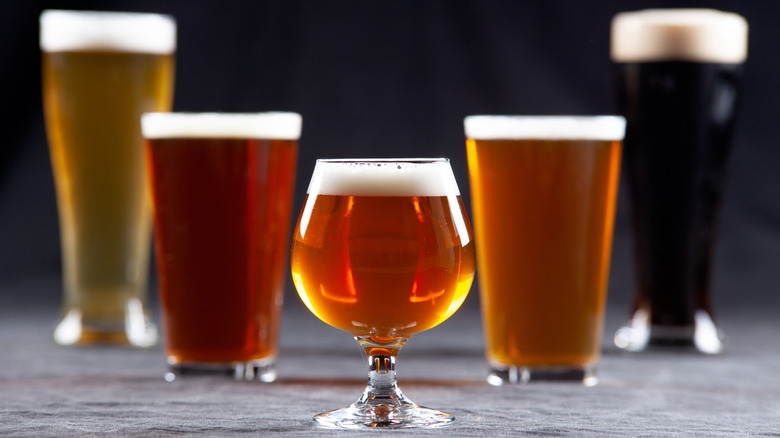
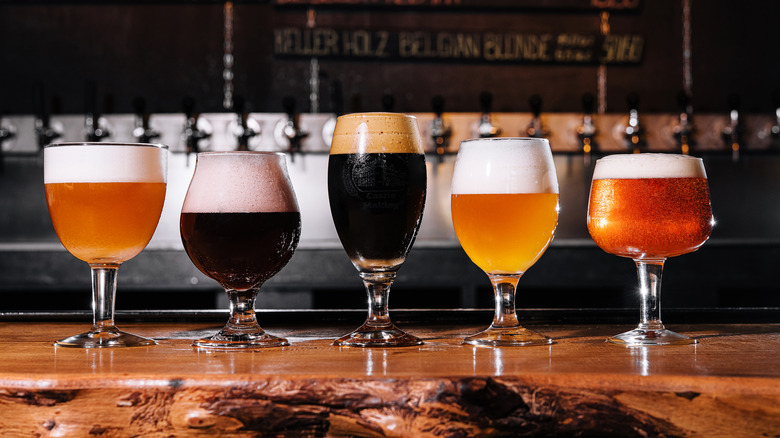
When every beer in a taproom is served in the exact same glass, it's a potential red flag. There should be thought put into the best kind of glassware to serve a particular beer in. When this is overlooked, not only are you not experiencing the beer at its best, but it can leave you wondering what else has been missed.
Lane Fearing looks for beer that's served in style-appropriate glassware. "When every beer is served in a generic shaker pint, that's often a warning sign," he tells us. Look at what drinks are being served in, and you can spot this red flag before you even order a beer.
There are various types of glasses to complement different beers. For instance, tulip glasses have a shape that tapers in and then flares out to better accentuate aromas from the head of the beer. They're known for being suited to Belgian beers but are versatile. Goblet glasses, on the other hand, are great for malty beers, accentuating the flavor. Don't assume that just any glass will do, and don't put your faith in breweries that believe this.
Not caring about the details
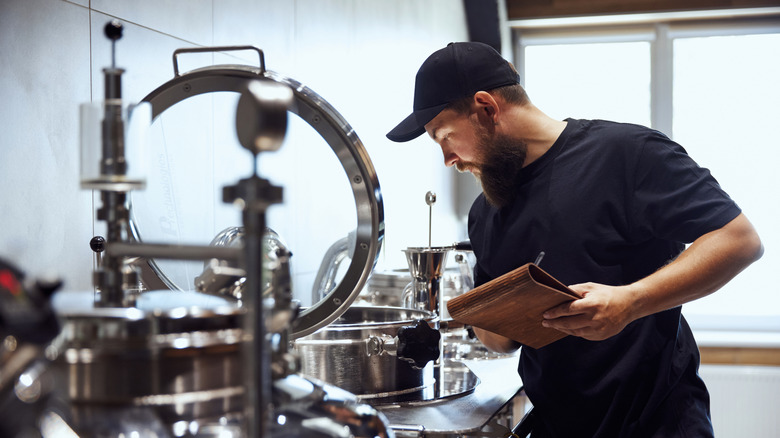
If you notice that, broadly, a brewery doesn't seem to care about the details, this is a bad sign. Brewing beer isn't something people should go into just to make a quick buck. The best beer comes from people passionate about the craft. And you can usually see when a brewery genuinely cares and when it's phoning it in.
"Breweries that sweat the details in the brewhouse usually do the same in the taproom," says Jamie Hoffman. You can see when there's pride in service, such as staff who are knowledgeable about the beer, greet customers warmly, and look the part, whether it's the kind of establishment with a uniform, or a band shirt and piercings are the vibe. These factors don't happen by accident. "And when that care is missing up front, it's often missing behind the scenes, too," warns Hoffman.
Eric Johnson warns against any dullness or cloudiness in the beer, unless this is a part of the style. It might seem like a small detail, but it can be the sign of issues with fermentation or yeast handling. "Breweries that consistently make great beer don't miss the small things," Johnson remarks. "If you find that a given brewery has beers that are hit-or-miss, that's a sure-fire sign that they are not focused on the details or lack the training to make great beers."
Dirty draft lines
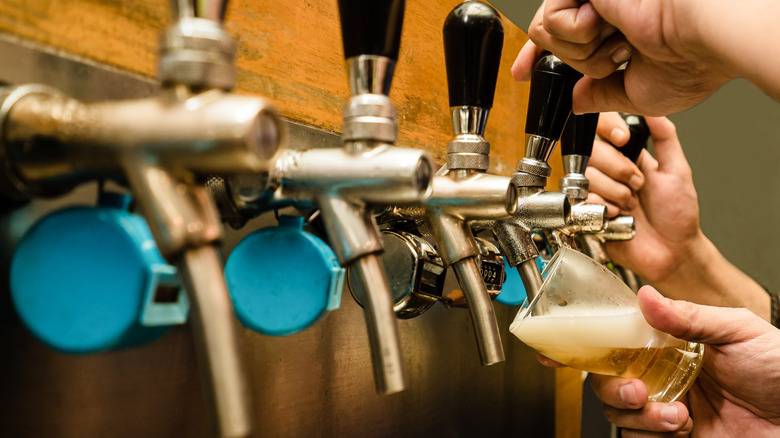
If a brewery doesn't clean its draft lines regularly, that's a major red flag. You might not be able to tell right off the bat, but once you taste the beer, the signs are there. And, it's always okay to ask politely, if you're really concerned.
"Dirty draft lines contribute to many of the worst off-flavors in beer and can make customers feel unwell after consuming your beer," says Eric Johnson. At Wild Heaven Beer, lines are cleaned every two weeks to ensure a quality product. When this isn't happening, you might get the buttered popcorn diacetyl flavor mentioned earlier in this article, or sour vinegar-like notes. Not only is it unpleasant, but you could also end up with a headache or a dodgy stomach after drinking beer from draft lines that are in need of a clean.
Some people think twice before ordering a draft beer because of dirty lines. But, you shouldn't be put off draft beer altogether, you should just be careful about the breweries that you choose to frequent. If there are other signs that the cleanliness of a brewery might not be up to scratch, like dirty glasses or a particularly wet or sticky bar top, you might want to head elsewhere or order something from a bottle or a can.
Aroma and mouthfeel that isn't right

Taste isn't the only way to tell that there's something not right with a beer. Our experts also consider the smell of the beer and the way it feels in the mouth. Issues with either of these can be an immediate red flag.
As well as off flavors, diacetyl in beer — whether from brewing issues or dirty lines — "creates a buttery, slick mouthfeel," Jamie Hoffman tells us. Lane Fearing backs this up, saying that beer with a diacetyl build-up can have an "almost slimy" texture. Certainly not what you want when you're after a refreshing brew.
"I always spend some time with a beer's aromas before diving in," remarks Eric Johnson. He says that skunky odors are a bad sign. However, the correct aroma for a particular beer will depend on the style. Some hazy IPAs can smell dank, for instance, whereas this aroma would be a bad sign in a lager.
Hoffman adds that it's okay if a small brewery has some experimental beers that don't fully land. "You need to take some chances, and they are not all going to be winners," he says. But, this is a different thing from off smells and an incorrect mouthfeel. Maybe not every beer is a hit, but it should at least smell fresh.