

Over 100 Years Ago This Chain Changed Grocery Shopping Forever
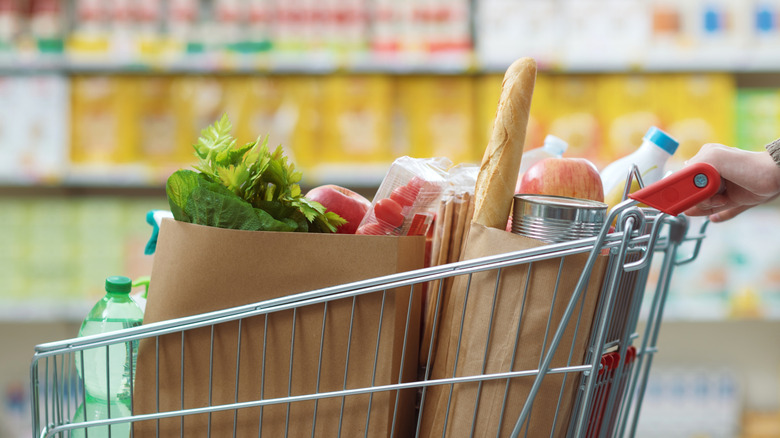
There are certain things many people take for granted about modern grocery stores. Among the most fundamental is the basic process: Customers walk around the store, filling their carts with desired items before they're checked out by a cashier. However, this wasn't always the case. It took a pioneering supermarket chain to shake up the old-school shopping system and revolutionize the way people have bought groceries in the century since. That company is Piggly Wiggly, which still operates today.
The chain was founded in Memphis in 1916, when founder Clarence Saunders sought to shake up the grocery world with an innovative new concept. At the time, shopping was typically done with the help of a store clerk who helped customers assemble their order by grabbing items from a relatively limited selection behind a counter. Saunders changed the game by allowing customers to roam stores on their own, selecting items themselves from shelves packed with a diverse variety of goods. This do-it-yourself method lowered costs, further enticing early 20th-century shoppers to make the switch from their old-school general stores and other food sellers.
The idea quickly became a major success, with the original location spawning dozens, then hundreds of other franchises. Today, there are more than 500 Piggly Wiggly stores in 18 states, and self-serve shopping is now the standard at nearly every supermarket.
A critical innovator in food shopping
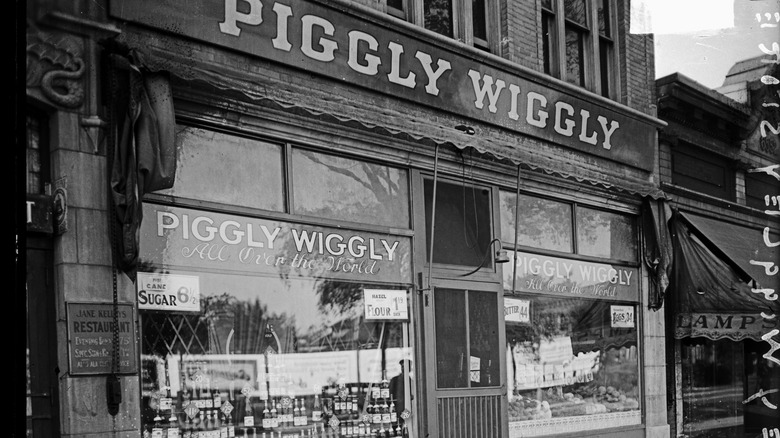
Those who want to explore that very first Piggly Wiggly can still do so — in a way. There's a replica inside the Pink Palace Museum in Memphis, a history museum housed, coincidentally, in an elaborate building originally constructed to be the home of Piggly Wiggly's founder.
While Clarence Saunders and Piggly Wiggly deserve credit for revolutionizing food shopping, the concept of the "supermarket" actually belongs to a different innovator. King Kullen, which opened in New York in 1930. distinguished itself from Piggly Wiggly and other grocery sellers with its large size, distinct food departments, and cutting-edge concepts like volume discounts and loss leaders, products sold for low or no profit to draw in customers who buy other, higher-margin ones on the same visit, such as rotisserie chickens that are cheaper than raw poultry.
These days, many may see Piggly Wiggly as just another place to pick up their food, even if it's among the least expensive grocery chains in the country. However, all modern supermarkets (and their shoppers) owe this company a debt of gratitude for forever changing the way shopping works for the better.