

Why You Shouldn't Put A Vintage Fridge In A Modern Kitchen
We may receive a commission on purchases made from links.
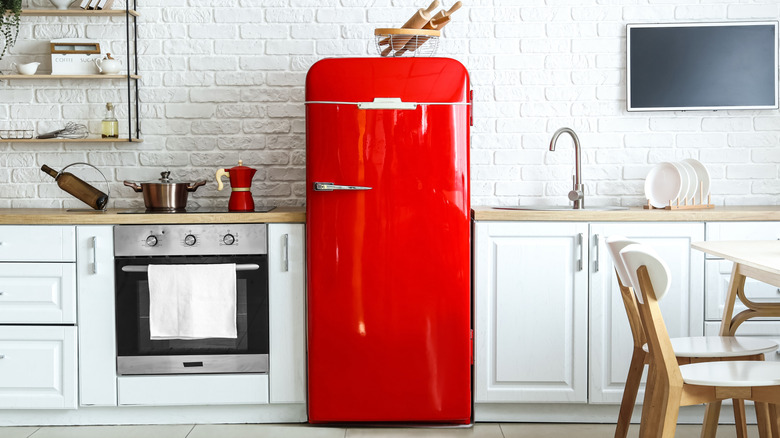
There's a reason why many spaces designed with a retro aesthetic don't actually rely on vintage functionality, particularly in areas like the kitchen. Sure, old-school kitchen items are making a comeback, and that includes appliances like retro refrigerators, but installing a vintage fridge in a modern kitchen can turn troublesome. First, you'll have to account for the much higher energy consumption of a midcentury model, especially since the fridge is one of the few appliances that run continuously. Energy Star only started rating fridges for electricity efficiency in the mid-1990s, so any fridge manufactured before then is likely to be a power guzzler. There's also the added inconvenience of missing features. Old fridges without automatic defrosting capabilities can be tedious and messy to defrost.
More serious issues are also at play. For one, refrigerators produced prior to 1958 weren't required to come with modern safety features. There have been instances of young children getting trapped inside old refrigerators because the door's mechanical lock could only be opened from the outside. To top it off, fridges used dangerous gases for decades. Initially, these were gases like ammonia and sulfur dioxide, which are toxic to humans. Then came chlorofluorocarbons, which actively harmed the environment. Interestingly, Einstein's forgotten kitchen appliance invention was an electromagnetic refrigerator pump intended to mitigate the dangers of toxic gases, which were commonly used in refrigerators until about 1930.
Finally, a vintage fridge could be quite difficult to repair. While it likely won't suffer from the high-tech-related issues shortening the lives of modern appliances, you'd be hard-pressed to find replacement parts for a decades-old fridge.
How to get the best aspects of a vintage fridge without the hassle
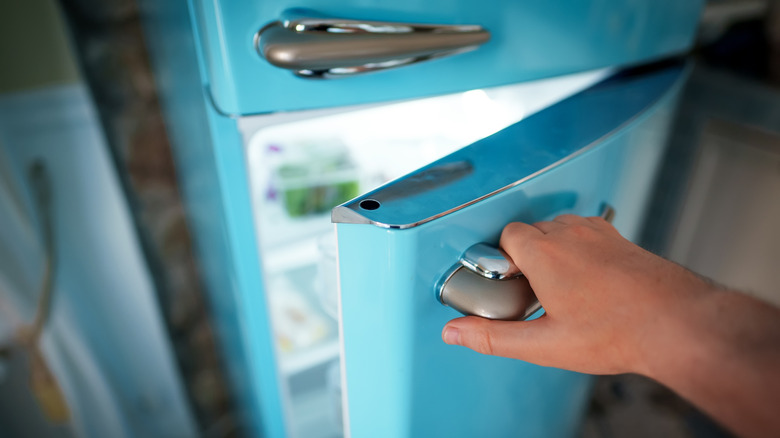
The myriad downsides of installing a vintage fridge in your kitchen can largely be avoided if it's not your primary food storage solution. For most practical purposes, a modern refrigerator will serve you best. However, if you have the space, a vintage refrigerator can be used for additional storage and to achieve a retro aesthetic. This way, you are not completely dependent on vintage tech, and you can even turn off the older fridge when it's not in use.
Some vintage fridges had convenient features you don't see anymore, like a temperature-controlled compartment in the door to keep butter at a perfectly spreadable texture, or rotating shelves for easy access. If it's the quirky features you're after, you can emulate some of them in modern fridges with, say, a lazy Susan refrigerator organizer. If your reason for getting a vintage fridge is longevity and you're getting a good deal on a second-hand one (or, as is sometimes the case, you move into a home that comes with an old Sub-Zero unit), it may be worthwhile, depending on the model and condition of the fridge.
Don't invest in a vintage fridge purely based on its looks, as you can now find modern appliances that channel vintage aesthetics. Appliance companies have noticed consumers gravitating towards vintage-ware and have introduced retro designs and colors. Take inspiration from how kitchens looked the year you were born and pick your appliances accordingly. Just don't expect these versions to be cheap or last for decades like those vintage cooling juggernauts did.