

The Most Overpriced Italian Restaurant Chains In America
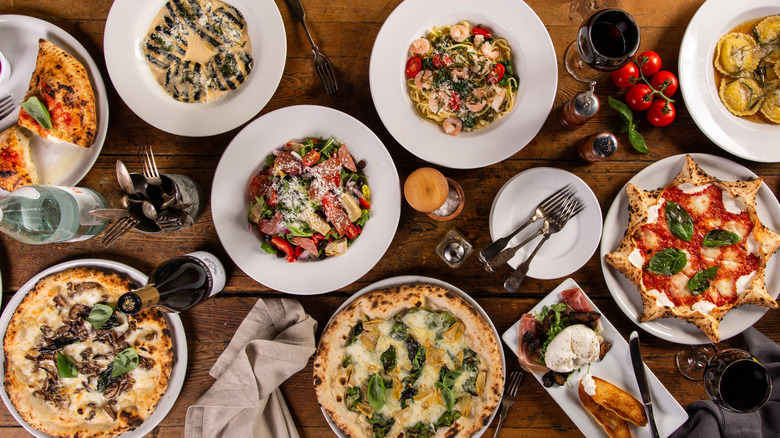
Nobody gets their heart set on a meal at their favorite Italian chain restaurant hoping they'll pay more than necessary when the bill comes. Peak Italian-American dining means finding affordable fare that captures the heart and soul of authentic old-world-inspired flavor without draining your entire entertainment budget. Sadly, a number of well-known chains feature elevated prices that more and more customers are finding hard to digest.
If you've happened upon one of the most overpriced pasta-and-pizza chains during your dining adventures, you may already know the restaurants that are charging too much for their food. Unless you grab a seat at one of the absolute best Italian restaurants in the U.S., you shouldn't expect to pay dearly for a bowl of fettuccine or a plate of chicken parm. It's perfectly reasonable to expect prices that reflect the quality of the food and the environment, especially in a fast-casual format.
How can you identify which chains are overpriced without having to drop a stack when the bill arrives? This list gathers the most noteworthy Italian-American eateries where the numbers on the menu are higher than many customers are comfortable with, including fast-food outlet Fazoli's, deep-dish pizza maverick Giordanos, and everything in between.
North Italia
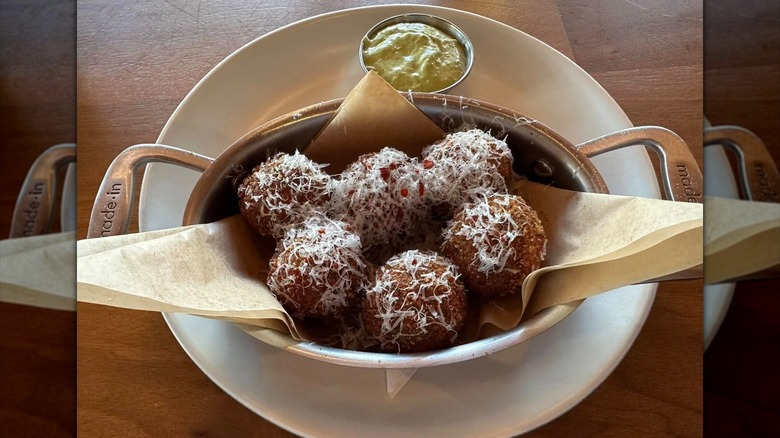
This up-casual (an upscale, fast-casual hybrid) aims to give diners something more refined than the lesser chains. That may be a cool concept, but North Italia stumbles a bit when diners realize the price to pay for such an experience leans more upscale, regardless of the casual atmosphere. There's a limit to how much ambiance patrons are willing to pay for without getting food that matches, and this operation seems to have maxed out the forgiveness of its clientele.
Customers at the chain's Scottsdale location have noticed that the chic environment isn't all that different from other restaurants — only at North Italia, you get mid-level food that costs too much. In Las Vegas, patrons call out the mediocre menu, high prices, and sub-par service — a hat-trick for driving away business in the food industry. One diner at a Washington, D.C. location declares the set-up to be "$5 food being sold at $50 prices" in their Yelp review. That doesn't exactly sound like a fair deal.
The dissatisfying quality and pricing structure may be reflective of North Italia becoming a property of The Cheesecake Factory Incorporated, when it acquired Fox Restaurant Concepts in 2019. Adding 18 new locations in five years or so may have pushed North Italia to increase prices to balance the financial scales, though it seems to be a poor move in the eyes of its customers.
Il Fornaio
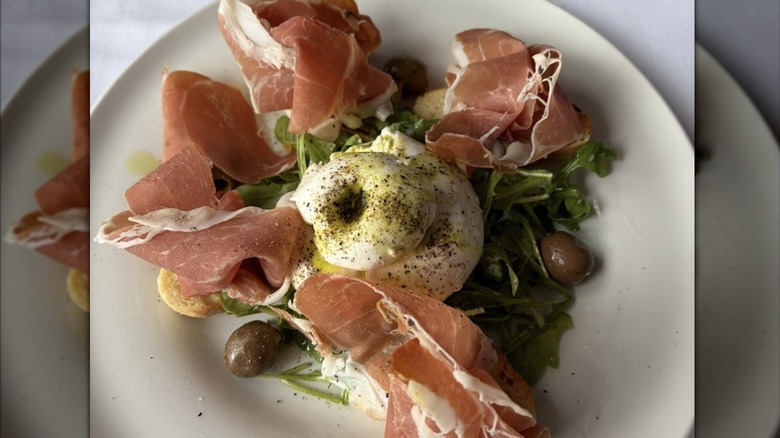
Il Fornaio is a small Italian chain with restaurants in California and Las Vegas — places where people know when they're spending too much for dinner, even if they have no choice but to pay. Reviewers on Tripadvisor note ridiculous prices, like $39 for chicken alfredo, and point out that the manager at the Irvine location blamed the chef for the inflated prices. Passing the buck like that seems a little too on the nose for a high-priced restaurant, and not the coolest move for management to make in front of patrons.
As prices go, the span from too-high to much-too-high is obvious. On the Las Vegas menu, a bowl of pasta and assorted shellfish rings up at $37, pizzas range from $24 to $27, and the restaurant's specialty 8-ounce tenderloin filet will run you $59. Even the salads are set at around the $20 mark. Prices are slightly lower on the San Jose menu, but the selections are somewhat different as well.
Location is certainly a consideration for the elevated pricing. One customer from the Las Vegas location in the New York-New York Casino and Hotel paid $100 for two bowls of pasta, two drinks, and bread. They remarked that it was expensive, possibly because it was in Vegas, but it wasn't worth paying so much money for such average food. Take note: If you happen to be near an Il Fornaio and you're hungry for Italian, you'll probably want to look for a better option.
Eataly
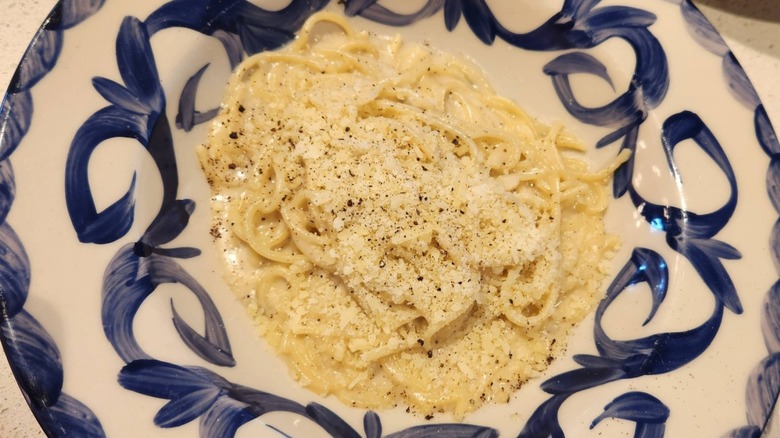
Eataly offers a unique premise for visitors to explore, a combination Italian market offering authentic wares and a restaurant serving homey Italian meals. Locations in major cities around the country give U.S. fans of Italian culture a taste of old-world tradition. But if customer reviews are accurate, it feels like maybe the team should focus more on the restaurant side of the business to make it worth paying for.
Even in its early days, the Chicago location was showing higher prices than customers were happy with. Visitors commented on Reddit that there are plenty of other Italian restaurants around the city with better food at more favorable prices. Other Chicago patrons point out the poor service and average — and sometimes flavorless — dishes make for an experience that's anything but a value. At the Flatiron Eataly in NYC, a subpar $30 prime rib sandwich has become the norm.
It's not out of line for restaurants to raise prices to keep up with inflation, as long as those prices reflect the quality of what patrons receive in return. But when even a four-star Tripadvisor review calls them "always expensive to exorbitant," a chain like Eataly might want to think about reconfiguring its pricing structure.
Maggiano's Little Italy
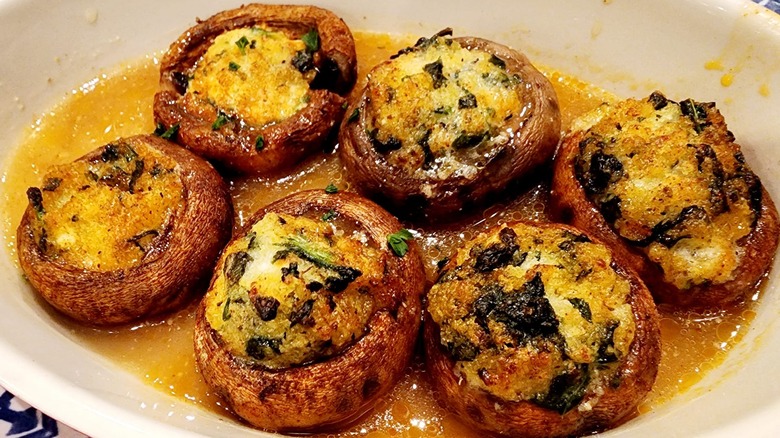
Authentic old-world meals are promised at Maggiano's Little Italy, but don't expect that you'll be getting them on the cheap. The chain's original template of providing homestyle Italian dinner like your nonna would've made was a big hit in the early 90s, when the original Chicago location opened and quickly spread into other markets.
The sticker shock customers might experience when dining at the Scottsdale location is very real, and quite severe. A simple bowl of baked ziti prepared for pick-up rings up at $26.50; a double portion is available for just $10 more, though at $36.50, it doesn't sound like such a bargain. Naturally, Wagyu-stuffed shells is a bit higher, at $30.50 for a regular portion and $40.50 for a double portion. But even the most basic Italian fare, spaghetti with meat sauce, starts at $22, which is difficult to justify for the average diner.
Customers feel the pinch and call it out, leaving Yelp reviews that speak of poor service, badly-prepared food, and small portions at various U.S. locations. It's one thing to expect your visitors to pay top prices for what you're offering. It's another thing entirely to underdeliver on the too-expensive fare, especially on the most basic aspects of a worthwhile dining experience.
Romano's Macaroni Grill
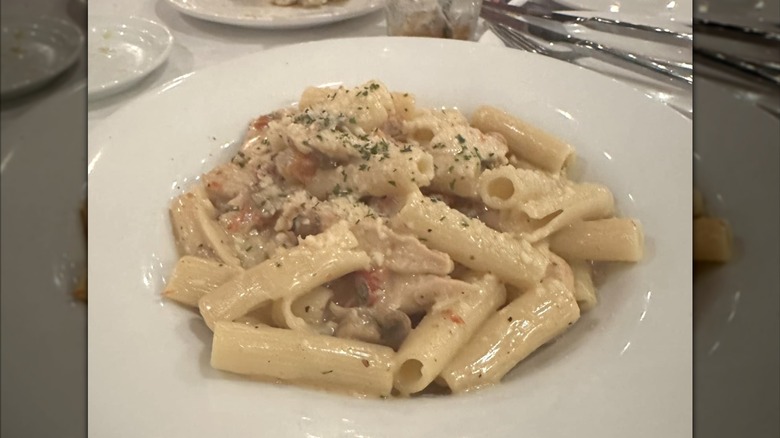
Considered to be a step or two above Olive Garden, Romano's Macaroni Grill was a welcome addition to the dining scene when it became widespread in the early 2000s. Decades later, the chain has fallen into the trap of charging high prices for mediocre fare. Inflation has taken a definite toll on the enterprise, which the company passed on to the customers in the form of a $2 inflation fee — and ended up with a lawsuit for lack of transparency.
There's more than mediocre food contributing to the overpriced nature of this chain. Many customers point out that locations have failed health inspections and don't seem particularly clean. They also report cold and undercooked food accompanied by poor service. One Facebook user calls dining at the chain a "hit or miss" scenario, which seems too big a gamble when you're paying over $20 for basic pasta dishes.
The fact there have been so many closures of Romano's Macaroni Grill locations is enough to make you wonder if price increases caused the shutdowns, or vice-versa. Having shuttered the majority of its restaurants, the company may be scrambling to stay in business. But eventually, customers recognize that paying too much for Italian food is a fool's game, no matter the reason. After reducing its numbers from over 200 to just nine U.S. locations, it looks like the chain may be a thing of the past before we know it.
Buca di Beppo
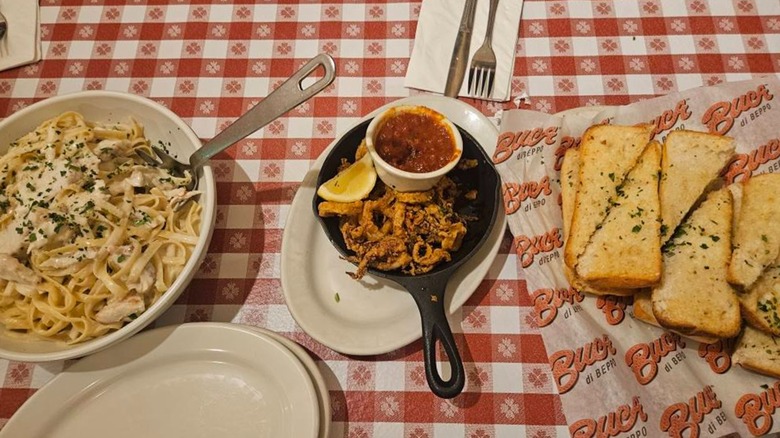
Buca di Beppo hit the scene with family-style dining that brought charm and a touch of whimsy to Italian-American restaurants. The idea that diners could eat for less by defraying their costs among the group was an attractive part of the original Buca di Beppo design. But prices have been less than satisfactory for some time now, with customers as far back as 2020 being displeased that their supposed family-style meal didn't feed as many diners as it advertised.
Indeed, the family-style orders are pricey, even if they promise the most bang for your buck. At the Arrowhead location in Arizona, you can find pasta, chicken, and even osso buco in orders that serve between three and six diners starting at $30.99, which isn't bad if everyone chips in and the amount of food you get reflects the description. But that only gets you one dish; the bill starts climbing when you order multiple dishes, naturally. Even if you hop in for lunch to order a solo plate, you might pay $15 or more for fancier combinations like spicy chicken rigatoni or shrimp fra diavolo — and what you get might actually be terrible for the too-high prices you pay.
If dodgy overpricing for bland food and poor customer service are signs that Buca di Beppo won't be around much longer, then it seems like the clock is ticking.
Fazoli's
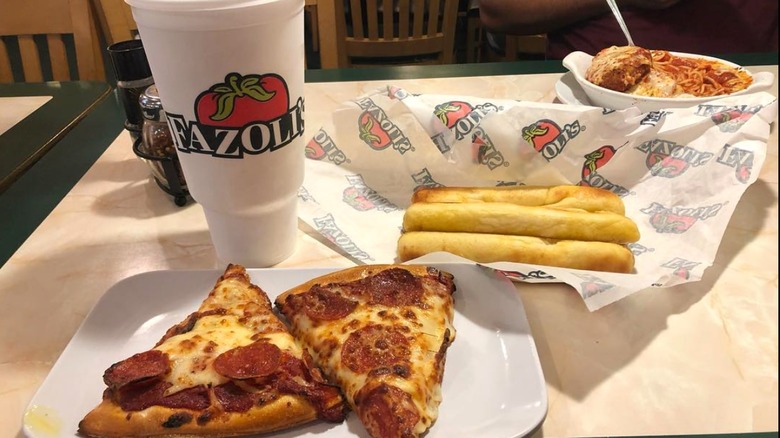
Some may dispute it, but you can tell Fazoli's is fast food by the fact that it has a drive-thru window. It holds the distinction of being one of the few quick-service chains that offers Italian dishes as a standard. All of that aside, even Italian fast food can cost too much when what you get in the bag is below your expectations. A fast and easy take-out spaghetti plate should be a simple win for diners on the go who've grown tired of burgers and tacos — but it only works if affordability is part of the recipe.
Opinions are bound to vary based on region and a customer's prior experience paying for Italian food, of course. If paying $15 for chicken covered in garlic salt sounds affordable, then maybe Fazoli's is a viable option for you. Customers reminisce on how great the chain used to be in the mid-2000s, before it started losing market share and disappeared from several regions. The return was heralded as a boon, but after seeing what you get for the prices listed ($50 for lunch in the case of one visitor), long-time fans are disappointed.
There's a reason Fazoli's is one of the lowest-placers among Italian chain restaurants ranked from worst to best. Actually, when you combine poor food, bad service, and skyrocketing prices, there are reasons galore.
Johnny Carino's
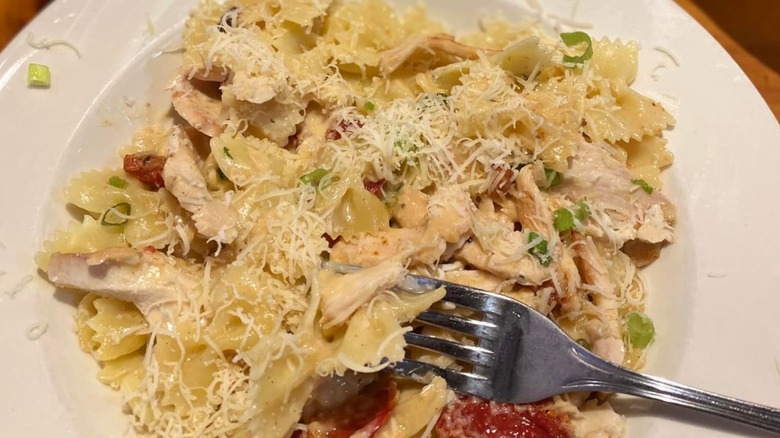
The name sounds more like a Vegas nightclub than a restaurant, but Johnny Carino's is indeed a collection of Italian eateries that caters to a more discerning clientele. There are locations scattered around the U.S. to give curious diners a chance to taste a wide variety of dishes, from appetizers to desserts, all prepared with winsome Italian touches. If only the food lived up to its potential. Sadly, the chain appears to put too much emphasis on making a profit and too little on making sure its customers get a fair deal.
Checking the El Centro menu to see just how much you might have to shell out, it looks like a $29.99 large margherita pizza and a $23 bowl of chicken or sausage cacciatore are standard possibilities. Seafood and steaks rise above the $25 mark as well. And for the picky eater who favors standard American fare, there's a $14.99 hamburger that seems a little steep.
Maybe you're into eating what one Tripadvisor writer calls "cafeteria food" for $54, but we doubt it. A trip to the restaurant is more manageable for solo diners, but you may have trouble feeding a family of four at Johnny Carino's if your budget is restrictive.
Sbarro
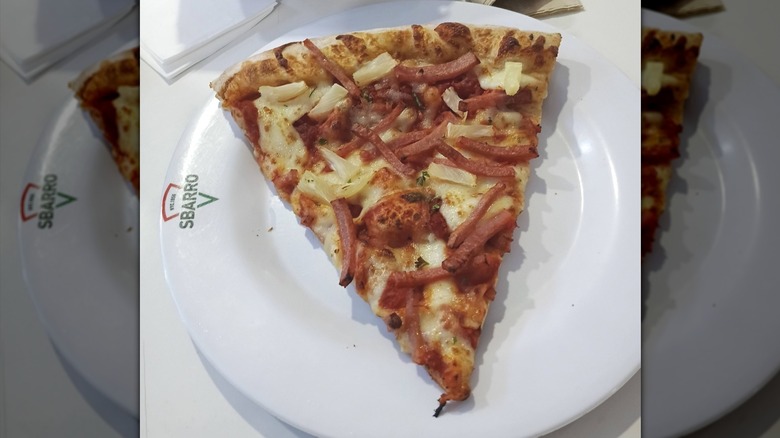
It shouldn't be surprising that mall food court staple Sbarro appears on a round-up of overpriced Italian chains. The pizza and pasta served here has always been suspect, as anyone who's taken the plunge can attest — if for nothing other than the time it spends under heat lamps. It may be one of the few pizza joints available in shopping center food courts, but that doesn't mean charging through the nose for so-so Italian-American food is a fair practice in the dining game.
It seems wrong to expect customers to pay $12 for a two-slice combo with a drink, but that's exactly what one Yelp reviewer did. Another paid $20 while pointing out that the food and service are generally bad and the portions are too small and clearly too expensive. None of that adds up to a good time, especially in a setting where there's plenty of competition to capture your appetite. Sbarro could stand to sharpen its standards.
There are plenty of reasons why people can't stand Sbarro. When you wrap them all up in a single package, it starts to feel like you pay a lot of cash for a boring atmosphere and dishes that used to be twice the size.
Giordano's
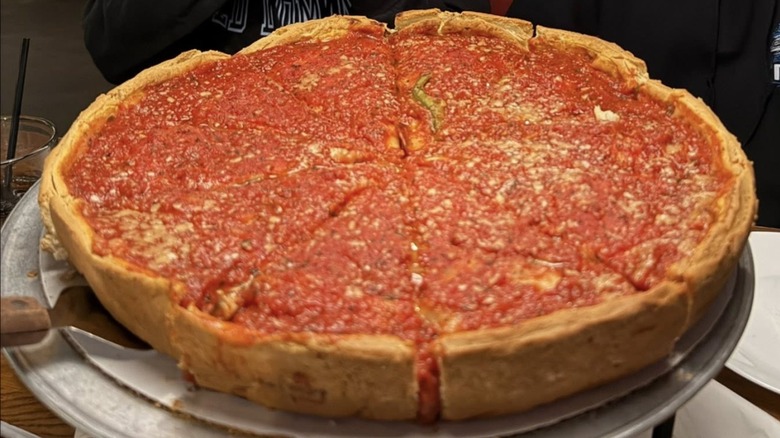
Giordano's is practically synonymous with Chicago-style deep-dish pizza. The chain has gradually made its way from Chicago, where it started in 1974, into other markets around the U.S. Despite the one-of-a-kind creations and undeniable quality of the food, this chain has slowly made paying for a pie less comfortable for the average patron.
One hometown Chicago customer reported paying over $45 for a medium deep dish pizza and a salad in late 2025. They noted that, a year prior, the same order had been about 17% cheaper, which is a staggering rate of increase. The company doesn't play coy with its price-hiking habits, either. A screenshot posted by a patron on Reddit shows Giordano's explaining that instead of raising prices on the menu, it was adding a 3% surcharge to every order — which is essentially the same thing. With visitors calling out the diminishing quality of ingredients coinciding with the additional prices, it seems to add up to a hokey cash grab.
With an itchy finger on the cash register and food that doesn't taste like it used to, Giordano's may be mastering the art of overpriced pizza in record time. It's not a good look for an iconic eatery, no matter how hard times have gotten.
Bravo! Italian Kitchen
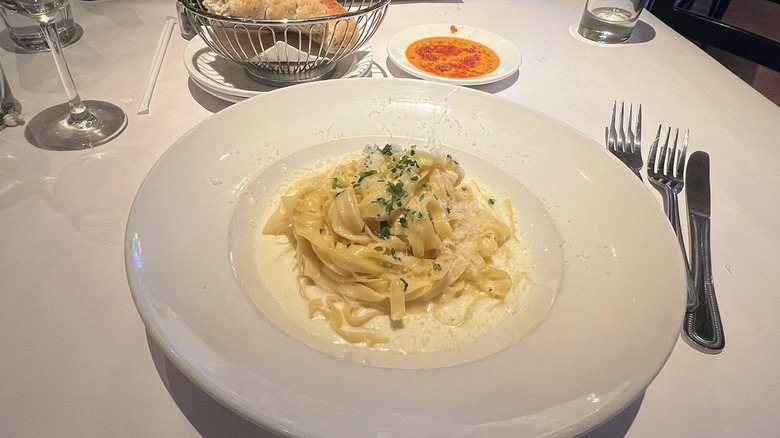
Don't name your restaurant Bravo! Italian Kitchen if you can't deliver the kind of food the word "bravo" suggests. At Bravo!, the attempt at capturing true Italian spirit is valiant, but customers aren't convinced the prices are worth paying.
While everyone has their own idea of what constitutes an expensive Italian dinner, it's safe to say we can all agree that paying $8 to include chicken on a salad that already costs $17 is ridiculous. Customers turn to Facebook to vent about their unappetizingly chewy and small calamari portions, after paying nearly $20 for the so-called privilege of dining out — and that says nothing of the sour tiramisu. One patron shared a photo of a $25.95 take-out container filled with what seems to be jarred, watery Alfredo sauce over less than a whole chicken breast on a bed of floppy noodles. There are so many better ways to spend dining-out money than this.
Of all the mistakes everyone makes at Italian restaurants, sticking around when the prices don't align with the food is one that's easy to fix. If you value your dollars and your taste buds, you'll find a better spot to drop your food funds than Bravo! Italian Kitchen.
Methodology
It isn't simply higher prices that make an Italian restaurant chain feel overpriced; serving food that's less than top-quality can qualify a restaurant as too expensive even if prices are somewhat reasonable, in general. By referencing menus, customer reviews, and discussions from sites like Yelp, Tripadvisor, and Facebook, I was able to identify which Italian chains diners consider too costly.
Being a relatively frugal diner myself, I used my own sensibilities to gauge what feels like pricey spending for standard Italian-American restaurant chains. It's not unreasonable to expect to pay decent prices for mid-level food, especially when you're not fooling yourself about how high-end your dining habits are.
When you struggle to find a menu item that falls within your budget no matter which section you check, at a restaurant you've become familiar with for its sensible prices, there's a problem. It becomes clear that the pricing structure is not only higher than it used to be — it's also higher than most of the general public can afford.