

7 Restaurants Al Capone Enjoyed Around The US
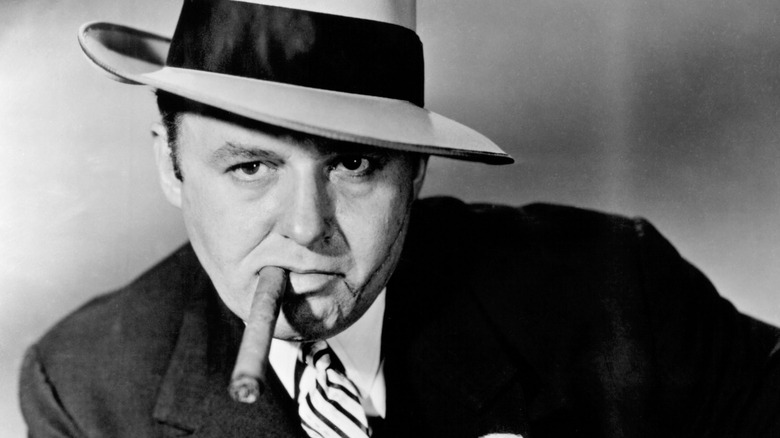
Some people go to restaurants for good food, while others go for history. Some of the best restaurants in the United States have a whole lot of both. History buffs who like a good mob tale should know that Al Capone was a bit of a foodie, and these restaurants that Al Capone used to enjoy should be on their radar.
Al Capone was a New Yorker, but he operated largely in Chicago during the height of Prohibition, from 1920 to the early 1930s. He also spent a good amount of time in Florida, and after he was released from prison in 1939, he moved to Miami to retire. In all these places he laid his head, he also filled his belly. You can find killer food spots associated with the mobster in all three cities on this list. Though not all are still open, each has, at one time, boasted about their connection to one of America's most famous outlaws.
The Green Mill Cocktail Lounge in Chicago, IL
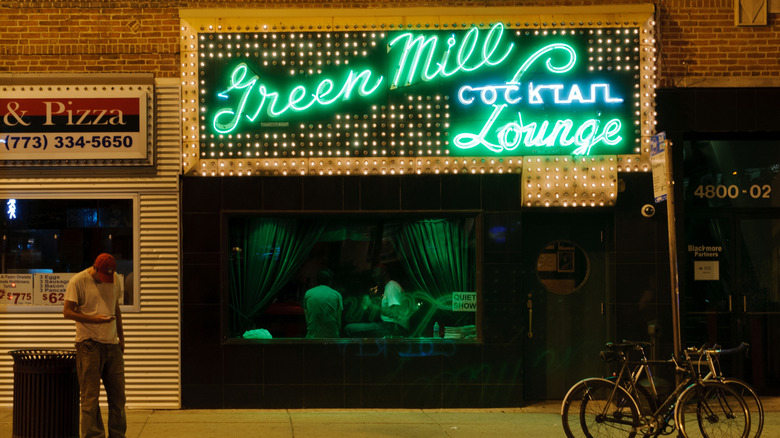
One of the most iconic food spots associated with Al Capone is conveniently located in the Windy City's Uptown district. This cocktail lounge is one of the best bars in the U.S. and has a legendary history, at least where jazz fans and true crime buffs are concerned. Its ties to the mob, especially during Prohibition, are some of the strongest in Chicago, with Al Capone being just one of the many mobsters who frequented the joint.
It makes sense that Al Capone would have the Green Mill as one of his hot hang out spots, because one of his men (allegedly) had part ownership of the club back when it operated as a speakeasy. Jack "Machine Gun" McGurn was seemingly a top figure in Capone's crew and used the Green Mill as a kind of headquarters for gang activity. Though he was let go for the crime, McGurn is widely thought to have killed a number of people for Capone. He may have even planned the incident that helped him earn his "Machine Gun" nickname while sitting inside the Green Mill.
If you visit the Green Mill today, you can still see Al Capone's favorite spot: A booth with a clear view of both entrances and exits is an obvious and smart choice for a gangster. Patrons can now even sit where the rum runner once sat with his squad.
Joe's Stone Crab in Miami, FL
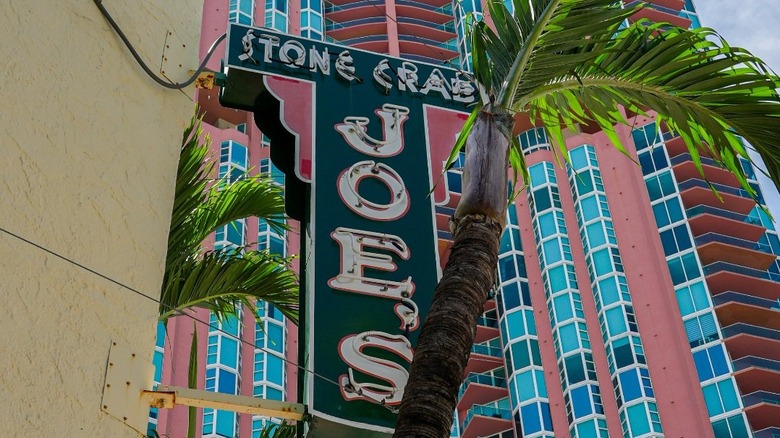
After Al Capone was released from prison in 1939, he left Chicago, set himself up in Miami, and retired. His love for Miami had already been established previously, as he purchased a residence there before going away to prison. He spent a good amount of time in the city during Prohibition, and allegedly frequented Joe's Stone Crab, a restaurant in South Beach.
Technically, it was a man named Al Brown that became a regular at Joe's Stone Crab. Capone used this name as an alias while visiting, so the restaurant's owner knew him only as Brown and as a gentleman. According to the restaurant, which is over a century old, the original matriarch of the family-owned business was picky about who she allowed in her restaurant. Capone (or Brown) was always welcomed with open arms since he was polite and respectful when he dined.
Joe's Stone Crab is one of the most famous restaurants in America and a staple in Miami Beach. The establishment that Capone once knew has surely changed in the last 100 years. Still, tourists and crab lovers alike flock to the restaurant, for both the upscale dining and to experience a piece of Capone history.
The Harvard Inn in Brooklyn, NY
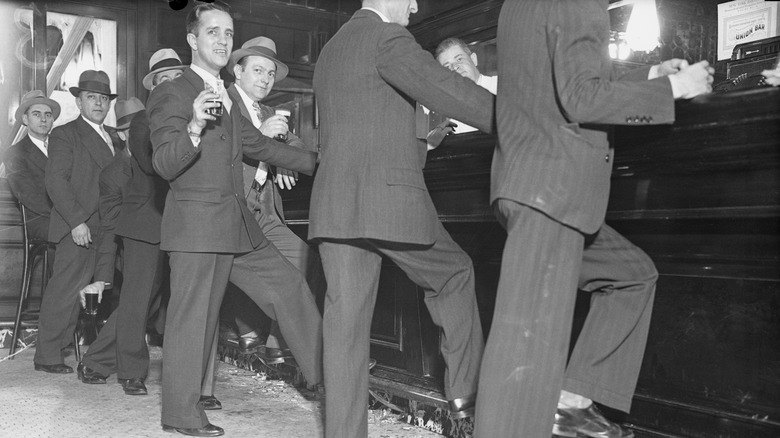
Every gangster has an origin story, and we know quite a bit about Al Capone's. Before he was a big name in Chicago, he was a gang member in New York under mobster Frankie Yale. During this time, Capone worked as a bouncer at The Harvard Inn, a bar located right across from an iconic dancehall on Coney Island. New York City is home to some of the best speakeasy-style bars in the U.S., and The Harvard Inn used to be one of them — and a real speakeasy at that.
Quite a lot of violence and illegal activity happened at The Harvard Inn, including shootings. In addition to being near the beginning of Capone's crime career, this bar is the place he received his famous nickname. Capone was known as Scarface to his acquaintances because of a facial scar he received at The Harvard Inn. The story goes that he was working at the bar when he insulted a woman, whose brother returned the favor by cutting his face. This incident and moniker would go on to inspire the title of the iconic movie "Scarface", which is loosely based on Capone.
Exchequer Restaurant and Pub in Chicago, IL
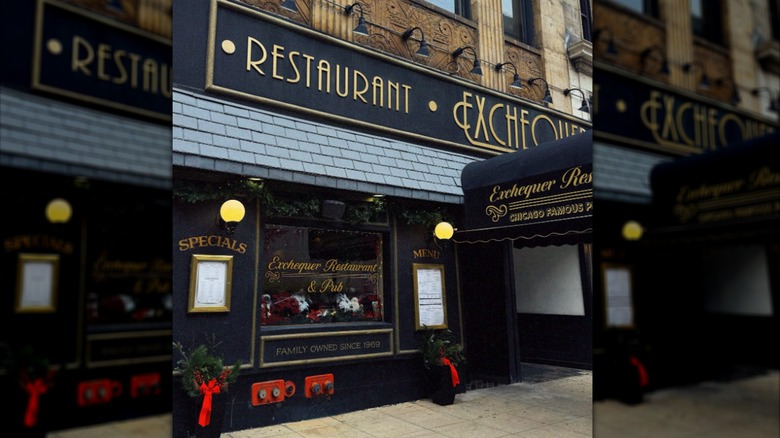
Exchequer Restaurant and Pub is an iconic spot, smack dab in the middle of downtown Chicago. It has established itself for over 50 years and remains a popular place to eat. Back in Prohibition-era Chi-town, though, the restaurant was well known to Al Capone. At that time, it was known as the 226 Club and held a speakeasy and brothel that Capone spent quite a lot of time in.
The balcony of the 226 Club is where Capone and his gang could be found with their enterprise of illegal alcohol. The floor of the club held a trapdoor covering an underground tunnel system used for bootlegging.
These days, the 226 club is full of dust. Some of the original architecture and elements remain, just covered by the ceiling of the current restaurant resident Exchequer. The balcony is still there, covered and frozen in time. The trapdoor is also visible and on display for history-loving patrons.
Won Kow in Chicago, IL
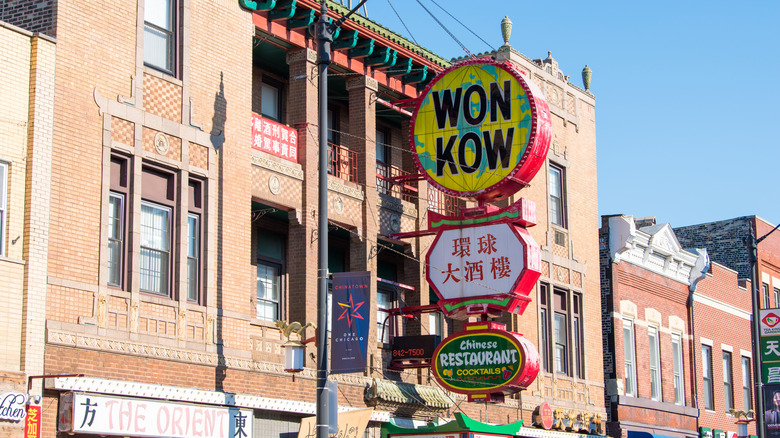
By many accounts, Al Capone was relatively big into the food scene when he lived in Chicago. Capone even opened up his own soup kitchen during the Great Depression, offering food and coffee to those out of work. For his own personal meals, though, he reportedly liked going to Chinatown. In particular, he enjoyed one of Chicago's oldest Chinese restaurants, Won Kow.
Before Won Kow closed down in 2018, it was considered to be one of the oldest restaurants in Chicago's Chinatown. It was around during the reign of Al Capone, and legend has it that the mobster frequented the establishment. Not only was he said to be a regular, but he apparently had his own regular table in the back of the restaurant, where it was common to witness Capone enjoying a meal while bodyguards watched his front.
Before the Chinatown staple closed up shop, patrons could enjoy the same meals that were offered back when Capone was a guest. The menu hardly changed in the nearly 100 years it was in business.
Luna Cafe in Mitchell, IL
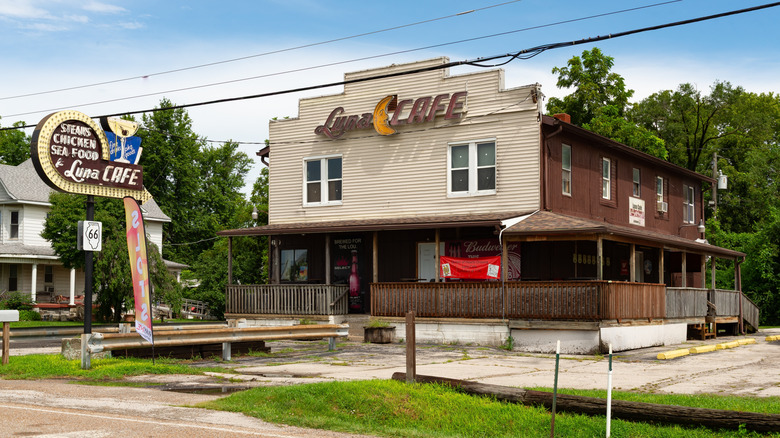
Al Capone had a lot of power in Chicago during the 1920s and early 1930s and is largely associated with the Prohibition era. Capone was also loosely associated with another iconic 1930s nostalgia, as Americana fanatics will be thrilled to learn. Route 66 starts in downtown Chicago, where the gangster did a lot of his business, and he frequently traveled on the iconic highway. Capone often stopped at one Route 66 dive bar in particular: Luna Cafe.
Even though Route 66 is now merely a tour for the nostalgic and lovers of vintage American, some classic Route 66 diners are still very much around. Cafe Luna is still alive and kicking, though it looks quite different than it did when Al Capone was a patron. It used to be a den for mischief and crime, the basement being a speakeasy where gambling was rampant and the upstairs a thriving brothel. So, right up Capone's alley, where he could mingle with other hardened criminals of Illinois. Now, the dive bar is much more law abiding.
Cap's Place in Lighthouse Point, FL
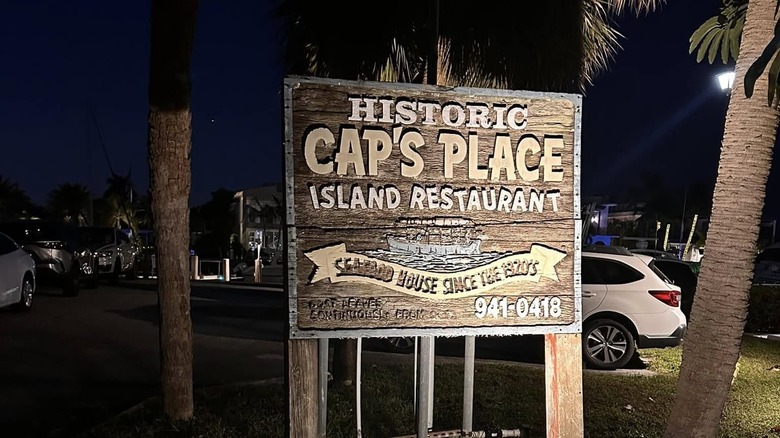
There aren't too many places that can say they've played host to both presidents and rum runners, but Lighthouse Point's Cap's Place can. The coastal restaurant claims to have seen many big names in its over-100-year stint. FDR and Winston Churchill dined here, but before that, criminals like Al Capone enjoyed the illegal rum and gambling that occurred here.
Cap's Place, which is still a functional restaurant, is located right on the water. This location made it an ideal speakeasy, as the rum runners could hop on a boat to transport rum from the Bahamas straight to the establishment. This is exactly what the owner Captain Theodore Knight did, and he was reportedly never caught.
A gambling den and speakeasy was certainly the kind of place Al Capone would have frequented. It seems very feasible that he would find Cap's Place to be an enjoyable hideaway, combining his love for the coast with elements of his life in Chicago.