

Are Cast Iron Skillets Actually Non-Stick?
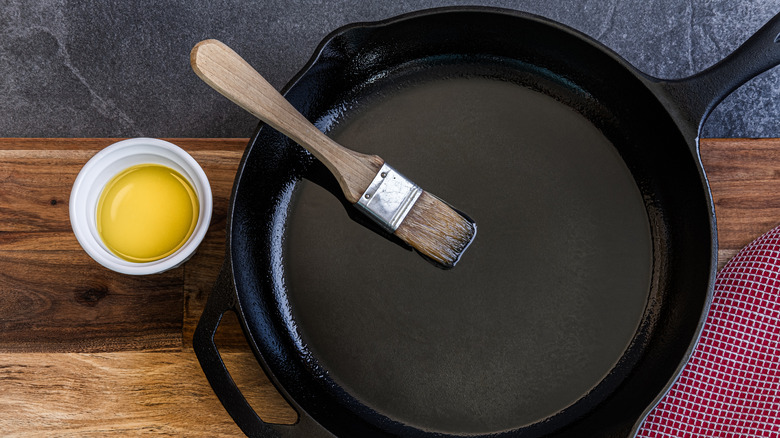
To buy the non-stick pan or not to buy the non-stick pan? That is the question home-cooks may have been asking since the early 2000s. You know, when we started learning how Polytetrafluoroethylene (A.K.A Teflon) was possibly releasing toxic chemicals into our food. If you asked for advice from a more eco-minded friend, they might tell you that the best non-stick pan out there is a tried and true cast iron skillet. But is that really the case?
If you went out and bought a brand new cast iron pan from the store and tried using it like your old non-stick, you might be pretty ticked off at the hippie who told you that would work. That's because right off the bat, a cast iron pan is most certainly not non-stick by itself. On the contrary, if it hasn't at least been pre-seasoned, things tend to stick very much. However, it does become non-stick over time through a process called seasoning.
When exposed to heat, oil physically bonds to the metal in a chemical reaction called polymerization. We don't just mean that the surface of the pan becomes slick and ready for cooking. It actually transforms on a molecular level, creating a hardened sheen that eventually works as the most effective non-stick solution around if you play your cards right.
More oil, less washing
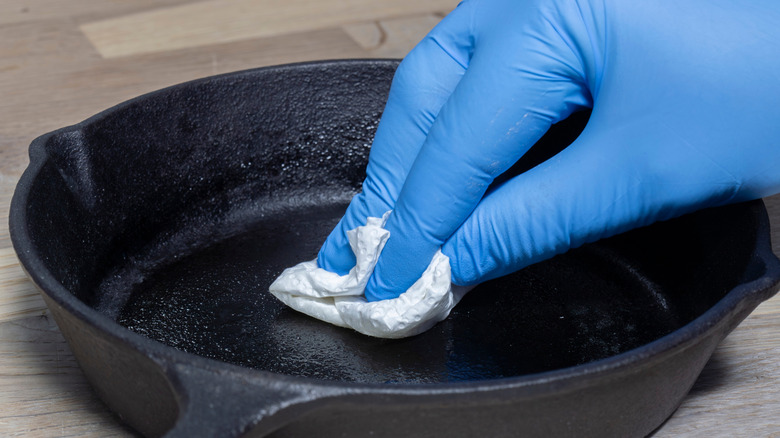
To properly season a cast iron skillet before its first use, you'll want to coat the inside and outside of the pan in a thin, even layer of cooking oil. Even if you bought yours pre-seasoned, it's a good idea to start this process again as it will begin building up that seasoning. Baked upside down in the oven for an hour or more at 400 degrees, this coating of oil begins to oxidize and transform into that slick hardened coating. This will suffice for immediate cooking, but the real magic happens with repeated use. The more you cook with the pan, the more effective the seasoning becomes. What's more, it will not leach harmful chemicals into your food. On the contrary, one of the things that arguably makes cast iron pans better than non-stick ones is that they can transfer iron to your food.
In order to maintain the seasoning you will inevitably work so hard for, you will also need to know how to clean and care for your new favorite non-stick skillet. To start, run hot water over it while it's still warm. Soap isn't always a must, though a drop or two can be used when necessary. Here's the kicker: Rather than leaving the skillet to air dry, pop it on the burner for a minute or two to ensure it's bone-dry before sealing it off with a quick coat of oil and storing it in the cabinet (extra rustic points if you have a nail on the wall for it).