

The Cooking Rules Cowboy Kent Rollins Lives By
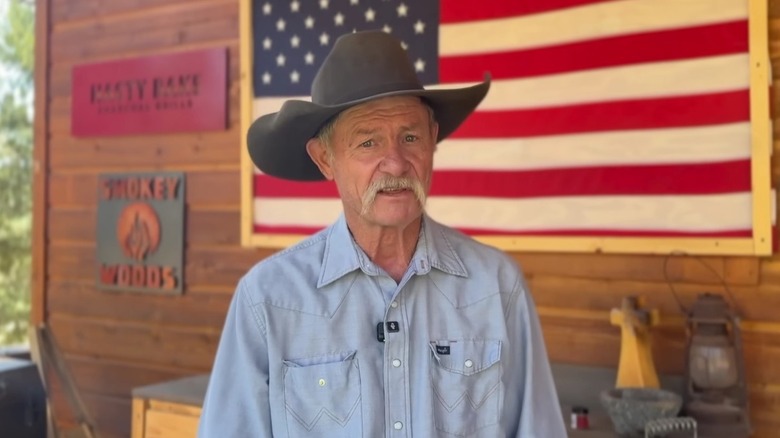
Cowboy Kent Rollins is a beloved, professional chuck wagon cook with some of the most wholesome food content on YouTube. He is passionate about chuck wagon cooking and prairie history, and his videos demonstrate his expertise. He has many educational videos about cast iron cooking, caring for cast iron pots, Western history, the old-fashioned ways of cooking on a cattle drive, and more. You always know what you'll find when you click on a Cowboy Kent Rollins video, and that's a seasoned cowboy cook enthusiastically sharing tips on how to whip up hearty, filling food that cowboys love.
Cowboy Kent Rollins' life is proof that experience is the best teacher. His instructional videos, even the ones where he simply tells stories about the lives of chuck wagon cooks in the 1800s, show mastery and confidence one could only get from years of trial and error. Rollins offers immersive workshops on camp life and outdoor cooking, but you don't have to pay for a class to learn from him. He already shares a lot of what he knows freely on his YouTube channel.
Rollins has 904 videos on his channel as of this writing. They are a joy to watch, but in case you don't have time for bingeing, here are some of the most helpful cooking rules Cowboy Kent Rollins lives by that you might want to try.
Rollins' cooking pots are American made
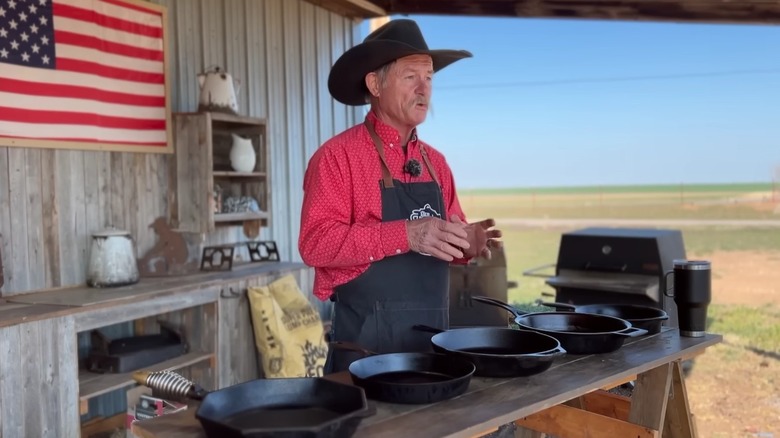
Anyone who's watched Cowboy Kent Rollins' videos for a long time knows how much he values American-made products, especially cast iron skillets and Dutch ovens. He says it a lot in his cooking videos, too. When he unboxed and reviewed a Marquette cast iron skillet in 2023, he said, "We're only gonna do a review or use a piece of cast iron that's made in the United States of America. That's where the quality is, that's where you're going to get longevity from a piece of iron."
As you'd expect, after decades of cooking for ranches and going on cattle drives, Rollins has a pretty impressive collection of cast iron skillets. All from American brands, of course. We get a peek at this collection in one of his cast iron review videos, where he reveals the skillets he uses most frequently at home and out in the field on good old Bertha (his 385-pound wood-burning stove). His preferred brands include Stargazer, Lodge, Field Company, Marquette Castings, and Finex.
More recently, Rollins spoke with Cowboy Cartel, and the host admitted he bought cheaper brands because he wasn't "ready for the good stuff yet," but Rollins reassured him. He said, "As long as it's made in the U.S.A., that's all I'm after."
No one is allowed to walk under the fly without permission or ride too close to camp
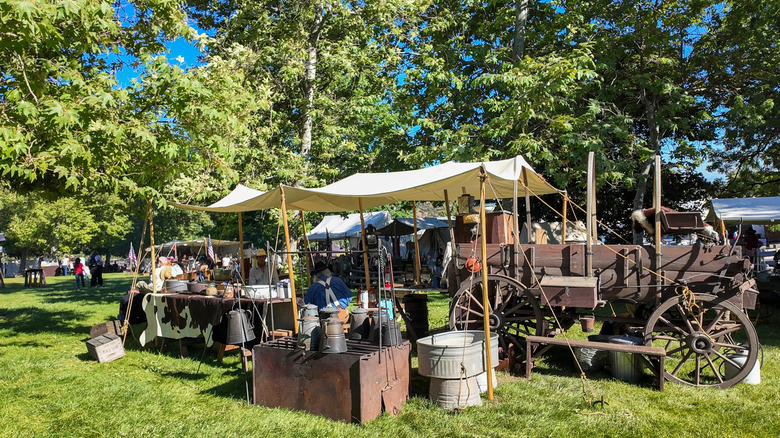
There are certain customs in ranching communities and cattle drives from as early as the 1800s that Kent Rollins continues to honor and enforce today. These include not allowing cowboys to enter the flap without consent or ride too close to camp on horseback.
Traditionally, the chuck wagon is parked under a sheet or tarp staked to the ground like a tent. This is called the fly. When the chuck box lid is down with the leg propped up under it, it becomes the kitchen table. Nobody was allowed to go under the fly without the cook's express permission. In a video about cattle drive lessons, Rollins said, "That was the area in which all the food was prepared. And between that fire ... and that chuck box lid, that was the most sacred ground ever. Nobody walked through that spot."
Another hard rule that Rollins lays down to this day is that no cowboy is allowed to "dust the cook." This happens when someone rides on horseback or guides cattle too close to the chuck wagon, sending dust flying all over the cooking area. These were rules cowboys and cooks followed over a century ago, and they still apply when it's Cowboy Kent Rollins cooking on a cattle drive.
Make sure the coal is hot enough and shake off the ash before cooking
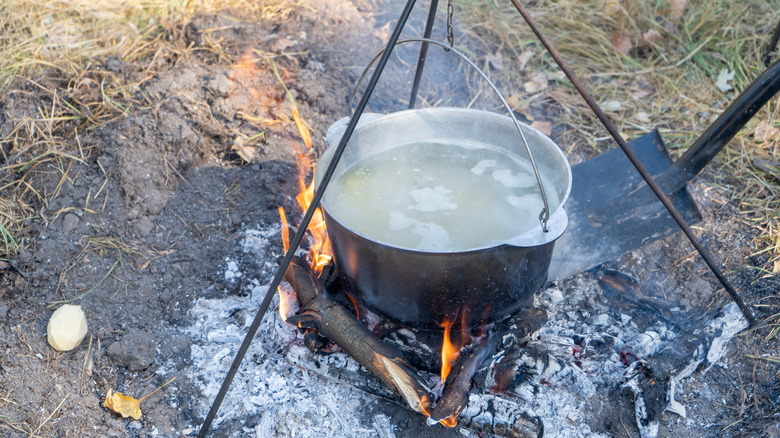
Cast iron retains and spreads heat very well. However, it doesn't heat quickly. That's why it's so important to make sure the coal is hot enough for the food to cook properly. "You don't want to start too soon," Kent Rollins said in a video about grilling advice. "You want to start at the peak performance that that hardwood or hardwood lump is giving you."
Another one of Rollins' tips concerns the coal. "Wait till you see that good, white, hot stuff burning," he advised. "And then it's time to go to town." The only caveat? Shake off the excess ash from the hardwood coal before putting it around the trivet or on top of a Dutch oven lid. Ash has an insulating effect and can hinder the cooking process. Removing the excess ensures that the heat from the coals is maximized.
How do you remove the hot ash? Some people use tongs to pick up pieces of hot coal and shake the ash to the ground. But Rollins recommended a shovel. His pro tip: drill quarter-sized holes so that when you shovel coal from the ground or remove the burning embers from inside a wood oven, the ash simply falls through.
Use a trivet
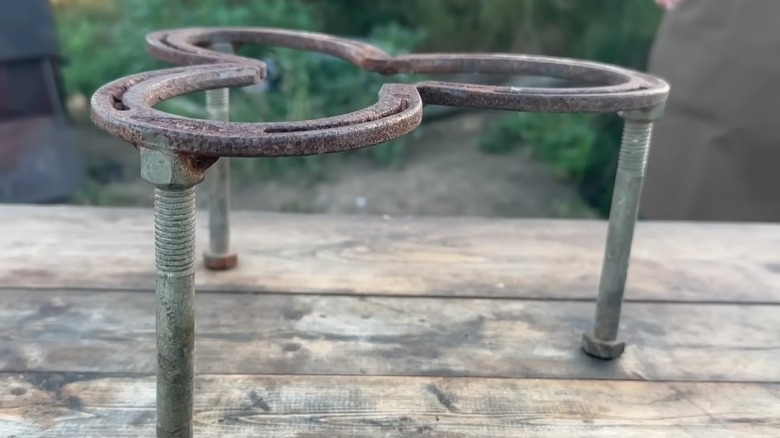
A trivet is one of the essentials of outdoor cooking, especially for chuck wagoners on a cattle drive. It is smaller and simpler to use than a tripod and trammel. It's also faster to set up, clean up, and put away, which is another advantage for a mobile camp.
An outdoor Dutch oven has three legs at the bottom, about an inch or so high. They are designed as such for outdoor cooking right on the ground. However, the legs are so short that food is more likely burn because it gets too close to the heat source. "I feel so much more confident when we can set it on a trivet," Rollins said in a video on Dutch oven cooking advice.
Rollins uses trivets that his team designed and sells on his website. They're made by welding the ends of three horseshoes together into a three-leaf clover. Three large bolts screwed into the piece serve as the legs. The bolts are also removable, so you can swap them for longer ones if you need your trivet to sit higher above the ground. Rollins recommended using a short trivet for casseroles and a tall one for breads, pies, cakes and other food that may burn easily.
Put coal around a dutch oven, not under it
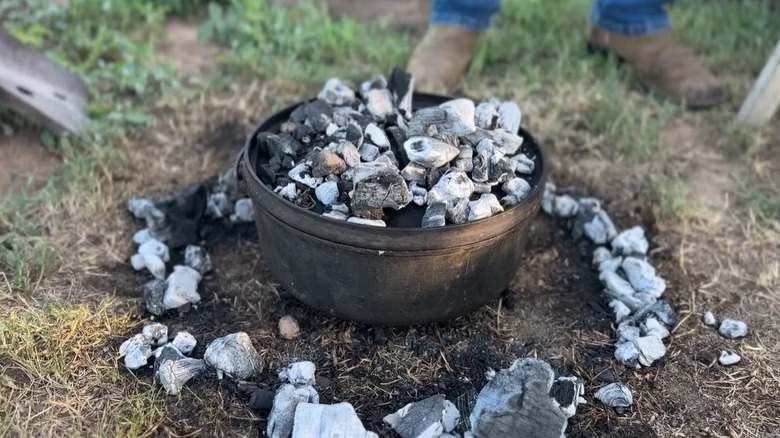
Anyone wanting to learn how to cook outdoors must know about proper coal placement. Kent Rollins believes this is the most important thing when learning to cook outdoors with a Dutch oven.
"I never, hardly ever, if I'm baking something like breads, pies, cakes, brownies, put coals directly under a Dutch oven because you're gonna end up burning something," the cowboy cook shared on his video guide on Dutch oven cooking. As someone who teaches cowboy-style cooking to city folk, Rollins said this is one of the biggest mistakes many people make. The only time it is acceptable to put coal directly under the cast iron is when heat needs to be directed at the center. This can happen when baking a cake, for example, and the center is still jiggly while the edges are already cooked.
So, what is the proper way of cooking over coal? Rollins' rule is simple: place the coal in a ring around the Dutch oven. This "ring method" is akin to turning the flames up or down on a conventional stove. "As you widen the circle [of coal], you are turning down the knob for heat," he explained. "As you bring 'em in closer to your Dutch oven, you are turning up the heat." Rollins also recommended adding or removing some coal on top of the lid as another way to regulate heat.
Pre-warm, don't pre-heat a Dutch oven
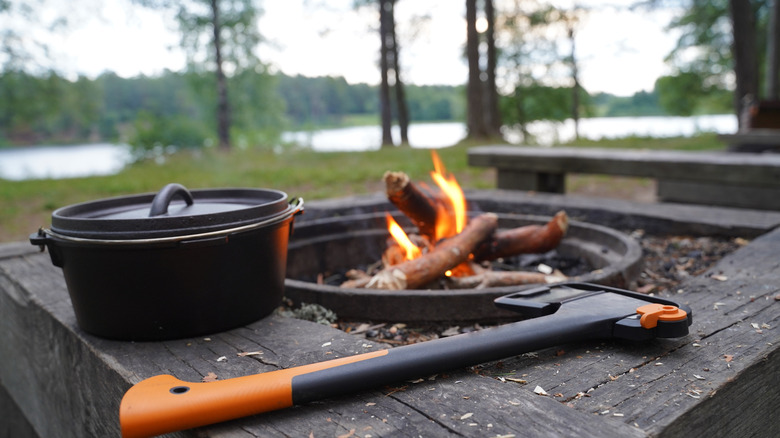
With decades of experience cooking and making recipes with a Dutch oven, Rollins has become an authority on the subject. He has extensive knowledge of this type of cookware and tons of tips he generously shares on his YouTube channel. One of his most important tips is to pre-warm, not pre-heat, a cast iron Dutch oven.
"Never just take a cold piece of cast iron and just go ahead and start baking it right on the money," Rollins shared in one of his videos on outdoor cooking. Doing so could shock the cast iron and cause the metal to warp. It can also burn the oil in a seasoned pot, making it crack and peel off.
The easiest way to gradually warm the Dutch oven is to place the pot on the ground near the wood stove or by the pit where burning coals gather. The pot shouldn't be in direct contact with a heat source, but near enough that the heat can gradually spread across its surface. Once the Dutch oven is warm enough, it is safe to place it on a trivet and assemble a coal ring around it. Rollins recommended always starting with a little coal and gradually adding more as needed.
When baking a high-rising cake, use a deep Dutch oven
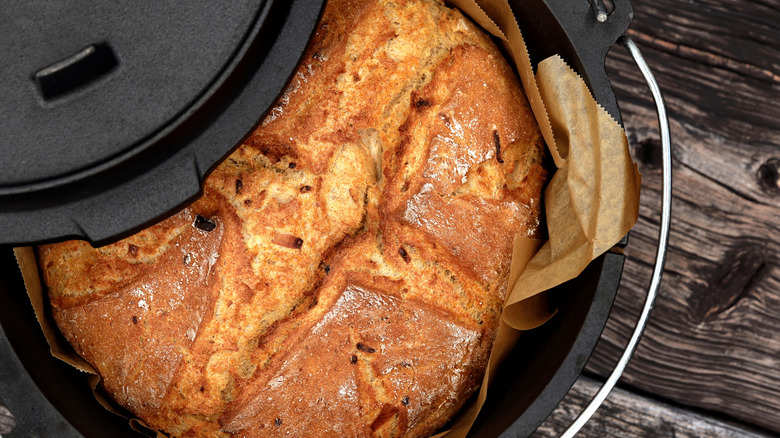
Cowboy Kent Rollins has tons of educational videos on Dutch oven cooking. He has mastered cast iron cooking so well that he even bakes cakes, biscuits, and bread in outdoor Dutch ovens. One important rule he's shared many times in his cooking videos is to use a deep Dutch oven when baking high-rising cakes and breads.
Keep in mind that cast iron retains heat, so when the lid gets hot, it becomes another heat source that contributes to the baking process. As the cake or bread rises, the top will burn as soon as it touches the bottom of the lid. Using a deep oven gives the pastry more room to rise, so it is the better choice for Dutch oven baking, especially if the recipe includes a rising agent.
Shallow Dutch ovens are typically 10 to 12 inches across and can hold 4 to 6 quarts. They are great for cooking casseroles and pies because these foods don't rise so high. Deep Dutch ovens can also be 10 to 12 inches in diameter, but they'll hold up to 8 quarts. Rollins recommended using the deeper pots to anyone who's just learning how to cook and bake with an outdoor Dutch oven.
Clean and re-season cast iron pots after cooking
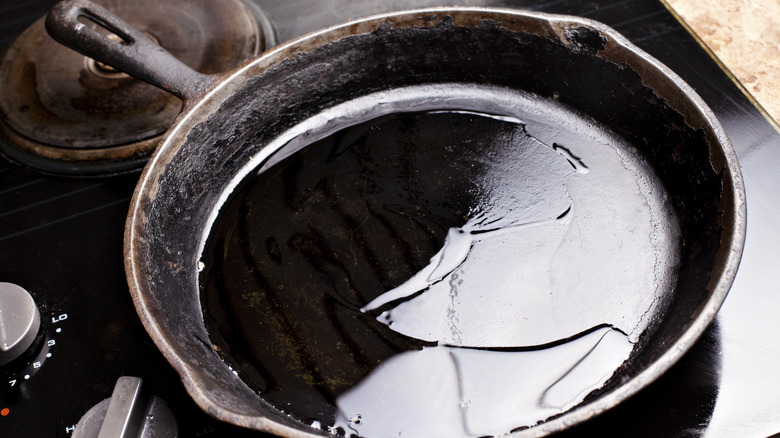
A OnePoll survey revealed that nearly 80% of Americans would rather scrub the toilet or take out the garbage than wash dirty dishes by hand. This explains why dirty dishes often stay in the sink for days at a time. But at least one person in the country is not guilty of this: Cowboy Kent Rollins.
Cast iron cookware is integral to chuck wagon-style cooking, so Rollins uses it all the time. His biggest tip on cleaning cast iron? "Clean it immediately when you get through cooking with it," he said. "That's when it's gonna clean the fastest and the easiest." Food residue is easy to scrub off with a wooden spatula while the cast iron is still warm. If something is really stuck at the bottom, Rollins recommended rubbing the spot with some coarse salt using a soft towel or a halved potato.
After cleaning, Rollins dries the cast iron on the stove, then re-seasons it every time with avocado or grapeseed oils. Both have a high smoke point (they can withstand high heat without smoking or leaving a bitter taste on the pan) and form a smooth, non-stick surface, which is what you want for your skillet or pot.
Season the coffee pot and never wash it with soap
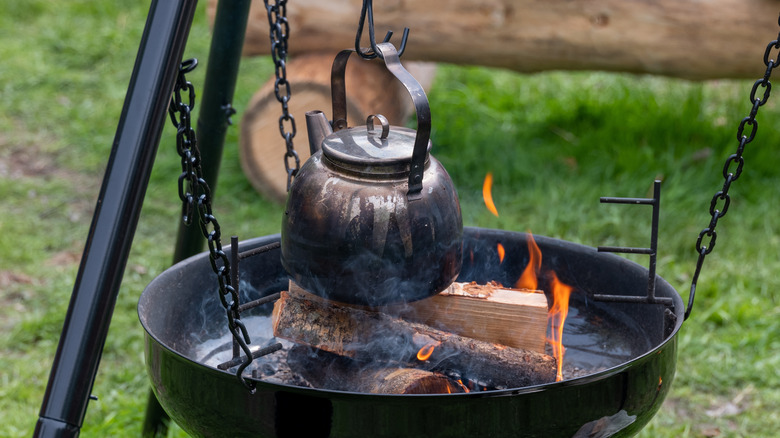
Coffee is an essential out on the range. Kent Rollins knows it's the first thing cowboys look for in the morning. It fuels them and gets them up and ready to tackle the day. And to make excellent cowboy coffee, Rollins shared that the most important thing you'll need is a well-seasoned coffee pot.
An enamel or tin coffee pot is ideal for outdoor brewing. They are durable and can withstand rough environments. They are also like cast iron: they season nicely when used to boil coffee over time. And as one does with cast iron, Rollins doesn't wash his coffee pots with soap. He lets the natural residue left behind from boiling coffee build up and form a film around the interior. This, he said, brings out a much better flavor of the coffee than if it were boiled in an unseasoned pot.
To season a coffee pot, Rollins boils coffee in it for around 10 minutes before removing it from the heat. He lets it sit overnight, and the next morning, drains the coffee used for seasoning before brewing a fresh pot for everyone.
Wrap thick meat in tinfoil when grilling
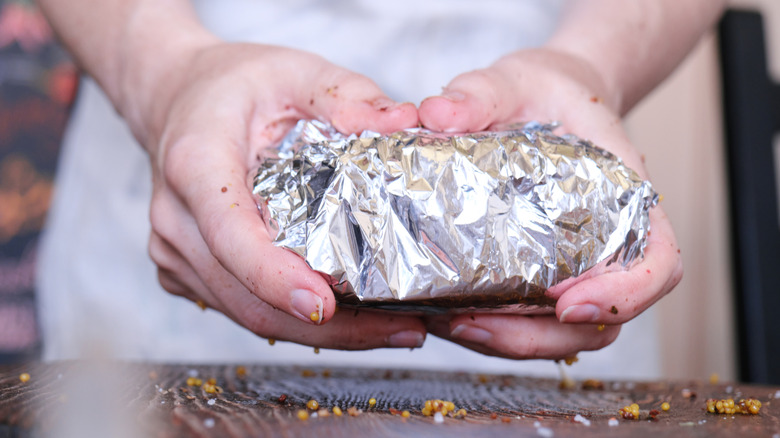
One of the most charming qualities of Cowboy Rollins is his affinity for traditional cooking. You won't catch him showing off with a sophisticated, complicated technique to demonstrate his skills. So, when he's grilling meat and has to tenderize thick slabs of pork chop, for example, he simply uses aluminum foil.
Putting meat in a Ziplock bag and flattening it with a rolling pin is a classic method for tenderizing. But if your cuts are especially thick or bone-in, wrapping them in aluminum foil is Rollins' go-to method. This is also known as Texas crutch, a barbecuing technique commonly used when slow-roasting briskets and pork shoulders. At a certain point during the slow roasting process, the meat's internal temperature stalls due to evaporative cooling. The foil traps moisture and heat, ensuring that the temperature continues to rise and slow cook the meat.
Rollins' method is to season the cuts of meat, wrap each one in foil, then put them directly on the heat for four minutes on each side. The trapped steam pre-cooks the meat, so when you remove the foil afterward and continue grilling the cuts over the fire, you'll need less time to get ultra-tender pieces.
Don't add sugar in cornbread
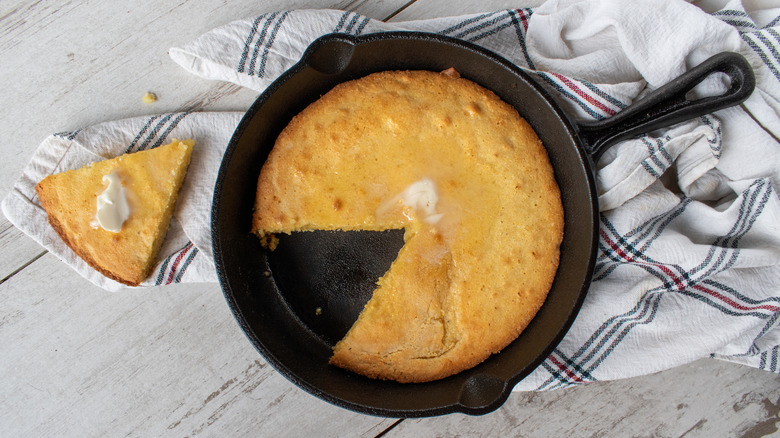
Rollins isn't one to turn his nose up at recipes and cooking styles he's not familiar with. However, there is one thing he doesn't like to do when it comes to cornbread: adding sugar or sweetener to the recipe.
"There's a big debate going on, and it even goes on at our house," Rollins said in a cooking video about cattle drives in the 1800s. "People wanna add sugar to it. Honey to it, molasses to it. They wanna make it like a cake. It's cornbread, it is not a cake!" Although he added that his wife, Shannon Kent, likes sweet cornbread, seeing the incredulity on Rollins' face proves that adding sugar really goes against the grain for the seasoned cook.
Cornbread is a staple in a cattle drive. Rollins referred to it as "yellow gold". He shared that cooks from back then probably only used hot water, lard, and cornmeal. But Rollins cooks it differently. He uses buttermilk instead of hot water. He also adds bacon bits and a bit of bacon grease –– the secret ingredient for delicious Southern cornbread –– to the batter. He then bakes the cornbread in a Dutch oven with a thin layer of leftover bacon drippings.
'Cook what you love. Love what you cook.'
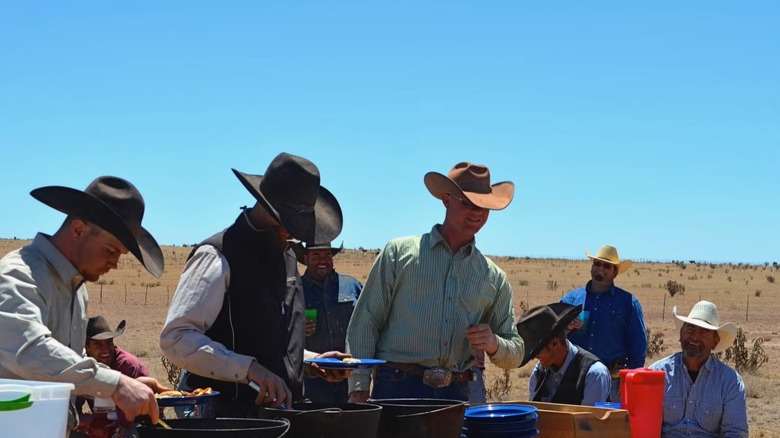
Cowboy Kent Rollins isn't formally trained. He learned to cook from his mother, who imparted an important lesson that Rollins now shares with everyone. That lesson, as he told CBS News in 2015, is, "Cook what you love. Love what you cook." For Rollins, this means keeping things simple no matter where he's cooking. His preparations are based more on memory and know-how than precise measurements, and his recipes revolve around staple ingredients we've all got in the kitchen.
Unlike many celebrity chefs who lean into the glamorous side of the culinary world, Rollins doesn't care about plating and making a dish look like it could be served at a five-star restaurant. He cooks straightforward food like traditional cowboy beans, Depression-era meals, classic biscuits and gravy, and his famous fried chicken steak that beat Bobby Flay.
Rollins' mother also taught him the joy of cooking for your loved ones. He recalls that his family, friends, and neighbors would happily gather together to eat. "We were poor as dirt, but happiest at the table," he said in an interview with AllRecipes. "Simple dishes, made with simple ingredients, but prepared, most importantly, with heart, make gathering around the table even more special."