

Why Food At The White House Was So Bad Under FDR
We may receive a commission on purchases made from links.
"We had a rainwater soup followed by rubber squab, a nice wilted salad, and a cake some admirer had sent in." That was how Ernest Hemingway described dinner at Franklin Delano Roosevelt's White House (via Foreign Policy). The Great Depression began in 1929 and was in full swing when the Democratic nominee, known as FDR, won the presidential election. By his inauguration in March 1933, unemployment stood at nearly 25% — the highest it has ever been in the U.S. FDR's economic policies, collectively known as The New Deal, produced agencies that went by alphabet soup-like acronyms: AAA, CWA, FCC, SEC, and dozens of others. Had there actually been alphabet soup in the White House, surely it would have been as tragic as the one Hemingway tried.
The aggressively frugal White House food was a way of signaling to the nation that austerity wasn't a choice, even for the first family. Subsequent food rationing during World War II and a brass tacks approach to cooking in the White House kitchen meant the fare in the 32nd president's official residence remained dreadful throughout his 12 years in office.
Eating before coming to the White House for a meal became a running joke. Bread and butter sandwiches, boiled vegetables, and spaghetti were common. While some presidents liked their steaks cooked a certain way, FDR's signature lunch consisted of deviled eggs with tomato sauce, mashed potatoes, prune pudding, and coffee. The most important aspect of the meal? It offered sufficient nutrition for under 8 cents!
First Lady Eleanor Roosevelt's home economics and some bad White House cooking
Multiple presidents have had questionable White House food, but rarely has the presidential menu held as much sociopolitical and historical importance as it did under Franklin Delano Roosevelt. The punishing effects of the Great Depression's scarcity, followed by World War II rations, were felt across the country. Although FDR occasionally enjoyed extravagant foods, he upheld his federal duty to promote the message of culinary austerity. His wife, Eleanor Roosevelt, was at the movement's forefront.
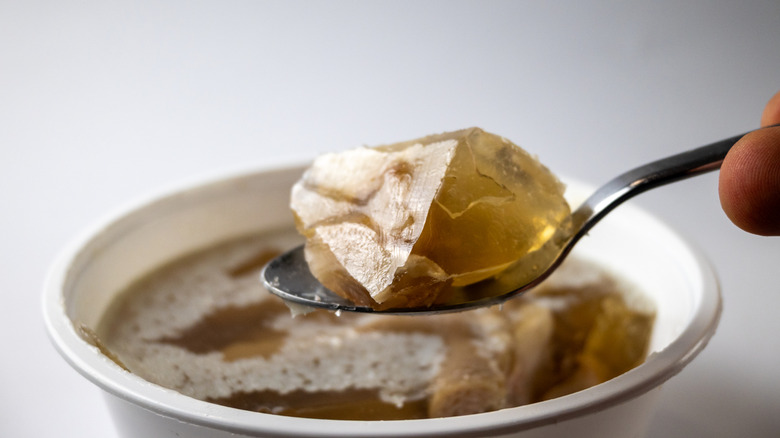
Eleanor embarked on a mission to lead American households in eating frugally. Impressed by meals conceptualized by Cornell's home economics department, she started putting together Depression-era menus even before her husband's inauguration. In addition to purchasing the cheapest meats and vegetables available, foods like Milkorno, made from dry skim milk and powdered corn, were put to use in the White House kitchen. The popularity of gelatin gave rise to jellied bouillon, an aspic-style, old-school dish most people wouldn't eat today.
White House food under FDR also suffered because the first lady and her appointed housekeeper, Henrietta Nesbitt, leaned towards plain cooking. The former was content eating simple fare, and the latter became infamous amongst White House visitors for churning out bland, sad-looking dishes. In her memoir, "White House Diary," Nesbitt reflects upon the thousands of guests who visited, and how, strangely enough, many of them had ulcers (via Time). Other historic accounts claim that visitors used the excuse to avoid the worst of Nesbitt's culinary supervision.