

Where Are Papa John's Complementary Pepperoncinis From?
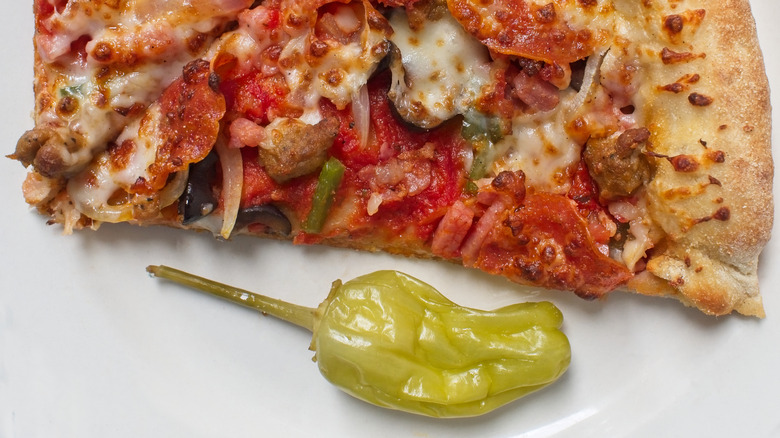
In a world of forgettable chain pizza, Papa John's stands out in the minds of many hungry folks seeking delivery through one simple addition: a sharply pickled, mildly spicy pepperoncini pepper included with each pie and other popular menu items. Curious minds may wonder about the path those complementary peppers take from the plant to your local pizzeria. For Papa John's pepperoncini, the story starts in the fertile farm fields of Turkey.
In a 2017 interview with Thrillist, the chain's "chief ingredient officer," Sean Muldoon, mentioned the Eurasian nation as the source of Papa John's pepperoncini. The company is apparently such a large consumer of the peppers that it buys approximately 1 out of every 4 pepperoncini produced by Turkey. The country's Mediterranean climate allows it to compete with other top pepperoncini-producing nations such as Greece and Italy.
However, this Turkish supply relationship hasn't always been a smooth one. Muldoon revealed that, as the chain rapidly grew in the late 1990s, its traditional suppliers struggled to keep up with the demand for peppers, a fact he claimed sparked a worldwide pepperoncini shortage. That's a startling feat, considering Turkey produces the third most peppers of any country worldwide, and exports the fourth most.
A company tradition that pre-dates Papa John's
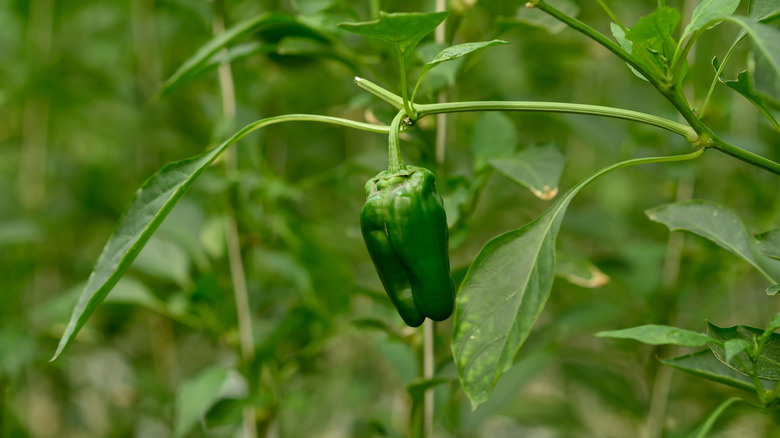
Of course, this doesn't explain the reasons why Papa John's became such a large consumer of pepperoncini in the first place. Those wondering why Papa John's includes pepperoncini with your pizza may be surprised to learn this isn't an original touch created by the chain. Founder John Schnatter borrowed the practice from Rocky's Sub Pub in Jeffersonville, Indiana, where he worked as a dishwasher years before establishing the pizza company.
Unfortunately, those who are a bit squeamish may want to leave that free pepper in the box. Papa John's pepperoncinis are among the menu items that staff won't eat, with social media discussion from employees claiming the peppers are often tossed in with bare, sometimes unwashed, hands. Although there's no evidence of how widespread or harmful this practice could be, it's undoubtedly a shame to see peppers that have traveled all the way from Turkey to an American pizza box wasted over food safety concerns.
There's no doubt Papa John's has grown substantially since the 2017 interview that revealed its source of peppers. Yet there's no clear indication whether the chain's suppliers have stepped up their game to keep up with demand, or if Papa John's has found additional ones, perhaps even from other countries. However, it's safe to assume that, when you chow down on a Papa John's pepperoncini, you're enjoying a tangy, spicy taste of Turkey.