

Where Does Costco's Kirkland Signature Syrup Come From?
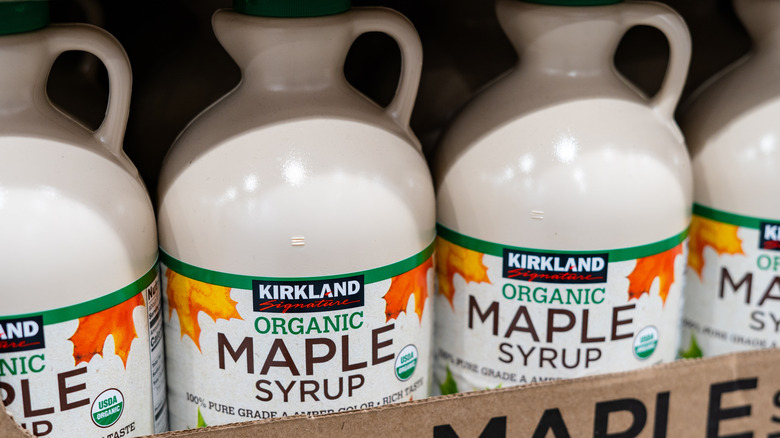
We named Costco's organic maple syrup among the 5 best Costco products that flew under the radar. If our word isn't enticing enough, customers also recommend stocking up on this Kirkland Signature product. Amassing a hoard of the sweet, sticky liquid and saving it for a rainy day when the craving hits for extra flaky maple bacon biscuits might not be a tough task, considering the low price point ($14.99 per liter jug) for the syrup that's 100% pure and Amber Rich (color and flavor). When we see a Costco product that's amassed a cult following like this one, we're naturally curious to know where it comes from. It turns out Costco's Kirkland Signature Organic Maple Syrup is sourced from Canada, via two major companies — Citadelle and The Maple Treat (now operating as Lantic Maple).
It makes sense that Costco gets its maple syrup from our northern neighbor. According to Climate Data Canada, the country produces approximately 70% of the world's maple syrup supply, with 90% of the product hailing from Quebec, where Citadelle and The Maple Treat are headquartered. Worldexports.com reported Canada earned $523.7 million (U.S. dollars) from maple syrup in 2024, compared with the second-largest exporter, the U.S., which earned $47 million. However, increasing adverse weather events and natural disasters could threaten Canada's maple tree forests and syrup supplies for the future, according to Natural Resources Canada (making an even greater case for our earlier stockpiling suggestion).
Pure maple syrup is different from pancake syrup and most customers can taste the difference
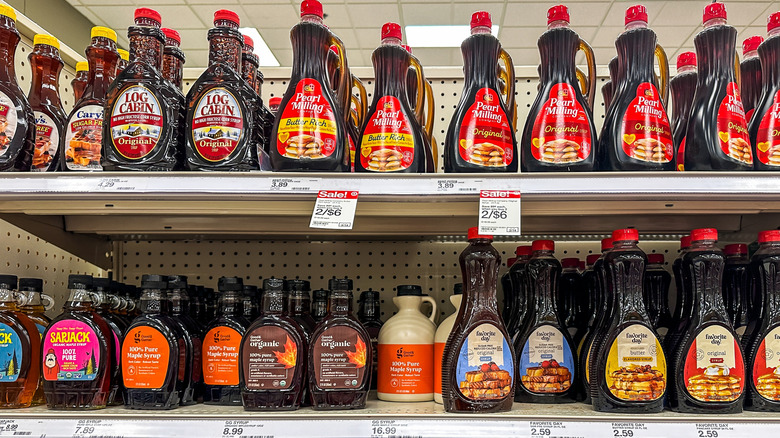
If you're privileged to hold a liter jug of Costco's Kirkland Signature Organic Maple Syrup in your hands, upon turning it over, the label will reveal just one ingredient: Pure organic maple syrup. In fact, checking the label for the single ingredient is how to know if your syrup really has maple in it. Alternatively, many of the familiar syrups in the breakfast aisle are actually classified as pancake syrup — different from maple syrup in ingredients (may contain high fructose corn syrup, artificial coloring, etc), and often price point. Breakfast lovers across the internet appear to be split on which they prefer. Some swear by the real stuff, while others prefer Mrs. Butterworth's and other pancake syrup brands of their childhoods.
A Redditor posting at r/AskCulinary questioned whether they were missing something when they admitted they couldn't pinpoint the difference in taste. Several users responded with reasons they believed pure maple syrup tastes superior. One person said the pure maple syrup has a lighter, more earthy taste with compounds in its natural sugar that make it a healthier choice. Another person said they grew up on real maple syrup and could not stomach the imitation. At r/unpopularopinion, a poster proclaimed they prefer pancake syrup to real maple syrup. Some disputed the poster's sentiment, but a few agreed that they believe pure maple syrup is over-hyped and/or overpriced.