

The Martini Sin That Franklin Roosevelt Committed In The White House
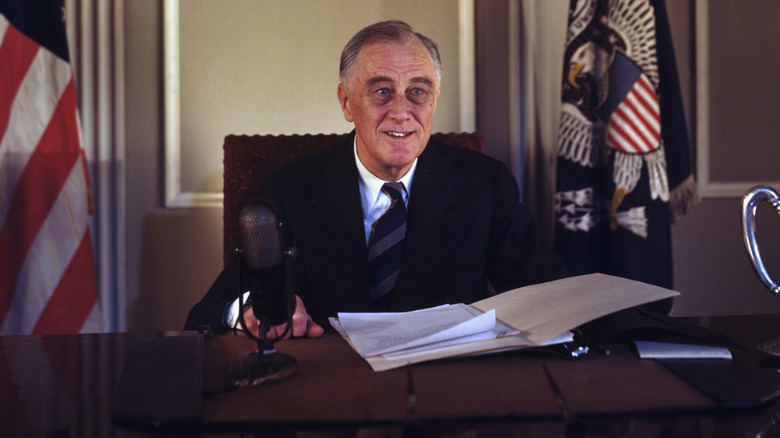
What someone considers an excellent cocktail often comes down to personal taste, but for the classics, there's a so-called proper way to construct them. Case in point: the martini. It's an incredibly simple cocktail made with gin and vermouth. While gin has been traditionally popular in a martini, vodka is also an option. Most people prefer the "dry" version with more gin or vodka, but former president Franklin Roosevelt was the oddball who liked it vermouth-heavy, with a bizarre twist of adding absinthe.
According to Drunkard, the president would add a few drops of absinthe to his martinis, which is definitely not the standard in martinis. The president's grandson reported to The History Channel that "[He] made the worst martinis I've ever tasted." Harsh, but valid — absinthe is a strong, bright green liquor (with an ABV over 50%) and has an intense, bitter herbal flavor. If he didn't add absinthe, he would do the normal addition of olive brine, and finish with a lemon peel and olive garnish.
But back to Roosevelt's soft spot for vermouth: A heavy pour resulted in a very "wet" martini, or basically mostly vermouth with a splash of gin — the opposite of the status quo. This also made for a slightly less strong drink as vermouth contains 15 to 22% percent alcohol, while vodka and gin have around 40 to 50%. Today, there is an absinthe-infused martini called "The Obituary," but it contains a more balanced ratio than Roosevelt would have opted for, including 2 ounces of gin, and ¼ ounce of both dry vermouth and absinthe.
Roosevelt's martini vs today's standard martini
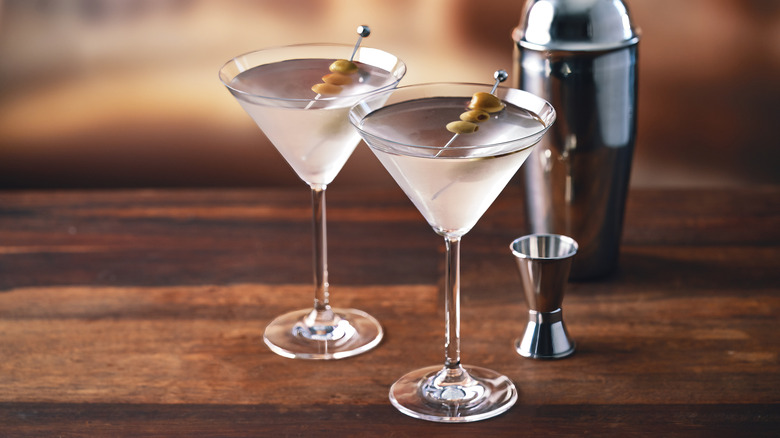
There is flexibility when it comes to making a martini: The cocktail has traditionally followed a ratio of anywhere from 2:1 gin or vodka with vermouth, up to a spirit-forward drink with a 5:1 ratio. Those who are new to martinis may start with a 1:1 ratio to see which spirit they prefer tasting, and adjust from there. Roosevelt clearly discovered that he preferred the flavors of the fortified wine, vermouth, more than gin. His ratio varied from two to five parts vermouth to one part gin, the opposite of most martini recipes, and he wasn't alone in thinking this was the better route: It's said that Julia Child also enjoyed this type peculiar martini.
Dry or extra dry vermouth is the typical choice for martinis, which are made from white wine and contain very little added sugars. Roosevelt made a normal choice here and stuck with the standard dry or extra dry vermouth, but it's not clear which brand he liked. If you need some inspiration, Dolin Dry Vermouth is a classic choice, and if you like a more "wet" martini like Roosevelt, consider the fresh and citrusy Yzaguirre Blanco.
When posed with the dilemma of deciding on gin versus vodka, there isn't necessarily a right choice for this. It's mostly about choosing what flavors you prefer; clean and straightforward (vodka), or herbal (gin)? Don't worry — no one will ask you if you want absinthe in your martini. If you aren't a fan of either, then consider the tequila martini.