

12 Storage Mistakes That Are Ruining Your Cheese

Nobody should underestimate the importance of cheese in many people's lives. And that's why it's all the more disappointing when you go to your fridge searching for that piece of cheese you want to eat only to find that it has dried out or grown unwanted mold. The problem usually isn't the cheese itself but the way you're keeping it stored. We wanted to learn more about the storage mistakes that ruin cheese, so we spoke to four experts.
We interviewed Shannon Bonilla of Wisconsin Cheese, an American Cheese Society certified cheese professional and certified cheese sensory evaluator; Beth Crave, director of quality assurance for Crave Brothers Farmstead Cheese; Jeff Kampa, cheese specialist and certified cheese professional at Dietz and Watson; and Tim Stearns, master cheesemaker at Land O'Lakes, Inc. Laden with their expert knowledge, we were able to discover some common storage don'ts that make cheese spoil faster or ruin the flavor or texture.
Once you learn about the 12 storage mistakes that are ruining your cheese, they're simple to avoid. You don't need to do anything dramatic, just make a few tweaks to the way you keep cheese stored at home and you'll notice the difference. No more heartache when you realize the cheese you've been thinking about all day isn't good to eat anymore.
1. Leaving cheese uncovered
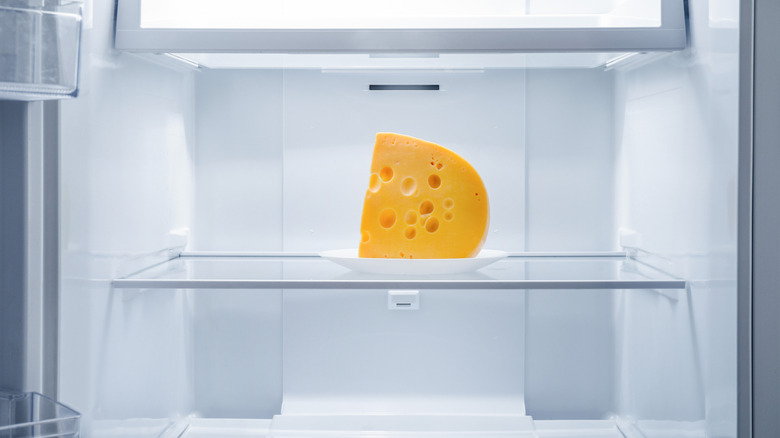
You might think it's okay to just pop open packages of cheese back in the fridge on a plate or cheese board, especially if you'll be coming back to it within a day or two. After all, it's refrigerated and you may assume that this will stop it from spoiling. However, the fact is that cheese shouldn't be left uncovered in the fridge. It won't turn rancid or go off in this way, but there are other reasons to cover your cheese in the fridge.
"I always recommend covering or wrapping cheese for storage," says Dietz and Watson cheese expert Jeff Kampa. "Unprotected exposure can lead to off flavors, unwanted molding, or textural degradation." When you leave it without any kind of cover on it, it can absorb the flavors of the other foods in your fridge, so it might end up with notes of onion or fish, which is not going to be pleasant.
Cheese is one of the most commonly wasted grocery items and a big part of this is that people often store it wrong so it dries out. If you've ever found your open block of cheese is dried out and cracking at the end or around the edges, exposure to air in the fridge is the culprit. Take a few moments to wrap or cover your cheese and it will last much longer.
2. Not letting cheese breathe
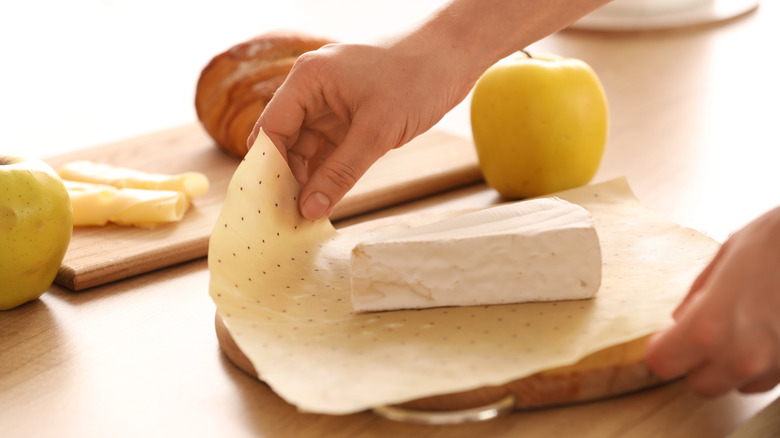
One of many common cheese misconceptions is that you should store cheese in plastic wrap to keep it fresh for longer. But, in fact, this can have the opposite effect; you need to let cheese breathe. So, while you shouldn't leave it uncovered, you also shouldn't store it in a way that means there's zero air circulation. It's a fine balance, but once you've got it figured out, your cheese will last far longer.
"The trick is to let the cheese breathe, but not so much that it dries out and gets gross," explains Jeff Kampa. You can buy special products to achieve this but it's not essential. "My top recommendation is cheese paper; two-ply is key because it keeps the moisture in and the oxygen out, which is essential for keeping cheese in prime condition as a 'living' product," says certified cheese professional Shannon Bonilla. However, most of our experts recommend using wax paper if you don't have or don't want to buy cheese paper.
But, once you've wrapped it, that's not the end of the story. Beth Crave of Crave Brothers Farmstead Cheese recommends wrapping it in cheese paper, wax paper, or parchment paper and then placing it loosely in a bag or a container. If it's a zippered bag, leave the zipper slightly unzipped or if it's a lidded container, place the lid on top but don't seal it. "This protects the cheese while still allowing airflow," Crave tells us. "You should avoid wrapping cheese tightly in plastic wrap for long-term storage because it can trap moisture and affect flavor."
3. Keeping cheese for too long
We understand that when you buy a fancy cheese, you might decide to savor it and not eat it all at once, but there is such a thing as keeping cheese for too long, especially certain varieties. No matter how perfectly you store it, if you keep cheese for longer than you should, it's eventually going to spoil.
"One common mistake people make when storing cheese at home is not using it soon enough after opening," says Beth Crave. Before it's open, you can rely on the expiry date to see how quickly you need to use up your cheese, but once you crack that packaging, it's a different matter. Crave notes that certain cheeses, such as fresh mozzarella, need to be eaten as soon as possible, because once the packaging is open the quality starts to degrade.
Jeff Kampa generally advises buying little and often. "Don't purchase more cheese that you can eat in a week," he says. "Frequent trips to the cheese counter are never a bad thing." However, he acknowledges that some cheese varieties last longer than others. "Softer, fresher, higher moisture and fat cheese should be consumed sooner than later as they tend to develop off flavors more quickly than firmer, drier varieties."
4. Storing cheeses together without being mindful of their qualities

When you're storing cheeses together, it's important that you don't just chuck them all in the same container and hope for the best. You need to be mindful of their individual qualities to make sure they don't interact with one another and spoil. Our experts all have slightly different opinions, so there's some nuance to this situation.
According to Shannon Bonilla of Wisconsin Cheese, you ideally shouldn't store different cheeses in the same container at all. "Each cheese has its own microflora and unique characteristics, which can be affected when stored together," she says. But she advises that, if you need to store them in the same container to save space, you should aim to group similar cheeses together. However, she notes that "blue cheeses and white-mold cheeses should always be kept separate, as their molds can transfer and affect the flavor and quality of other cheeses."
Beth Crave agrees that, if stored together, it's best to keep like with like. "You wouldn't want to store a cheese like blue cheese with other cheeses as the flavor, smell, and moisture could transfer to the other cheeses," she says. "But you could have your ... Jack or cheddar in the same container as long as you have them individually wrapped in parchment paper or wax paper." Land O' Lakes, Inc. master cheesemaker Tim Stearns advises to keep strong-smelling cheeses away from milder ones. "Cheese can absorb the smells of other things around it so just be mindful," he says.
5. Positioning the cheese too close to the fans in the fridge
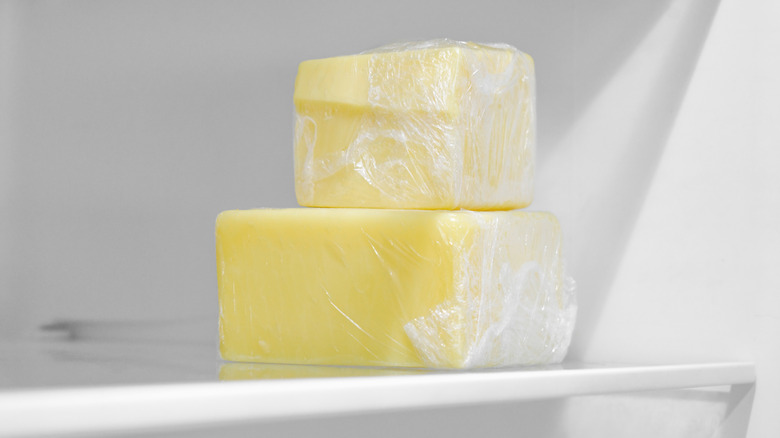
Some cheeses are worth eating more than others, and if you've procured yourself a fancy cheese, the last thing you want to do is ruin it. It matters where you position your cheese in the fridge. Many people make the mistake of not thinking about it and accidentally placing their cheese too close to the fans that move cold air around the fridge, and this can have an unexpected impact.
"I recommend keeping the cheese in some type of drawer and away from the fans in the fridge because that can dry the cheese out faster," says Tim Stearns. He notes that this depends on what you keep your cheese in. For instance, if you're storing it in wax paper inside a lidded container, that extra airflow from the fans might not make too much difference. However, if you're storing it in cheese paper or wax paper alone, it could lead to some drying.
But if your cheese dries out, it doesn't have to be the end of the world. "If a cheese dries out because it has not been stored correctly, you can usually trim away the dried portion and still use the rest," says American Cheese Society certified cheese professional Shannon Bonilla.
6. Not using the cheese or vegetable drawers for storage
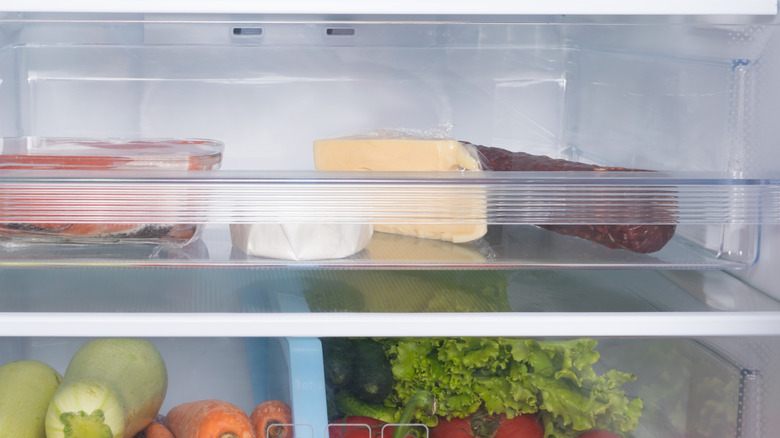
If you store your cheese in the main body of the fridge, you're making a mistake. Most fridges have specific areas for storing cheese — even if you skipped reading the manual and didn't realize that's what they're for. And if your fridge doesn't have a specific cheese drawer, there are other areas of the fridge that work well for cheese.
"Many Wisconsinites are familiar with what we like to call the cheese drawer," says Shannon Bonilla. "This is typically the crisper drawer, usually located in the middle of the fridge, and it is an ideal place to store cheese." She explains that it helps to create a stable environment for cheese and keeps it more separate from other food in the fridge, which is handy since cheese easily absorbs surrounding flavors.
Beth Crave also recommends using either the cheese or vegetable drawers. "These areas tend to have more stable temperatures and slightly higher humidity, which helps maintain better storage conditions for cheese," she remarks. Jeff Kampa also rates crisper drawers because some of them allow you to control the temperature, so you can keep it slightly warmer than the rest of your fridge, which works out well for cheeses.
7. Storing every type of cheese the same way

France is home to more than 1,200 cheeses — and that's just one country. All over the globe, there are soft cheeses, hard cheeses, cheeses veined with blue mold, cheeses with a rind of white mold, and cheeses aged for more than a decade. So, why do people often treat them the same when it comes to storage? Each cheese has its own storage requirements, which is something to bear in mind when putting them away in the fridge.
Shannon Bonilla explains some particular storage requirements for a range of cheeses. Fresh cheeses like ricotta or mozzarella should ideally be used right away, but where storage is necessary, keeping them in the original packaging is ideal. Soft ripened cheeses can be difficult to keep fresh. "Because these cheeses have delicate rinds, proper storage is important," she tells us. To get the perfect balance of airflow and humidity, you should use cheese paper or wrap them in parchment paper.
Hard cheeses and semihard cheeses are a bit more forgiving. While cheese paper or parchment paper is ideal, they usually won't suffer from being kept in a resealable bag. If in doubt, you can always ask the person serving you when buying from a cheese shop or cheese counter.
8. Assuming all cheese has the same shelf life

There are so many types of cheeses that it doesn't make sense to assume that they all have the same shelf life. Still, for many people, cheese is cheese and all of it spoils at about the same rate. This is a common misconception, leading people to either keep cheese for too long and have it grow mold or causing them to rush to try and use it up long before necessary.
Hard cheeses "have less moisture to lose and can safely be stored for up to six weeks (or more) after opening," Shannon Bonilla tells us. Semihard cheeses like cheddar or Gouda "are middle-of-the-road in moisture and can be safely stored for about four weeks after opening," she explains. Soft cheeses, on the other hand, contain much more moisture and are quicker to spoil. To be on the safe side, you should aim to eat them within a week.
And, then there's the fact that some cheeses are deliberately aged for years to improve their flavor and texture. It's possible to age cheese at home, but professionals do it under specific controlled conditions, so your levels of success may vary. "If you buy extra-sharp cheddar and you try to 'age' it longer yourself, keep it in a dark drawer in your fridge," Tim Stearns advises. But he explains there are caveats: "this would only work with aged cheeses — a high moisture cheese like fresh mozzarella will not age well."
9. Storing mozzarella and other fresh cheese out of the liquid it came in
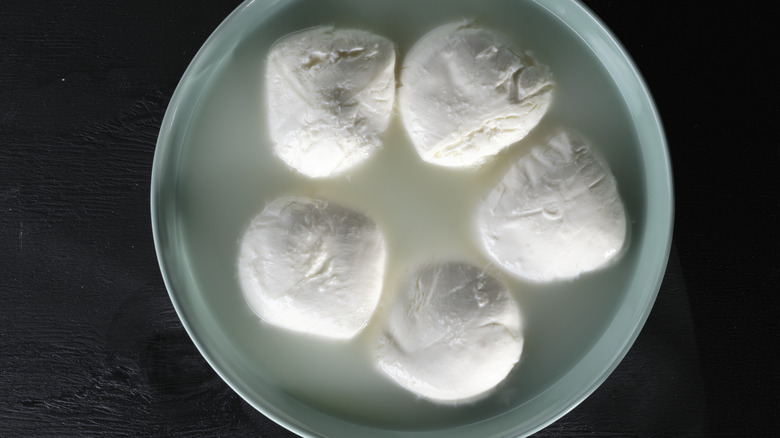
Fresh cheeses that come in brine have particular storage requirements that differ from most others. Because supermarket versions have a relatively long shelf life before opening, a lot of people make the mistake of assuming that how you store them and how long you keep them doesn't matter all that much, but this can lead to wasted cheese.
"Once you open a retail cup of fresh mozzarella and brine, you want to take the cheese you need and leave the remaining cheese in the brine with the lid on," says Beth Crave. The same goes for other cheeses that come in brine or other liquid, such as feta. According to Shannon Bonilla, eating fresh cheese right after opening it is ideal. "If you must, these cheeses are best stored in the containers they were sold in," she says. Keeping them in the liquid they were sold in helps keep them from drying out.
10. Not checking for microbial growth
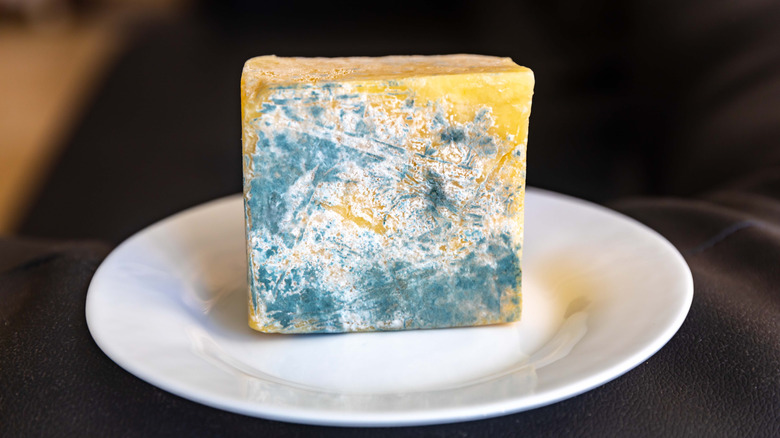
One thing you should be doing regularly when storing cheese is checking for microbial growth — or, in other words, mold. It's safe to eat moldy blue cheese because of the mold it is and the fact it was grown under controlled circumstances. However, when you get mold on your cheese that you don't expect to be there, outside of a lab test, there's no way to tell what it is and whether it's safe to eat. So, keeping your eye on cheeses can keep any potential issues from going too far.
"One thing to keep an eye on with firm cheeses in storage is to periodically check their surface for unexpected microbial growth," says Jeff Kampa. "Catching it earlier than later makes it easier to trim, salvage, and consume." Mold is all part of the cheese-making process and almost none of the mold that pops up on cheese — even accidentally — is dangerous. That said, it can affect the flavor and texture, so it's best not to eat it and see if it's the delicious kind of mold.
How you deal with mold also depends on the type of cheese. Shannon Bonilla tells us that a small amount of surface mold on harder cheeses isn't a problem. "You can simply cut away the affected area and continue enjoying the rest," she says. "Mold spreads more easily in moist environments, so in drier, firmer cheeses it typically does not penetrate deeply," she explains. Younger, softer cheeses are another matter. The higher moisture and looser structure in these mean that there's more space for mold to spread throughout the structure. If these get mold, it's best to throw them out.
11. Storing your cheese in the fridge right up until the moment you serve it
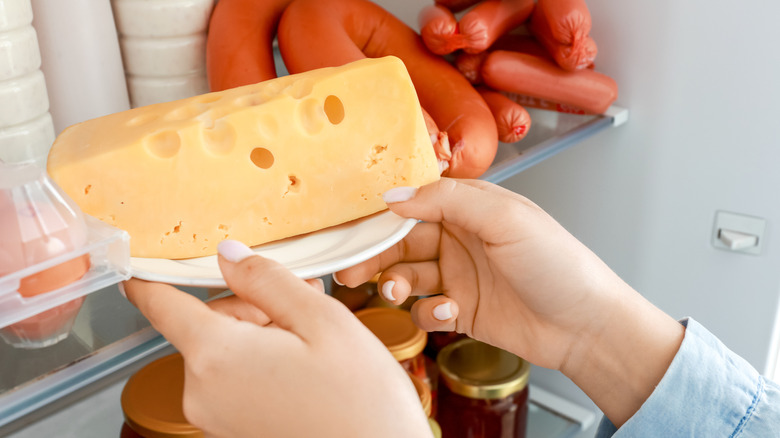
If you're keeping your cheese in the fridge right up until the minute you eat it, you're not getting the best from it. When it's cold, its flavors are dulled and the texture isn't how it's intended, so you can end up with bland, rubbery cheese. Bringing it up to room temperature is important whether you're serving a cheese board or just enjoying an afternoon snack.
"Make sure to remove it from the refrigerator 30 to 60 minutes before you plan to serve it so it comes to room temperature for best representation of the flavor profile as created by the cheesemaker," advises Shannon Bonilla. The flavors in cheese are at their best when it's close to our body temperature when we eat it, so serving it at room temperature is a good bet.
"Maintaining consistent temperatures helps preserve the quality of your cheese and extend its shelf-life," Bonilla says, but that's not the end of the story. "Keep in mind that cheese was invented to preserve milk long before refrigeration was a thing, so a few hours on your counter will not significantly damage or alter most cheeses," she explains.
12. Expecting the texture to be the same after freezing cheese
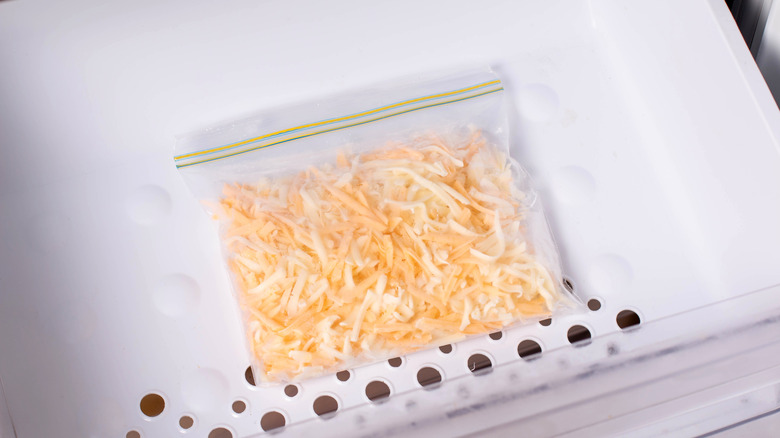
Freezing your cheese isn't an ideal solution, but when it's either that or let it go to waste, it's better than nothing. However, if you choose to store your cheese in this way to prevent it from spoiling, you shouldn't expect the texture to be the same when it's defrosted. "When you freeze the cheese, the moisture inside the cheese will freeze and it will cause the cheese to be dry and crumbly," explains Tim Stearns, so it shouldn't necessarily be your first solution for extended storage.
"I'm all for avoiding food waste and it's totally possible to freeze firmer cheese like aged cheddar, Parmigiano-Reggiano, or aged Gouda," says Jeff Kampa. "I've also heard of people successfully freezing things like pre-shredded mozzarella or cheese blends," he notes. But he admits that some cheeses won't freeze particularly well, such as delicate, high fat, high moisture cheeses like brie and Camembert.
"If you find yourself with more cheese than you can finish, the best approach is to shred it first and store it in an airtight container," before freezing, says Shannon Bonilla. "That said, freezing will impact both the texture and overall quality, so it is best suited for cooking rather than eating on its own." Shredding cheese and freezing it to use later in a mac and cheese or toss in an omelet is one thing, but the freezing process won't perfectly preserve your cheese.