

Mistakes Everyone Makes With Pizza Sauce
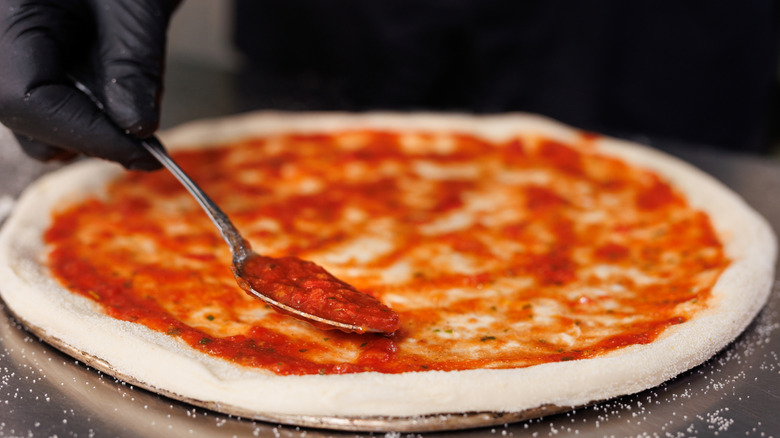
When people think about making the best possible pizza, they normally focus on the crust, looking for pizza dough mistakes and learning how to troubleshoot them. Then, people consider the toppings and what cheese to use — but the sauce often gets overlooked. There are some mistakes everyone makes with pizza sauce, which can lead to a subpar pie. A great sauce is an important part of a top-notch pizza. Without it, you can get everything else right and still miss the mark.
As a food writer, I'm naturally obsessed with cooking. I used to run Crust, a pizza pop-up and market stall, in and around Oxford, England. I spent countless hours developing my sauce recipe, with the help of some ancestral knowledge from the Italian side of my family. So, I know plenty about the potential pitfalls and can save you hours of research, trial, and error. However, I'm certainly not the only pizza expert on the block. I also interviewed Mark Bello, owner/operator of Pizza School NYC, who teaches others to make the perfect New York style pizza.
Between us, we have you covered. I'll walk you through some of the most common pizza sauce missteps and tell you what to do instead. Before you know it, you'll be making the pizza you've always wanted to but could never quite nail.
Using the wrong types of tomatoes
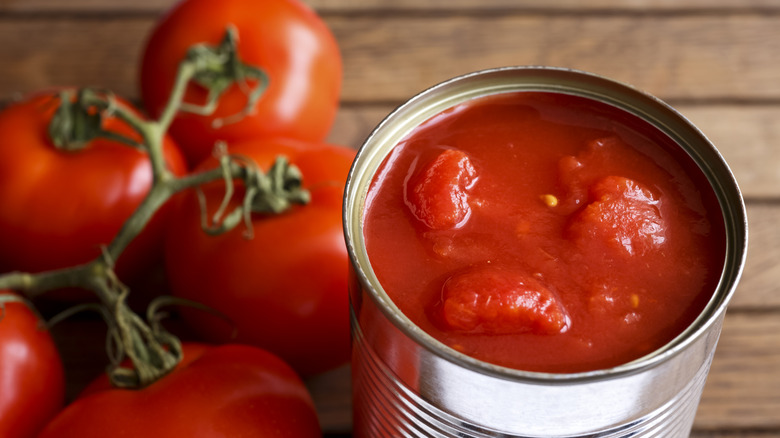
Pizza sauce is all about the tomatoes. If you get that part wrong, there's no coming back from it. Whether you use fresh or canned, whole or chopped, and the variety you use all make a difference. While there isn't just one way to make solid pizza sauce, you can make it easier or harder on yourself.
Mark Bello always uses canned or bottled tomatoes for his pizza sauce over fresh ones. However, "during peak/local tomato season I will add ripe sliced tomatoes on top of a pizza after it comes out of the oven (not before as they will turn to mush) and this usually on a white pizza," he tells us. I've had some success using fresh tomatoes for pizza sauce, though they contain far too much moisture on their own, so need tomato purée to thicken the sauce. So, unless you have some excellent, low-moisture tomatoes growing in your yard or that you picked up from a farmers market, you'll usually be better off sticking to canned versions.
"For my classic NYC pizza sauce, I use high-quality canned puréed tomatoes or bottled Italian smooth passata," says Bello. "For a more rustic sauce, I use high-quality canned crushed tomatoes or bottled passata rustica." Depending on what you're hoping to achieve, tomato variety matters. San Marzano tomatoes are a must for Neapolitan pizza. They're generally excellent sauce tomatoes, since they're sweet and fleshy, with relatively low moisture.
Not considering tomato quality
When you're making pizza sauce, tomato quality is of the utmost importance. As Mark Bello puts it, "you are never better than your ingredients." It doesn't matter how good a cook you are or how flawless your technique, if you use tomatoes that are just fine, your sauce is going to be average. For some people, that's enough. But those striving for pizza perfection can do better.
Looking at the ingredients is a good place to start. "The purée I use (Cento brand) lists just one ingredient: tomato purée," says Bello. "The crushed tomatoes I use (Bianco DiNapoli brand) list tomatoes, citric acid (a natural preservative), and salt." Avoid brands that have added extras like sugar, corn syrup, or tomato paste, or ones that are diluted with extra water, as this will dull the flavor.
One of the mistakes people make with canned tomatoes is buying the most affordable ones or picking up whatever's available at your local grocery store. My advice is to use the best tomatoes that you can afford. Good brands for pizza sauce include Bianco DiNapoli and San Merican. It's not just the variety, but the overall quality that matters — if you're going to splurge anywhere, this is where you should do it. Going to an Italian deli will usually give you some great options, though, if you're on a tighter budget, a can of supermarket Italian tomatoes will do the trick.
Cooking pizza sauce before spreading it on dough
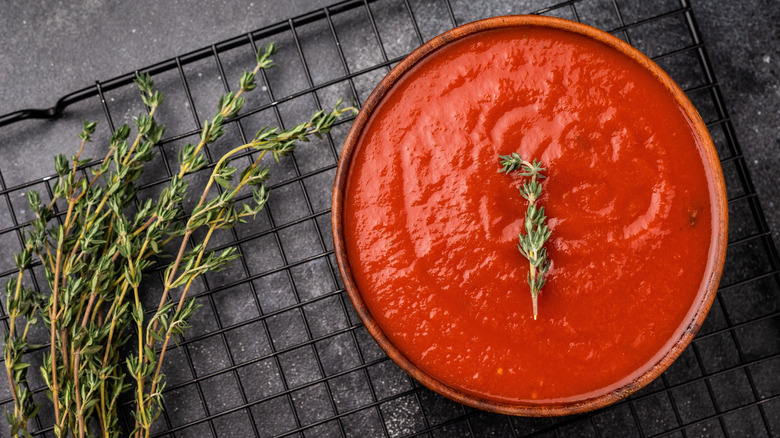
You might think that the first step before spreading the sauce on your pizza is cooking it, but you'd be wrong. This is one of the most common mistakes people make with pizza sauce. Tomato sauces for pasta are usually cooked, but for pizza the opposite is true. There are some exceptions, which we'll get into later, but there's usually a good reason for keeping pizza sauce raw.
"For what I consider the best approach with pizzas, the sauce goes on raw and cooks in the oven with the pizza," says Mark Bello. "That keeps the tomato flavor fresh and bright." When you cook down the pizza sauce, as you would with a homemade marinara for spaghetti or similar, it changes and deepens the flavor. This can make it too rich and robust for pizza.
What you have to remember is that the sauce cooks in the pizza oven, so it's not like it stays raw. That quick cook time intensifies the flavors and mellows out the garlic without making the sauce overly heavy. Pizza isn't exactly known for being light. You've got the doughy base and richness of the cheese, so you need some contrast to brighten the flavor. This helps create balance and give you a really standout pie.
Using the wrong herbs
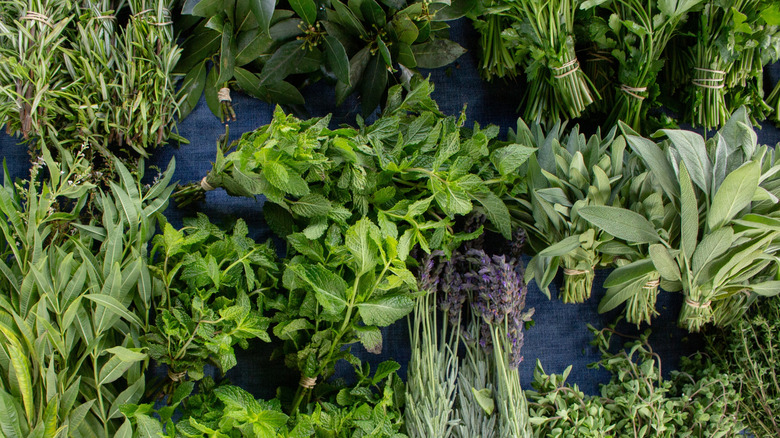
Herbs — fresh or dried — can make a great addition to pizza sauce. They make it more aromatic, so that it's not dull or one-note. However, if you use the wrong types of herbs, the flavor profile won't be right and it won't taste like a traditional pizza. You might love dill or cilantro, but this isn't the place for them.
Mark Bello tells us that, for his NY style pizza sauce, he uses dried oregano as the one and only herb. What you need to know about oregano is that the fresh version can be a little too punchy. It's the kind of herb you might put springs of in a dish and remove before serving. But, since you'd be blending it into your pizza sauce, it's best to stick with the dry stuff.
Dried oregano is my herb of choice for pizza sauce, as well. However, I've also had success blending fresh basil into the sauce. It imparts that distinct aromatic flavor without burning in the hot oven. Don't even get me started on dried basil; as far as I'm concerned, it's not good for anything much. It's dusty and bland. Don't ruin your pizza sauce with it. While Bello doesn't use it in his sauce, he says "fresh basil is added after the pizza comes out of the oven" when making a margherita.
Using too many herbs
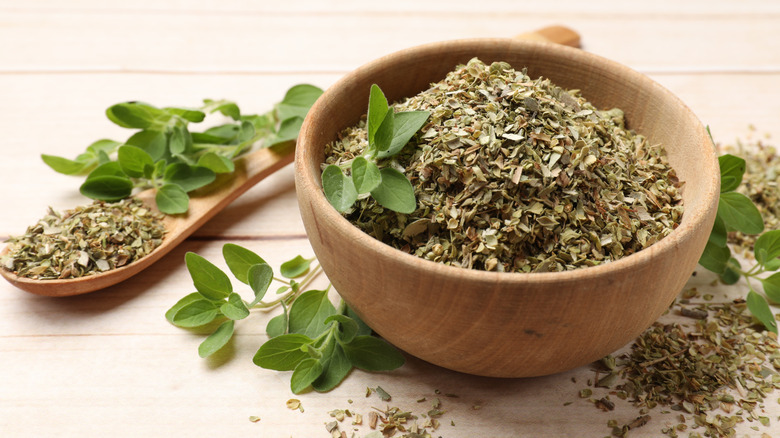
You can have too much of a good thing, and herbs come into that category. Yes, they add some extra depth and dimension to your pizza sauce, but tomatoes should still be the star here. If you overdo it with the herbs, you'll end up overwhelming the sauce and the balance of flavors won't be right in your finished pizza.
Exactly how much is too much can be subjective. It all depends on the herbs you're using and your preferences. "The goal, like everything for me in pizza making, is balance so each ingredient plays its part without taking over," says Mark Bello. Sometimes Bello forgoes herbs altogether, so they're not strictly essential, especially if you have great tomatoes.
It's best to start small, with a handful of basil leaves or around a teaspoon of dried oregano for an average can of tomatoes. Then, taste the sauce and go from there, bearing in mind the flavors will develop slightly as the pizza cooks. You can always add more, if needed, but you can't take it away.
Not considering your garlic choices
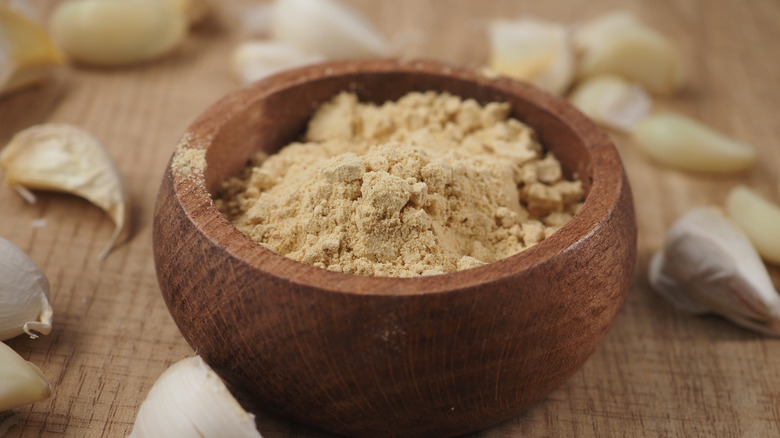
When making pizza sauce, you have two primary options: fresh garlic or dried garlic powder. Which you choose may depend on the style of pizza you're making or your flavor preferences, so it's worth experimenting before settling on what you want.
For his classic New York pizza sauce, Mark Bello uses dried garlic. It's a common addition in certain styles of pizza, as used in the correct quantities, it's mellow and doesn't overwhelm the sauce. However, the problem is that it's easy to overdo it with garlic powder. When you use too much, it can be cloying and intense, so start conservatively and work your way up. Around ⅛ teaspoon of garlic powder equals one clove of garlic.
Traditional Italian recipes tend to use fresh garlic, and this is my go-to. It has a greater depth of flavor than garlic powder and it's easier to control the quantity. One clove of garlic should be plenty for an average can of tomatoes. You should mince it finely or blend it into the sauce. The flavor will mellow as the sauce cooks on the pizza, so don't worry if it tastes a little intense when raw.
Adding sugar — except when you're in a pinch
You might think that putting sugar in your pizza sauce is the way to add sweetness, but this is a common mistake. After all, it's a common addition to certain cooked tomato sauces and can contribute to getting that perfect balance between sweetness, saltiness, and acidity. But, when you use the right ingredients, sugar isn't necessary.
"The best pizza sauces are usually the simplest and if you use quality tomatoes your sauce should be sufficiently sweet," says Mark Bello. "A healthy way to sweeten your sauce without adding refined sugar: grab a fine grater and grate in some raw carrot — magic," he adds.
I agree that a good pizza sauce made with quality tomatoes doesn't need sugar, but if you open a can to find them subpar, it can help balance things out. Ideally, you'll pick tomatoes that don't need sweetening, but if you can a can that's a bit "meh" and you don't have a backup, a little sugar can work wonders getting things back into balance. So, don't rely on sugar or add it willy-nilly, but I wouldn't be totally averse to it when things haven't gone to plan.
Salting too much or too little
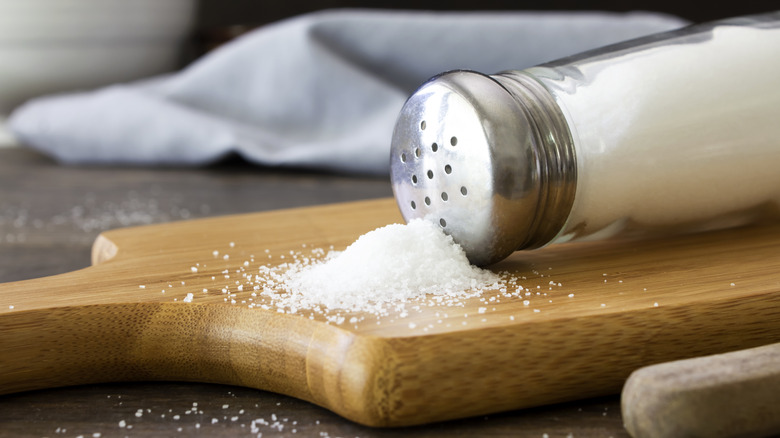
Both salting your pizza sauce too much and salting it too little can be an issue. Too much and it might be inedible, or at least unpleasant. Too little, and the balance of flavors won't be right, leaving the sauce tasting bland.
The thing about salt is that it doesn't just make things saltier. It also enhances their natural flavors. So, if you make pizza sauce with too little salt, it will end up not tasting as tomatoey as you want, and you won't get that classic flavor cutting through the richness of the cheese. Around a teaspoon of salt per 28-ounce can of tomatoes is generally the sweet spot, though you can experiment to get the results that you want.
The type of salt you use here doesn't matter too much. You don't need anything hugely fancy, though I would opt for sea salt over table salt, as its flavor is cleaner and more complex. Since you're not cooking the sauce before putting it on the pizza, crystals or flakes won't get the chance to dissolve and disperse, so this is the place to use fine salt.
Not draining tomatoes before making pizza sauce
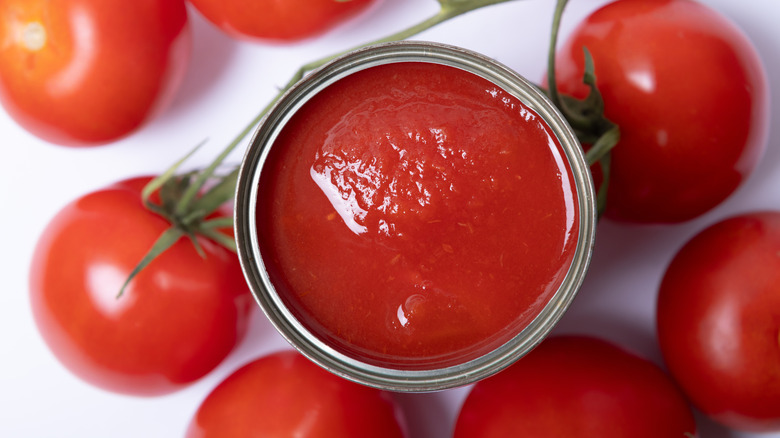
The consistency of pizza sauce is important. If it's too wet, it can make your pizza soggy and leave the base undercooked. Making sure you drain your canned tomatoes will help you get the proper thickness.
"Homemade sauce is often too watery because people are blending an entire can of whole peeled tomatoes, including their liquid," says Mark Bello. It's true that if you blend the juice that your tomatoes come in, you'll be left with a sauce that's way too liquidy. What you're looking for is something that's roughly the thickness of passata. If it's more like tomato juice, it's too thin. But, you shouldn't expect it to be as thick as a cooked tomato sauce, as some of the liquid will have reduced as it simmered.
Luckily, it's a simple fix. Just take a strainer and drain your tomatoes before blending them with the other ingredients to make your sauce. If you don't want to waste the juice, you can always keep it and add it to another recipe.
Ignoring texture when making pizza sauce
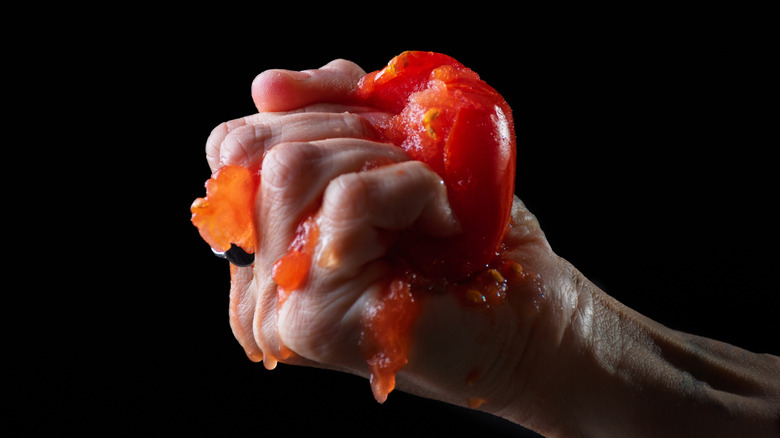
It's perfectly valid to make smooth pizza sauce. In fact, that's usually the way I make it. However, you shouldn't ignore texture entirely. It should be a choice rather than a default. In some cases, you might feel like a chunkier sauce is the way to go, especially if you're making a pizza with a thick base or you've got a lot of robust ingredients. Equally, a bit of texture can be nice for a simple marinara or margherita pizza, where the sauce plays a bigger role.
Mark Bello uses a smooth sauce for his classic New York pizzas, but chooses passata rustica or crushed tomatoes when he wants more texture. Another way to get more texture in your sauce is the classic Neapolitan way. You start with canned whole tomatoes and you crush them with your hands rather than blending them. This lets you control the texture completely, whether you want it mostly smooth or with lots of large chunks. Then you just stir through the other ingredients, making sure the garlic and any fresh herbs are chopped finely.
Leaving out olive oil

If you leave olive oil out of your pizza sauce, you're making a mistake. You might think it doesn't bring much to the table. Or perhaps you don't have any to hand and don't want to go out of your way to buy it, but it's important. Sure, you technically can make pizza sauce without it, but you shouldn't underestimate its impact. Just a tablespoon or two in your sauce will make all the difference to how it turns out.
Olive oil adds a silkiness and body to the sauce, plus it brings lots of flavor, especially if you use a quality version. It should be extra virgin and, ideally, it shouldn't be the cheapest one at the store. One of the more embarrassing things about me is that I have a bougie olive oil subscription. But, what I'm saying with that is that I know what a huge difference great olive makes to a dish. However, I also know that it can be pricey. Luckily, there are some great olive oils that don't break the bank that are perfect when you want big flavor without a big price tag.
Not considering regional variations when making pizza sauce
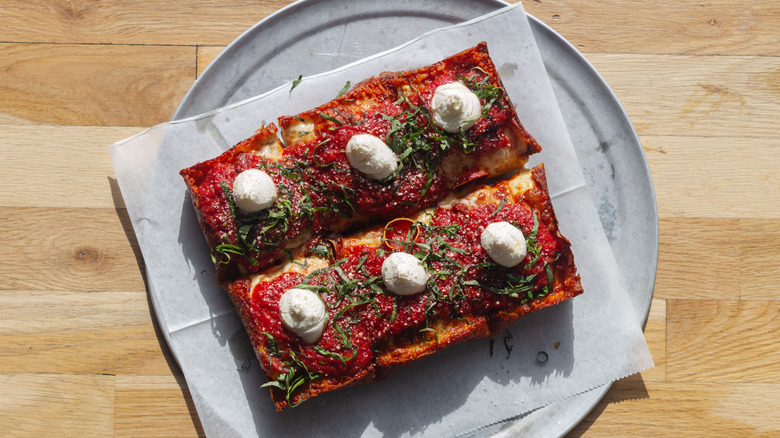
We've talked about best practices when making pizza sauces, but there are some exceptions to the rules based on regional variations. This means that you might occasionally need to throw out some of the fundamentals and rethink things when you're making different styles of pizza.
For example, Chicago style pizzas use a cooked sauce rather than a raw one. This gives them a more intense savoriness compared to your average thin crust pizza sauce. Notably, the sauce also goes on last, on top of the cheese and fillings. Detroit style pizza approaches sauce in a similar way. Sicilian pizza also uses a quite different style of sauce — something similar to a marinara, heavy on the onions and sometimes containing anchovies.
Ultimately, you don't need to worry about this too much unless you're trying to recreate a particular regional style of pizza. And, if this is the case, you can look up recipes for the specific style and find out how to perfect its sauce. As with many things in life, and in cooking, there are always exceptions, but this doesn't change how you should make a typical pizza sauce.
Using too much sauce on your pizza
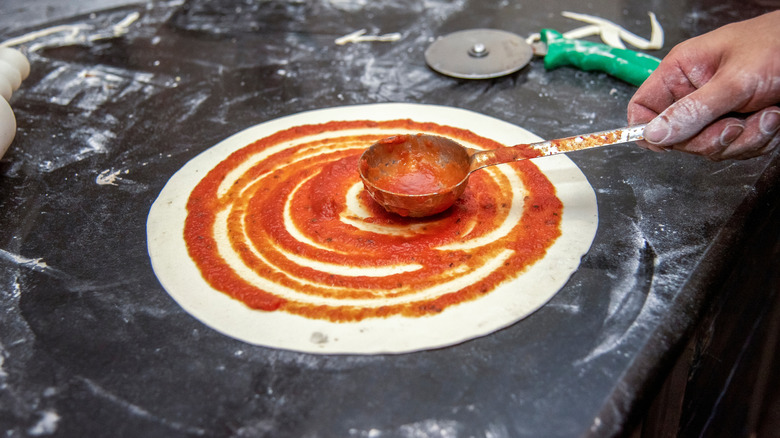
Once you've made the perfect pizza sauce, there's still a common mistake to be made: using too much sauce on your pizza. You might think it's one of those situations where more is more — you've spent time getting it right, it tastes great, why not pile it on there? But it can disrupt the balance of flavors and cause textural issues.
"Over-saucing leads to a soggy or gummy crust," Mark Bello tells us, noting that it's the number one pizza sauce mistake he comes across. "As a guideline, I recommend no more than 4 ounces of sauce per 12-inch pizza," he says. He advises that anyone who wants extra sauce should heat some on the stove and add it after the pizza is fully cooked. You could also put it on the side with a dip.
If you don't want to weigh and measure every time, my top tip is to spread a couple of spoonfuls of sauce onto the base and spread it out with the back of a spoon. You should get full coverage, but you should be able to see the dough underneath the sauce in many spots. If it's fully opaque all over, you've used too much. But if it's extremely thin or doesn't fully cover the base, use a little more.