

Is Imitation Crab Really Seafood?
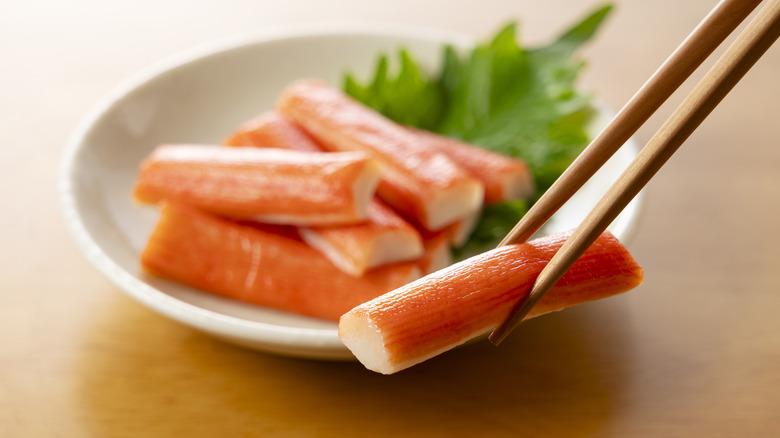
Seafood is a culinary category where freshness and authenticity are paramount. Take, for example, the difference in how most people regard a tuna steak fresh from the fishmonger compared to a fishstick out of the freezer. Therefore, it's understandable that some are a little leery when confronted with a protein like imitation crab, where concerned diners may wonder just how "imitation" it is, including whether it's even made of seafood. Although it's more processed than most seafood offerings, the evidence suggests imitation crab belongs in the category by most definitions. Let's get into it.
At its core, those red and white sticks of protein are primarily composed of surimi, a Japanese term for fish meat that's been stripped from the bone, processed to remove fat, and mashed into a paste. This often includes mild white fish like Alaskan pollock, but only rarely has any traces of actual crab. This fish paste is then mixed with binders such as eggs and starches along with various flavorings designed to replicate the unique flavor and texture of crab, and it all gets cooked to create the uniform sticks seen in the fish section or on low-cost sushi.
As the primary ingredient remains fish, it's easy to see why many would consider imitation crab to be firmly in the seafood realm. However, others may point to the added ingredients to suggest it's more of a cooked or prepared food product, rather than true seafood. In any case, the determination lies in the eye of the diner, who's likely more concerned about the flavor of the dish than the precise nature of each ingredient.
Misconceptions abound, but shortfalls are real, too
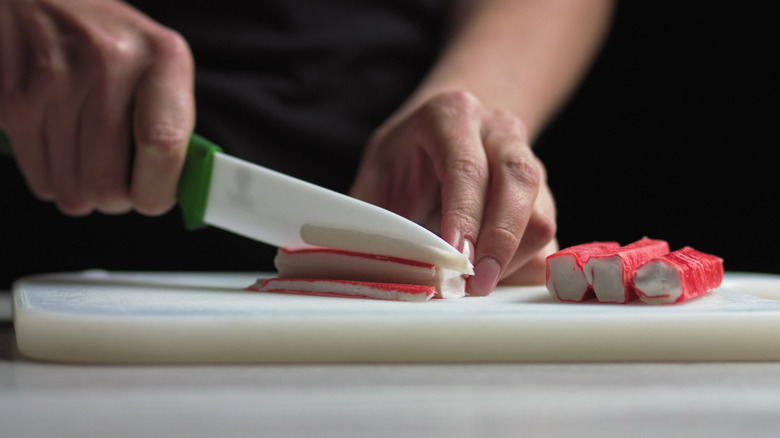
It's easy to understand how this manufactured, slightly uncanny-looking ingredient might raise some eyebrows. Still, the idea that it's not seafood is among the least-grounded imitation crab myths we debunked. These include the idea that it's made from low-quality fish (pollock is good enough for McDonald's popular Filet-o-Fish sandwich) or that it's particularly unhealthy. Although it doesn't stack up nutritionally to real crab, it still contains notable amounts of Vitamin B12 and the nutrients phosphorous and selenium, and a serving typically contains less sodium than real crab.
Among the other big mistakes everyone makes with imitation crab (perhaps assuming it's not truly seafood) is thinking it only belongs in budget-focused sushi. It can be used as a filling for stuffed fish or other proteins, provide the basis for crab dips or fondue, be made into crab cakes, and many other dishes where crab flavor and texture are more important than enjoying large pieces of the meat on its own. These include many of our 21 best crab recipes.
At the end of the day, there's no big mystery or unpleasant secret behind imitation crab. This processed product is primarily made up of fish, landing it among other seafood options for all but the most stringent purists.