

5 Tips To Make The Perfect Grilled Cheese
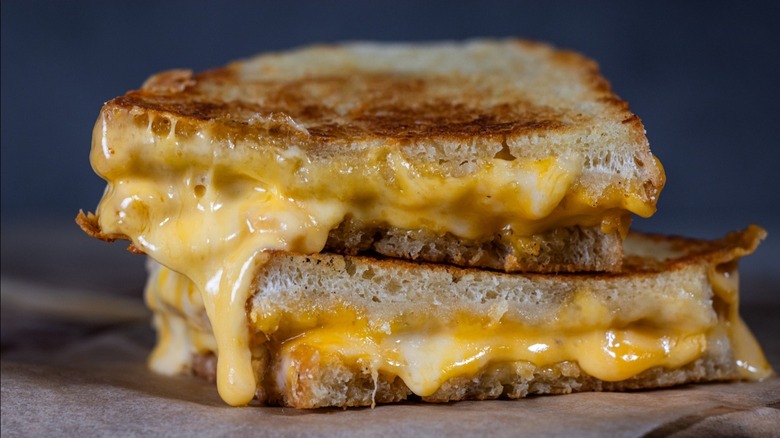
Grilled cheese seems like a simple undertaking, but in reality, there are so many things that can go wrong or cause your sandwich to fall short. Perhaps your pan is too hot and your bread burns, but the cheese within the two slices is un-metled. Or maybe, your toastie feels too bland — what is there to add? And how long are you supposed to cook each side of the melt? It's a laundry list of potential challenges that could go on forever, but considering all of them makes for a better bite.
Every celebrity chef has their set of tips to optimize their melty sandwiches. Jeff Mauro's secret for making delicious grilled cheese involves seasoning his bread just like he does his Chicago cheesesteak. Chef Jernard Wells loves to combine the handheld with tomato basil soup and told Mashed that the best grilled cheese will contain "a nice, good cheddar." However, enthusiasts can find excellent ways to improve this classic sandwich even if they're not pros. To lend a hand, we've pulled together a list of tips for upgrading your grilled cheese.
The cheese changes everything
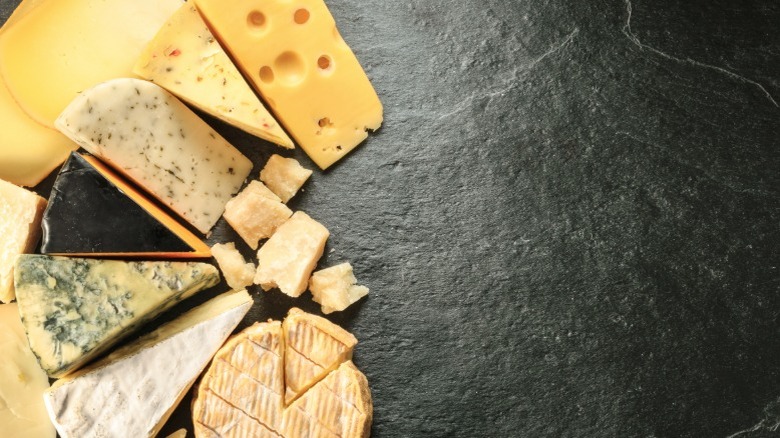
One of the most important qualities of the sandwich is its gooey interior. If the cheese doesn't melt, it likely doesn't live up to your expectations for the sandwich. So you need to choose wisely.
Broadly speaking, if you're only using one type of cheese, you should stay away from dried and aged options such as feta and Parmesan. Those, unfortunately won't melt very well. The best choices have high fat and moisture levels and are typically younger. These varieties break down much easier when heated. There are some exceptions to this rule, and the structural properties of products like halloumi mean they will only melt at very high temperatures (so your sandwich would probably burn). Additionally, dairy options made with rennet — mozzarella for example — soften more easily than acidic counterparts like cream cheese.
With these guidelines in mind, an ideal option for your sandwich is young cheddar (One of Ina Garten's secrets for making a great grilled cheese is to use extra-sharp Vermont cheddar.) You could also go for the classic orange American cheese or even Velveeta for a creamier flavor. Other great choices include gruyère, brie, havarti, or gouda. If you're worried about that melt-factor, you can always test out a slice of cheese first by sticking it in the microwave for 10 seconds.
Pick your bread wisely
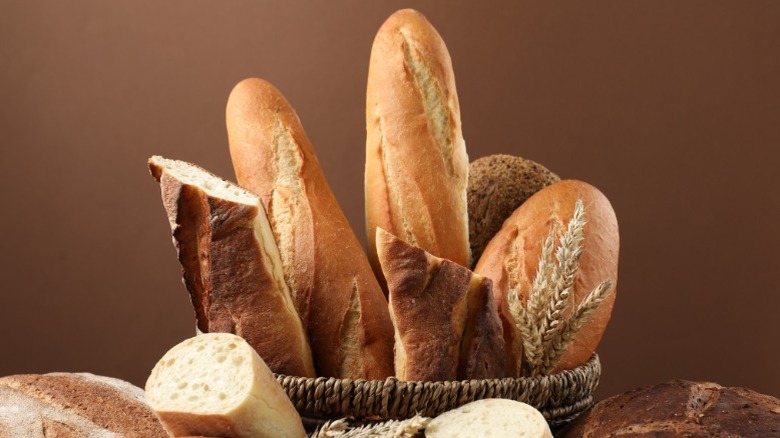
The specific kind of bread you use for grilled cheese makes a difference. While some of this choice comes down to individual preference, certain options may taste and function better than others. Broadly speaking, you should opt for loaves that are sturdy and have few holes. They should also have fairly regular shapes. One popular selection is sourdough. It's pretty hearty and will hold up well when grilled (in other words, it won't burn too quickly). Additionally, it has a distinct flavor that won't overwhelm the cheese and pairs nicely with it.
A downside of sourdough is that it can be more challenging to cover with cheese if the loaf isn't exactly rectangular. Moreover, because this bread benefits from high hydration, it can form large holes that result in cheese leaking through the slices.
Some popular picks that don't pose the same shape- or dripping-related problems include classic white bread, whole grain, or even rye if you don't mind a stronger flavor coming through. Another option could be to use homemade bread. By crafting your own loaf, you can engineer it so that it has a close grain (which means no holes for cheese to leak through).
Opt for mayo over butter
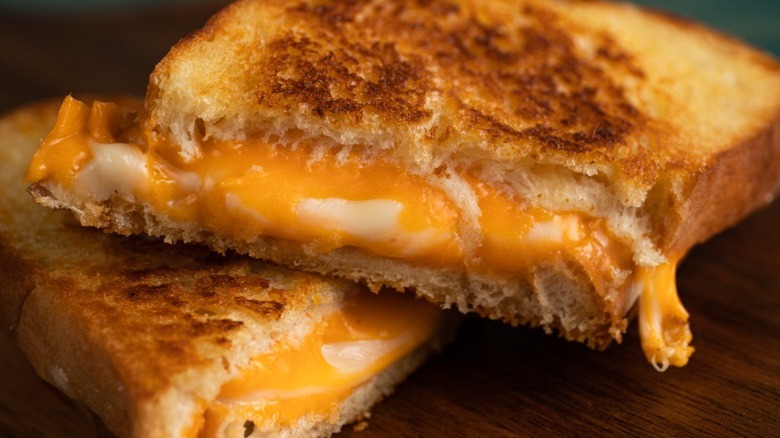
You may have grown up watching your parents slather sliced bread with butter in preparation to make a grilled cheese. However, mayonnaise is decidedly a better option. To start with, using mayo will lend your bread a delectable golden brown crust. It beats out butter in this regard because the latter spread's smoke point (or, the temperature at which it burns) is typically only 350 degrees Fahrenheit. In comparison, mayo's smoke point is 450 degrees Fahrenheit. For cheese that might need a bit of extra time to melt, this will make any burning less likely.
Another benefit of mayonnaise is the flavor it will add to the sandwich. The spread has a distinctly tangy taste, which it retains when used for griddling. It's basically a flavor portal in all of its uses. Butter is much more neutral-tasting. If you are opting for mayo, it's best to avoid the light version. This formulation contains much less fat than its traditional counterpart, meaning it won't brown as nicely or evenly. Moreover, you can add the spread to the inside of your grilled cheese, particularly flavored options like chipotle mayo, to enhance the taste.
Load up your sandwich with other ingredients
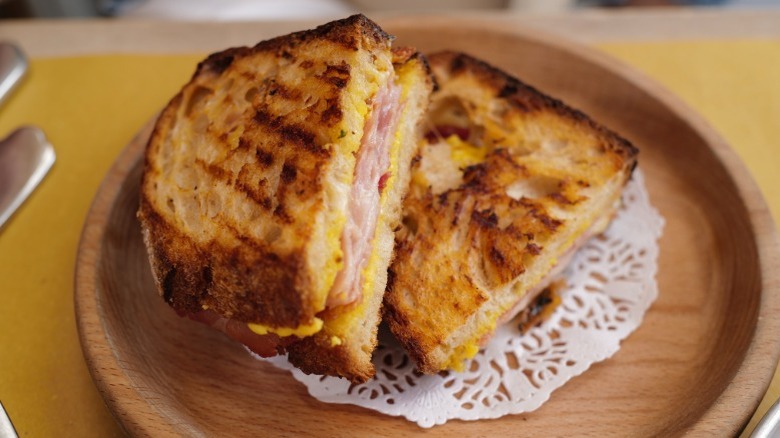
If you're bored of basic cheese and bread combinations, then it's time to get a bit more creative. To take your melt up a notch, toss in other ingredients. There are two lanes to approaching your flavor upgrades: sweet and savory.
Starting with sweeter options, you'll have to consider notes that will compliment your chosen cheese and bread. A simple choice is to slather a jam or jelly on the inside of your sandwich, or even add thinly sliced fruit (while still maintaining that delicious mayo exterior, of course). There are so many quintessential pairings of fruits and cheeses, so use your favorite combinations as inspiration. For example, brie with apples is a classic partnership, and a fig jam would meld deliciously with a creamy gouda. An unexpected ingredient that'll amp up your grilled cheese sandwich is blue cheese, whose bold flavors would couple well with blackberries or pears.
Switching gears to savory choices, a straightforward approach is to add meat. Deli staples like ham and turkey are good picks. You could even pair ham with pineapple for a delectably savory and sweet bite. For the spice lovers, sriracha or even a hot honey drizzled between your layers of cheese will add the ideal kick to your melt. And if you're one for more out-there and nontraditional add-ins, try crafting a grilled mac and cheese sandwich with buffalo chicken.
Cooking time and heat are vital
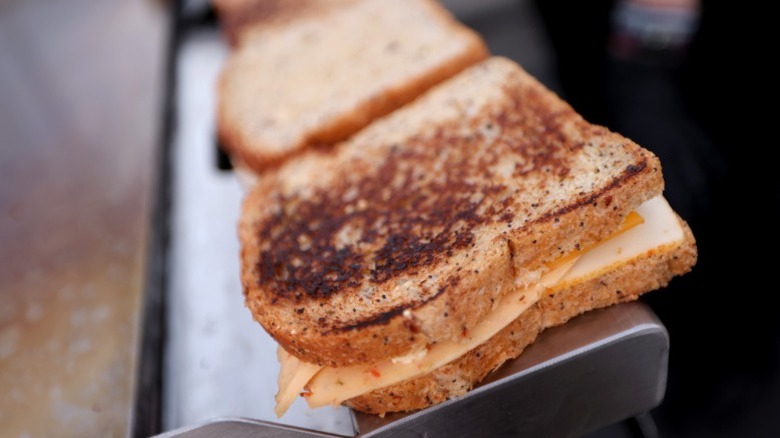
There's a thin line between a perfectly browned sandwich and one that's a bit too crispy, and it all comes down to methodology. In a YouTube video, professional chef Frank Proto demonstrated their optimal crafting approach, which begins with a nonstick pan and medium-low heat. The nonstick pan comes in handy in case melted cheese escapes your sandwich and drips onto the pan.
Medium-low heat is the ideal temperature because, in the chef's words, "If I have it on high, the bread's gonna burn before my cheese is melted." Proto also recommends constructing your sandwich in the pan itself — in other words, place one slice of bread, layer the cheese, and top with the final slice of bread. This method will help avoid having to transfer the uncooked concoction from plate to pan. As your melt is cooking, make sure to periodically check to make sure it's not burning. You'll know your cheese is melted and that it's time to stop cooking when the bread slices stick together on their own.
You may have seen chefs online or in restaurants using a sandwich press to really ensure that bread forms a nice crispy and brown exterior. If you have one on hand, you can definitely put it to good use for your grilled cheese. If not, pressing the handheld with a cake pan works as well.