

How Did Red Bull Get Its Name?
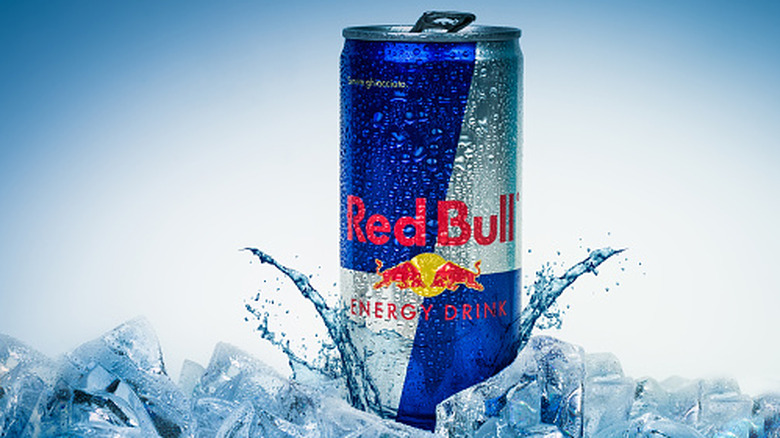
Over its nearly four decades on the market, Red Bull has arguably become the face of energy drinks. Many saw the vodka Red Bull as the party pick-me-up of the 2000s, while the company developed a unique brand related to action sports and unusual competitions. Although people might be familiar with the product and the boost of energy it provides, they're likely less certain about the origins of its name. Like most other elements of the drink, the moniker traces its roots back to a similar beverage invented years earlier in Thailand.
In the 1980s, Austrian businessman Dietrich Mateschitz tried the original version of Red Bull during a trip to Thailand. Known as Krating Daeng, the beverage was developed in 1976 by Chaleo Yoovidhya. Its name translates more or less to "red bison," a fact reflected by the logo featuring two charging bovines in front of a yellow sun. Naturally, this design will also be familiar to Red Bull drinkers. As part of a three-year process of adapting the drink for an international audience, Mateschitz tweaked the translated name.
Curious caffeine lovers may also wonder why the original Krating Daeng earned the bovine branding. The Bangkok Post reports that it was initially marketed primarily to rural Thai laborers, who'd likely understand the traditional association of the red bison with perseverance and the sun with energy. Decades later, with a far different typical client base, the branding and naming style still remain.
Alike in name and branding, but not identical
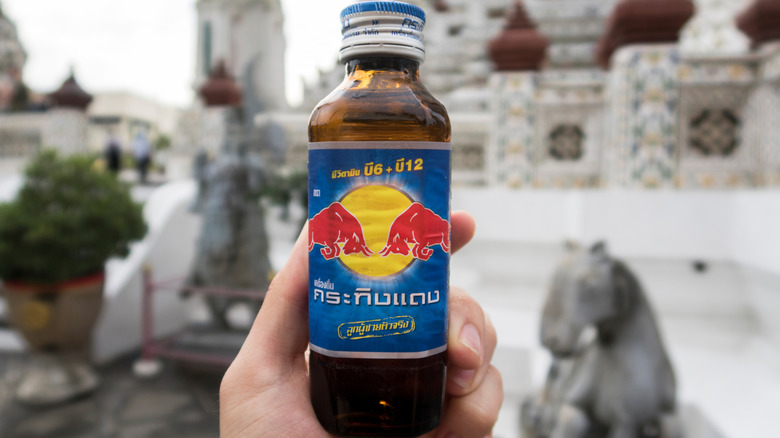
Fortunately, this isn't a case of outright corporate thievery or imitation. Mateschitz and the makers of Krating Daeng are partners in Red Bull GmbH, which now produces both the original and its more famous international cousin.
Those visiting Thailand who try the original version won't find it identical to the Red Bull sold worldwide. Unlike the latter, it's non-carbonated and typically comes in bottles rather than sleek blue-and-silver cans. Red Bull also targets a higher-end market internationally, while Krating Daeng often has a more working-class reputation in Thailand. However, one thing they have in common is an unmistakable taste. While not exactly the same, the standard Thai version is very similar to Red Bull's hard-to-describe original flavor.
These days, there's undoubtedly a great deal that makes Red Bull feel unique and original, from its variety of flavors to its offbeat marketing and advertising strategy. However, there's still at least one thing that isn't: its name.