

Mistakes People Make Baking Store-Bought Boxed Brownies
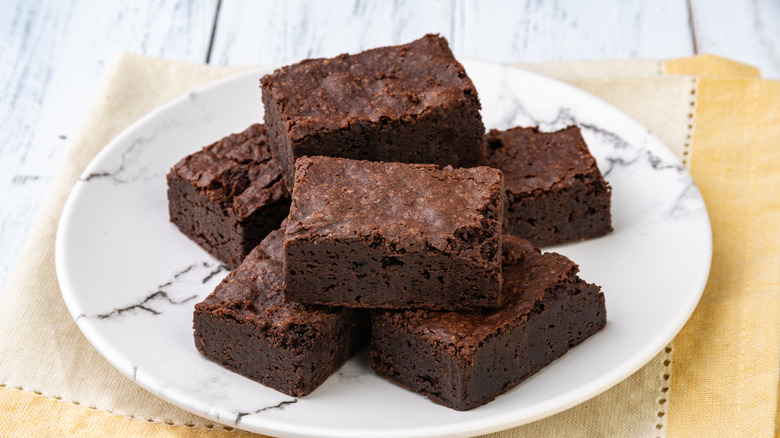
Some people consider boxed brownie mixes an inferior alternative to homemade versions. But, when you avoid the common mistakes people make with store-bought boxed brownies, they can be some of the best you've ever made. Whether it's nostalgia or a genuine preference, boxed brownies hold a special place in many people's hearts. There are so many homemade brownie recipes, yet some folks will reach for the kind from a package every time.
Now, there's nothing wrong with baking boxed brownies, but sometimes they do, undeniably, turn out disappointing. You might be left wondering whatever happened to that perfect packet of brownies from your youth. It's not necessarily the fault of the product — sometimes user error can be the culprit. It's common to think that boxed brownies are so simple to whip up that you can make them with your eyes closed. While they're not exactly tricky, you still have to follow the rules to get the best results. Yes, there are occasions in which you can go rogue and level-up your brownies in creative ways, but you should usually stick to the instructions and use your common sense — along with any existing baking knowledge you're bringing to the party.
We're going deep into the boxed brownie mistakes that are extremely common with home bakers. Whether it's down to inexperience or overconfidence, anyone can make these missteps. It doesn't mean you're a bad baker and it certainly doesn't mean you can't improve. Once you learn what not to do, you'll bake the best ever boxed brownies.
Not sifting boxed brownie mix
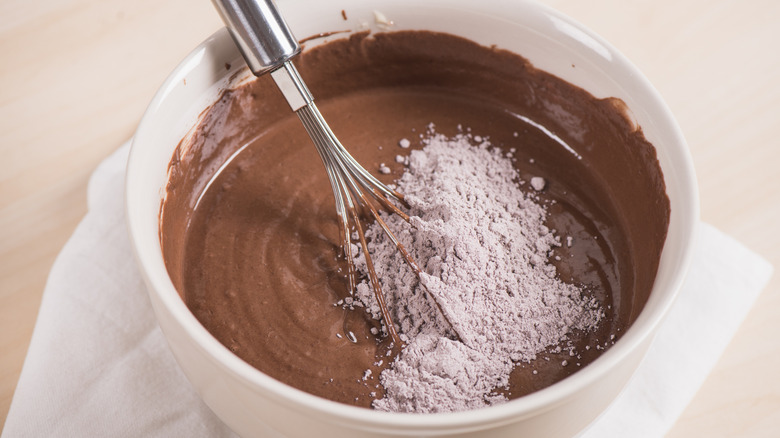
There's one thing that so many people overlook when making store-bought boxed brownies, and that is sifting the mixture. It's a simple step, but it can make a huge difference to the finished brownies. Ingredients like flour and cocoa are prone to clumping, which can be even more of an issue when the box has been sitting on the shelf of a grocery store or in your pantry for a while.
Sifting the flour and cocoa powder is one step that you shouldn't miss when baking homemade brownies and that same logic goes for packet brownies too. The only difference is that you have to sift the whole mixture, including the sugar and raising agents. By doing this, you remove any lumps of dry ingredients that have formed — so you don't get a mouthful of raw powder in your finished brownies. In addition, you'll end up with an airier, more delicate texture that's consistent through the whole brownie, since the ingredients are evenly distributed and not clumped together.
Use a flour sifter or a fine mesh strainer to sift the entire packet of brownie mixture before you mix it up. You can measure and stir together the wet ingredients in a mixing bowl and then sift the boxed mix straight in. This way, you only use one bowl and you can save on dishes.
Overmixing boxed brownie batter
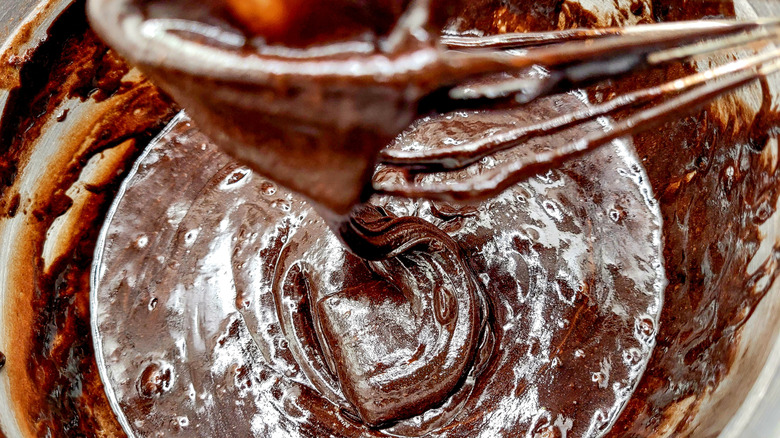
Another common issue with boxed brownies is overmixing the batter. Many people worry about getting the ingredients properly combined and getting all the lumps out, but this can lead to excessive mixing. So, what happens when you overmix batter? Well, when you mix the flour with wet ingredients, gluten strands start to form. These are what give cakes and breads structure, helping them to hold gases and achieve a rise. But, brownies are known for having a denser, fudgier consistency — and too much gluten development only serves to get in the way of this result. When you mix way too much, brownies can end up dry and crumbly, which nobody wants.
Overmixed brownies can also turn out cakey. This is because the more air you incorporate into baked goods, the more lift and rise they get. It's a technique often used to get lighter, airier cakes, but can get in the way of a perfect brownie texture, since fudgy, chewy consistencies are often more popular than cakey ones.
Some boxed brownie mixes specify a number of strokes to stir your batter so you don't overmix it. This is great for anyone who lacks confidence baking. Otherwise, just stir the mixture as minimally as possible with a wooden spoon or rubber spatula, never an electric mixer. Stop when all the ingredients come together and there are no dry streaks or patches left. Some small lumps in the batter are fine, as these will come out while baking.
Going straight from mixing the batter to the oven
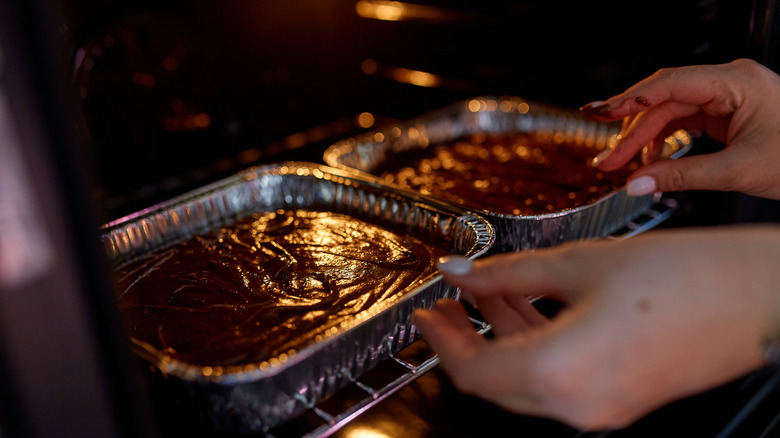
It makes sense that most people mix their brownie batter and put it straight in the oven. It's what most store-bought boxed brownie mixes suggest, and it's what you're used to doing with most sweet baked goods. But allowing the batter to rest can give you better results.
This is a technique used for homemade brownies, but the same follows when making boxed versions. The increased rest time lets the flour fully hydrate and allows the flavors to meld. The resulting brownies are significantly denser and fudgier, with a richer and more intense chocolate flavor. This extra rest time also seems to result in a textbook shiny, crackly crust, which many home bakers aim for.
You can rest the batter in the fridge for anywhere from a couple of hours up to a full three days. If you've got the time, you might want to experiment with a super long rest of 24 hours or more. But, if you want to eat your brownies the same day, even 2 to 4 hours of resting time will get you fudgier results. It's not an absolutely essential step, but if you're looking to improve your store-bought packet brownies, it's a simple step that doesn't call for any extra ingredients or equipment, just a bit of time.
Using the wrong size pan for brownies
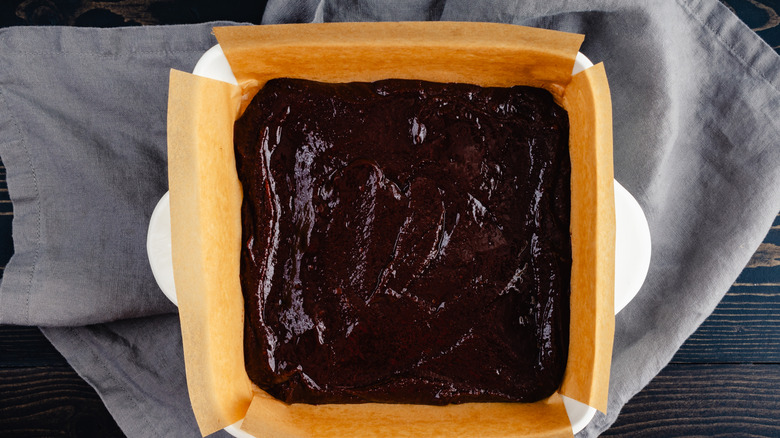
You might be doing everything right with your packet brownies, but if you use the wrong size of pan, it can throw the whole thing off. Pan size matters more than people realize, as does using the right cook time relative to the size. The size of the pan changes the speed at which brownies cook, which affects the texture and more.
When you have a small pan and your cook time is too short, you'll end up with an extra thick brownie that won't be cooked all the way through. It can go beyond fudgy or gooey to simply raw in the middle, which isn't the tastiest option and could lead to food poisoning. If your pan is big and you bake for too long, you'll be left with underwhelmingly thin brownies that can be dry and crumbly, or just burned.
Boxed brownies may specify just one size of pan to use or give you a few size options with different bake times and oven temperatures. You can adjust the size of the pan, as long as you know how to account for the differences. If you use a smaller pan, your brownies will be thick, but if you increase the bake time, they will cook through. Just check close to the end of cooking and cover the pan with foil if the top gets overly browned before the middle is cooked through. Batter cooked in a larger pan needs less time in the oven to avoid overbaking. Or, you can use a large pan but double the recipe.
Not making adjustments depending on the type of brownie you prefer
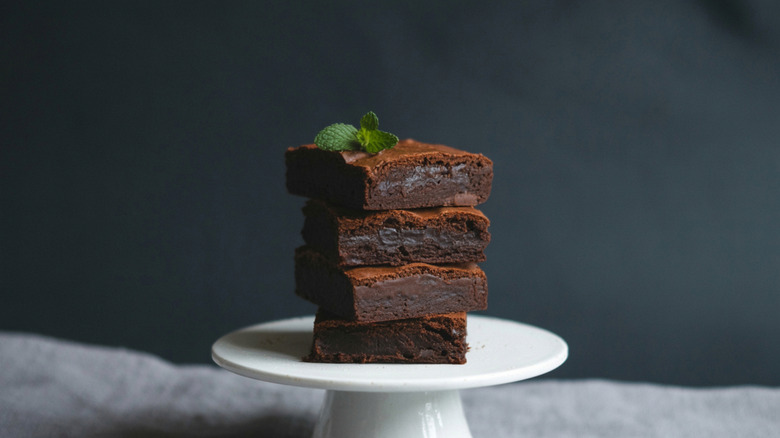
When you're baking brownies from scratch, you'll often find advice for making them fudgier or chewier. For instance, Alton Brown's tip for fudgier brownies is to use a whole heap of butter. Yet, when people make brownies from a packet, they often don't make adjustments based on the type of brownies they prefer, which is a big mistake.
Whether you prefer your brownies fudgy, chewy, or the much maligned third option, cakey, there are ways to get the best results from the same mix. Some boxed brownies even have instructions on the packet, so make sure to check that out before you start baking. For instance, Betty Crocker fudge brownie mixture advises bakers to add an extra egg for cakier brownies. Another simple tip to make brownies chewier is to increase the bake time by a few minutes and use a slightly larger pan (for instance, a 9-inch square pan rather than an 8-inch square pan).
If you're not making these adjustments to match your brownie preferences, then you might end up with a style that isn't to your preference, and many people have strong opinions about which type is best. It's not even a case of messing with the recipe too much or adding extra ingredients. Some of these tips are already right on the box, so it's worth experimenting to get a style you love.
Messing with the measurements on the package
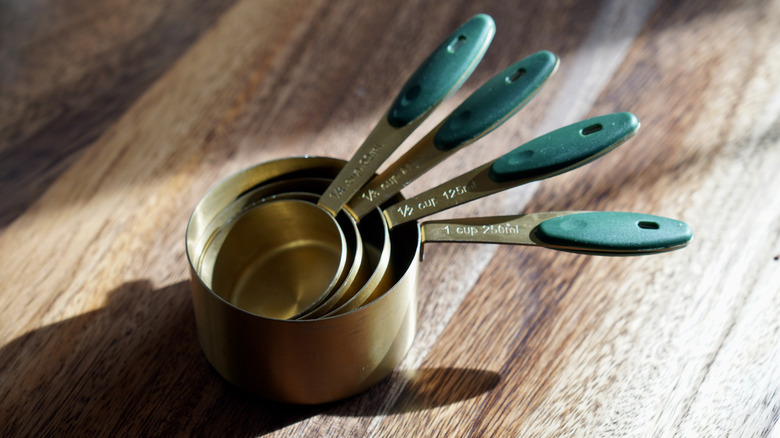
When you check the package of boxed brownies, there's specific information about how much of each extra ingredient to add. Usually, this will be oil, water, and eggs, but it can vary depending on the brand. Some packs also have information about the adjustments to make when baking at high altitudes. These measurements are tried and true, so messing with them is only ever a recipe for, well, worse brownies.
Perhaps you're an experienced baker and you think that the measurements don't sound quite right. Or when you mix the batter, the consistency isn't exactly what you'd expect and you decide to take matters into your own hands. Or maybe you think you can just eyeball the quantities because you're in a rush or you don't have the right measuring equipment. Whatever your reasoning, the measurements are there for a reason.
They aren't just random quantities of ingredients that somebody made up and stuck on the back of a brownie box. They're the result of years of research and development, product testing, and a raft of kitchen experts. When you follow the directions and use the measurements on the box, you can expect consistent results every time, so don't treat them as a suggestion or just make it up and hope for the best. You might end up with brownies that are too wet, have no structure, and totally fall apart, or ones that are dry and not at all fudgy.
Always following the directions exactly
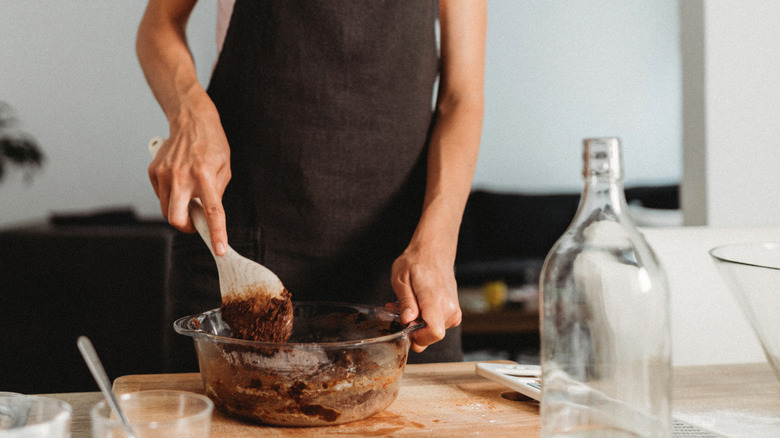
Yes, yes, we just spent 200-odd words telling you to follow the directions, but you need to know which rules to follow and which to disregard. The measurement quantities are important, because using more or less liquid can mess things up. But, always following every direction on the brownie box exactly is also making a mistake. Some simple tweaks here and there can take them to the next level.
There are ways to make your brownie mix taste homemade that are simple and take very little extra effort. One method is to use milk or buttermilk in place of the water. The package usually calls for water, rather than milk, not because it's better but because it's something people have freely available in their taps. Using coffee in place of the water is another option. The coffee boosts the chocolatey flavor without bringing a strong coffee flavor, since it's just a small amount.
You can also use melted butter in place of the oil to add more flavor. Some people swear by it, but others say it gives brownies a cakier texture due to the lower fat content, gram for gram. So, whether or not that's a good idea really depends on what brownie texture you prefer. Breaking the rules, on occasion, can up your boxed brownie game; you just need to know when to do it and when to leave things alone.
Not adding chocolate chips to boxed brownies
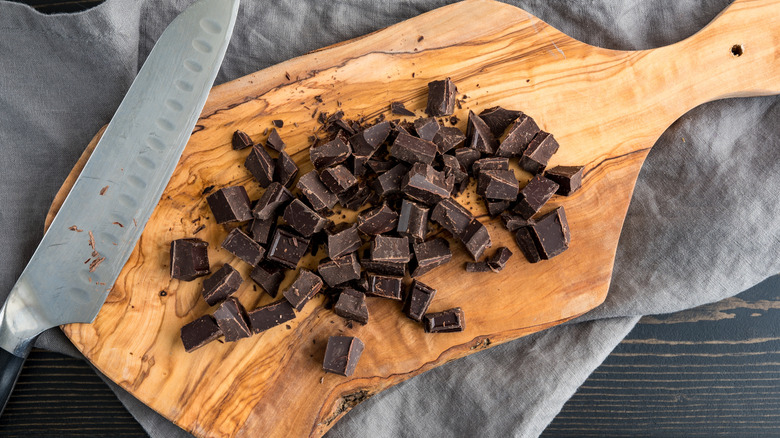
If you aren't adding chocolate chips or chunks of chocolate to your boxed brownies, you're truly missing out. It's among the easiest ways to improve the packet type of brownies, making all the difference. One of the major issues about boxed versions is that they're not chunky enough, and this tweak changes all that. It can even turn a basic packet mix into a beloved family recipe.
The key is learning how much chocolate you can add without ruining the structural integrity of the brownies. This can vary depending on the mix you're using, but around 1 cup is usually a safe bet. From there, you can adjust up or down as needed, if you find them too chocolatey or not chocolatey enough.
But, what chocolate to add? Chocolate chips don't melt in the oven because they have a low percentage of cocoa butter. They were designed this way to hold their shape in chocolate chip cookies and other baked goods. Chopped chocolate bars, on the other hand, do melt in the oven, giving you pockets of melty chocolate inside. Then, there's the variety of chocolate. Should you go milk, white, bittersweet, semi-sweet? It all depends on your preference, but if you can't make up your mind, it might be a sign that you should use a mixture. You could also add chopped candy bars to make things more decadent.
Failing to prepare the pan properly
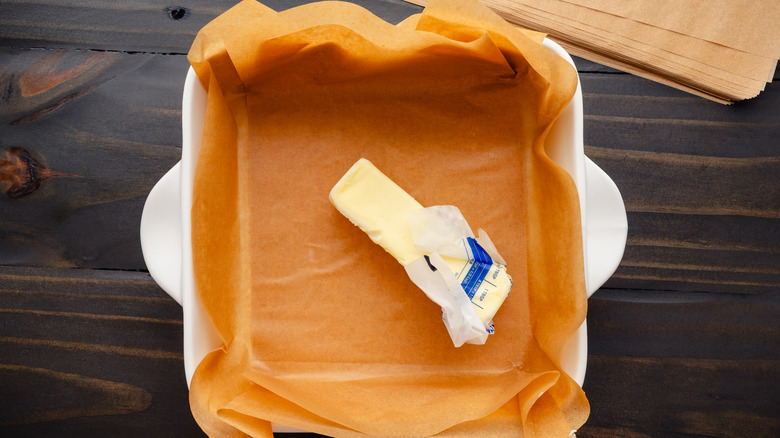
Few things are more disappointing than making the perfect brownies only to find that they're stuck in the pan. Sure, you can dig them out, but you won't get even slices and you might leave behind the chewy bottom and edges when you're wrestling them out. The mistake that causes this is simple and easily avoidable: failing to prepare the pan properly.
It doesn't matter what kind of pan you're using, be it glass, ceramic, or even nonstick, you need to prepare it. Every boxed brownie mix is likely to include this step in the instructions because it's that important. But, how you go about it is up for you. Generally, packages tell you to grease the pan or use a nonstick cooking spray. If you don't have the spray, greasing usually involves either butter or oil. It doesn't matter much which you use, as long as you get a good coverage.
But, sometimes even greasing the pan doesn't cut it. If you're worried that you won't be able to remove the brownies once they're baked, you can always line the pan with baking parchment. The benefit is that you can leave a slight overhang and lift the whole lot out of the pan once they're done baking, which simplifies things a little. It can seem like an extra step that you don't have time for or you can't be bothered with, but preparing the pan genuinely makes a difference.
Overbaking boxed brownies
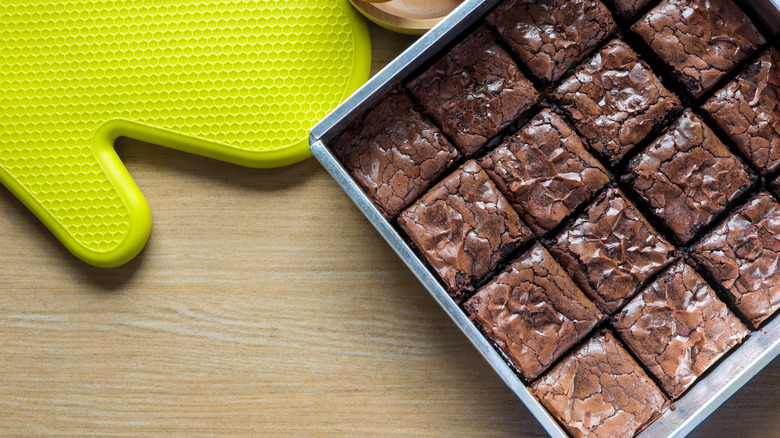
One mistake we see over and over again is people overbaking their boxed brownies. For many people, a fudgy brownie is the gold standard, but baking them too long can ruin any chance of that result. Luckily, it's usually all laid out for you on the package, so it's just a case of following instructions and knowing how to test when brownies are done. Overdoing the bake time can leave you with disappointingly dry results.
Your first port of call is checking the baking times on the package. This varies, but is generally somewhere between 20 and 40 minutes. Larger pans spread the batter out thinner, so brownies baked in large pans need significantly shorter bake times than those cooked in small pans. The difference in cook time between a 9x13 pan and an 8x8 pan can be as much as 30 minutes.
The thing is, there are other variables at play. Some ovens run hot or cold, your batter may have gone in the oven colder due to resting it in the fridge or using cold eggs and milk, or the type of pan you use might take longer to heat up. This means that following the bake times to the letter doesn't always work out. Test your brownies with a toothpick and when they're perfectly done, you'll see moist crumbs clinging to it. If it's covered in wet batter, they're underdone, and if it comes out clean or with a couple of dry crumbs on it, they're overdone.
Cutting boxed brownies when they're fresh out of the oven
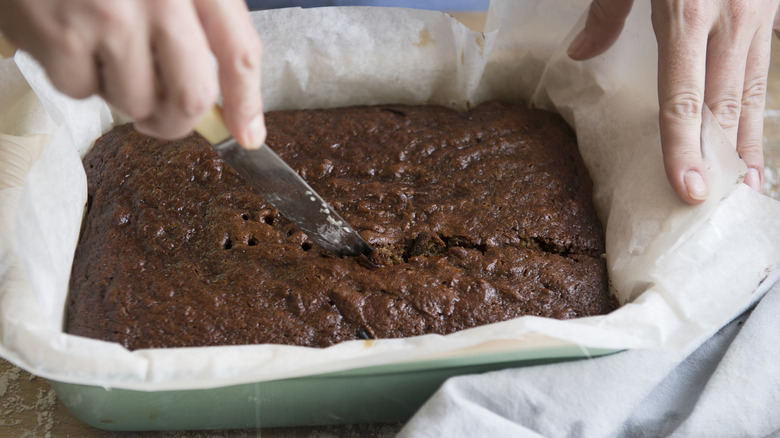
We know how tempting it is to dig straight into warm brownies the minute they come out of the oven. With the mixing, resting, and baking, haven't you waited long enough? But, sadly, you should always let your brownies cool slightly before you attempt to slice into them. This keeps you from ruining all the hard work that went into making them.
When you attempt to slice brownies fresh from the oven, they're essentially still baking. This is especially true when you pull them out of the oven slightly underbaked to let the residual heat finish off the cooking process. Once they're mostly cool, they will have set and firmed up, making them sliceable with the perfect texture. If you lack patience and slice straight away, your brownies are bound to fall apart and may still be slightly raw in the middle.
Of course, warm brownies are delicious and perfect with a scoop of vanilla ice cream. So, you don't necessarily have to wait until they're stone cold. But, giving them 30 minutes until they're partially cooled lets them set enough that they won't crumble into nothing, while still letting you experience still-warm-from-the-oven brownies.