

Are Seedless Watermelons Sweeter Than Other Varieties?
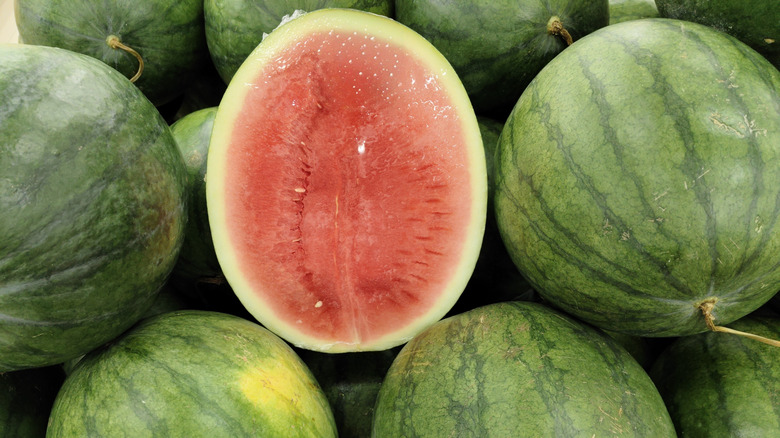
You have a decision to make when choosing a watermelon: with or without seeds? The latter offers a smoother eating experience without the hard, black seeds (though seedless melons often have soft, easily chewable white ones). Still, for maximum flavor, which is sweeter? According to science, whether watermelons have seeds or not doesn't affect their sweetness.
Seedless watermelons may actually be sweeter, not because of the absence of seeds, but because researchers bred these modern varieties for sweetness and flavor. To be clear, a watermelon's sweetness is mostly determined by variety, growing conditions, climate, and harvest time.
On the flip side, the thought that seedless watermelons are less sweet, likely is due to perceived nostalgia, Todd Wehner of North Carolina State University's horticultural science department told NPR. Recollections of watermelons seem sweeter and more flavorful, and in the past they mostly had seeds. However, the absence of seeds doesn't correlate with this. So if you happen to get a subpar melon, don't blame the lack of seeds; instead, check out these hacks for changing the way you eat melon. Or consider that a common mistake consumers make when buying watermelon is not knowing how to choose a good one.
How seedless watermelons originated and are grown today
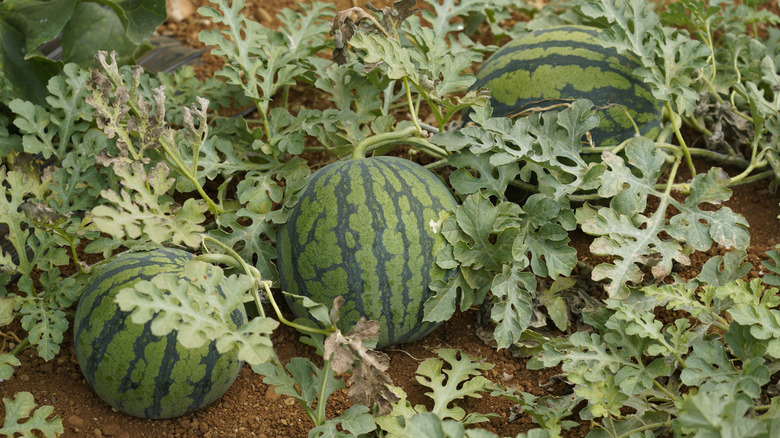
Today, the College of Agricultural, Consumer & Environmental Sciences at the University of Illinois Urbana-Champaign reports that 90% of watermelons sold in U.S. grocery stores are seedless. Melons have come a long way to get to this point; the wild watermelon originated in Africa, and is thought to have been bitter and full of seeds. The Egyptians are considered to be the first to help transform the fruit through early seed selection, saving seeds from melons with sweeter flesh and leaving less desirable fruit behind.
Seedless watermelons aren't genetically modified. Professor H. Kihara, a Japanese plant breeder, created the variety in the 1930s. He did this by crossing a regular watermelon plant with one that has double the chromosomes, resulting in a fruit with three chromosome sets. This uneven number prevents the mature, black seeds from developing, instead leaving traces of small, softer white ones.
Without a regular seed, seedless watermelons can't fully pollinate themselves, so growers have to plant pollinator vines nearby to produce fruit. In a field, a farmer may plant one pollinator vine for every three seedless vines to make sure enough pollen is available. Seeded watermelons often do this naturally, which is why growers commonly plant both types together. Now that you know all about the seedless ones, check out 26 other varieties of watermelon.