

I Tested 6 Hard-Boiled Egg Peeling Hacks And One Method Beat Them All
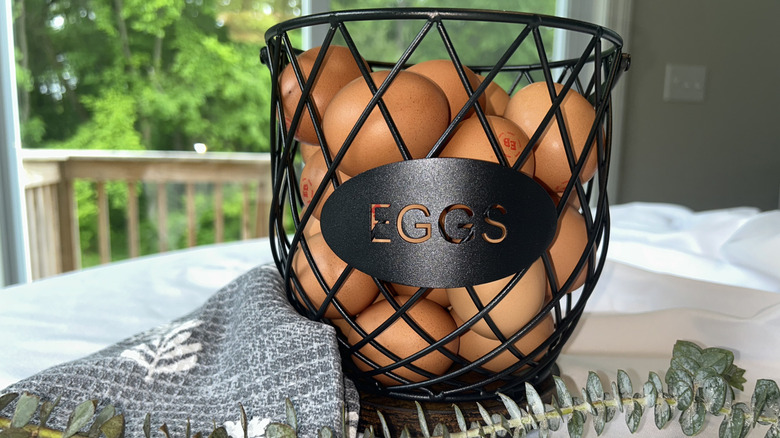
Hard-boiled eggs are a staple in many homes. Not only do they make a nutritious and easy-to-grab snack, but they're also a necessary ingredient in so many tasty recipes. From egg salad sandwiches and macaroni salad to potato salad, an easy Cobb salad, and popular deviled eggs, the humble, hard-boiled egg is often a crucial ingredient. But you can't complete these dishes without peeling a good number of eggs — a process many people find challenging and labor intensive.
For me, peeling hard-boiled eggs is probably my least favorite kitchen task — and likely what keeps me from making deviled eggs and potato salad as often as my family might like. That's why I was so excited to test six different egg-peeling techniques to see which one was not only the easiest and quickest but still resulted in a flawless hard-boiled egg even the most finicky culinary experts would be proud to serve. Here's what I discovered from my testing process.
6. Use air to loosen the shell
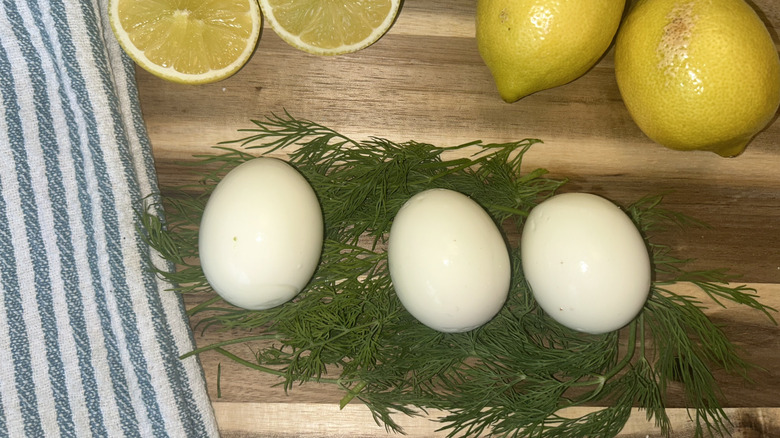
I'll admit, the idea of being able to blow on an egg and loosen its shell enough for the egg to effortlessly slip out of the shell was intriguing to me. But while this method is great in theory, it likely takes a lot of practice to perfect this egg-peeling technique.
To peel an egg with this method, you take a hard-boiled egg and peel off a quarter-sized piece of shell on the top and on the bottom of the egg and then hold it to your mouth and blow. The end result should be that the egg blows right out of the shell and plops into the bowl in front of you. But despite multiple tries with this technique, I could not get this method to work for me.
Of course, it could be that I gripped the egg too tightly and didn't leave enough space for the air to do its job. Or maybe I didn't peel away enough of the shell at the beginning to get it to work correctly. Whatever the reason, the big hang up for me was that I couldn't get past the idea that I was putting every egg close to my mouth and blowing on it. And, even though I washed each egg afterward, my mind was fixated on how germy this process is, especially if the person peeling the eggs has a cold or sinus issues. So, if you're making hard-boiled eggs for a crowd, I wouldn't recommend this method.
5. Use a spoon to peel the egg
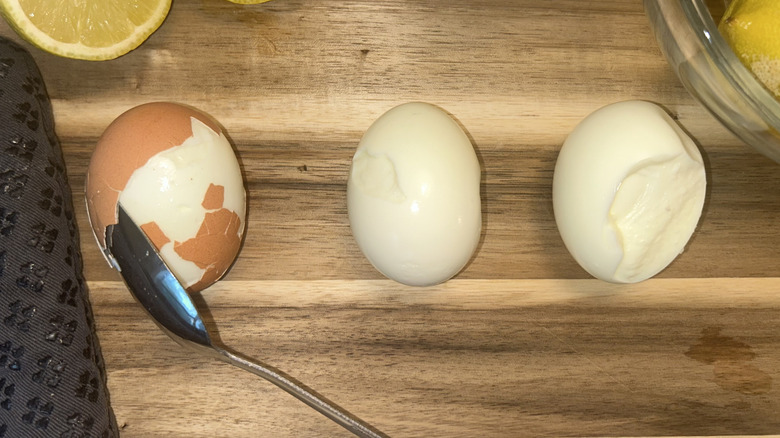
Using a spoon to slip under the shell of an egg and remove it one fell swoop is a great idea on paper. But when put to the test in my kitchen it was a major flop. Just one look at the finished eggs and you can see where the edge of the spoon took off the shell — and a good chunk of the egg, too. This method was easily the worst method for peeling hard boiled eggs. The only reason it didn't rank last was because it wasn't germy like blowing on the egg. To me, unsanitary eggs are worse than misshapen ones any day.
In theory, the spoon technique is a great idea for peeling eggs. After all, the shape of the spoon is nearly identical to the shape of the egg. You can sort of imagine it hugging your delicate egg as it efficiently lifts the shell away. Except that's not what happened in my experiment. At first, as I moved the spoon around the egg, I was surprised at how easy it was — and I promise I was trying to be gentle and not dig into the egg. The issue is that even with what I thought was a light-handed touch, I ended up destroying the egg. I wouldn't recommend trying this method unless you don't mind losing part of your eggs in the process.
4. Roll the egg on the counter
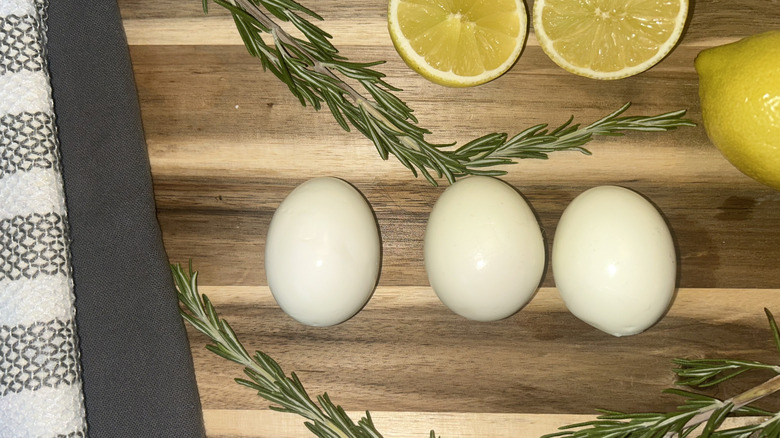
Normally, when I am about to peel a hard-boiled egg, I tap it gently on the edge of a bowl or my counter and then get to peeling. But with this method, you apply gentle pressure to the egg and gently roll it across the counter. The end result is a shell with many micro-sized cracks all over the shell. This method also loosens the membrane of the egg and makes peeling it a little easier. And, you can tell by looking at my eggs in the photo above that they were nearly perfect.
The reason this egg peeling method didn't rank higher is because it still took a long time to get the shell off. And, when you're pressed for time in the kitchen like I usually am, that's a dealbreaker. I also felt this method was incomplete on its own and needed some water to aid with getting the shell off. Also, if you press too hard on the egg the shell can leave marks on the egg. That said, this method does loosen the shell and membrane a good bit and would be great combined with peeling the egg in a bowl of warm water afterward or peeling under a stream of water.
3. Shake the egg in a jar of water
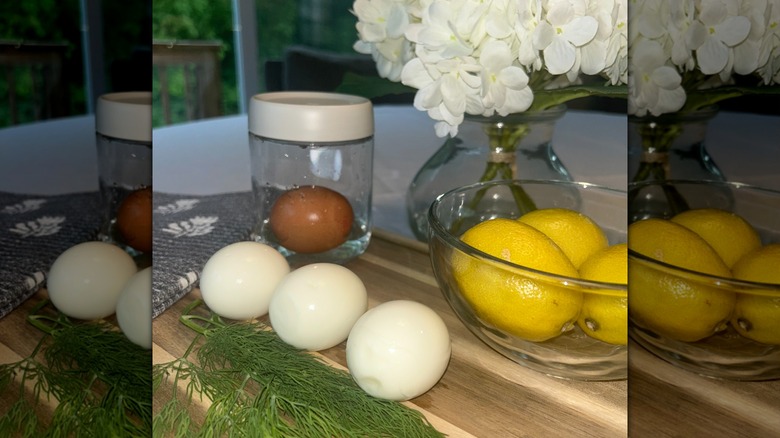
When testing this method of egg peeling, I was pleasantly surprised by the results. Not only did the shells come off easily, but the eggs looked pretty good at the end — especially considering they had just been tossed around in a glass jar for about 10 seconds. To use this method at home, find a small mason jar with a lid, or any glass jar with a lid in your kitchen (I used the jars I use for delicious homemade dressings). Then, fill it with ¼ cup of warm water and put your egg inside. Gently shake the jar for about 10 seconds and then peel your egg and rinse off the residue.
One downside to this technique is that shaking the jar too hard can result in damaged eggs. It also adds an extra 10 seconds or more to your peeling time. But if your fingers are stiff or you have trouble with the peeling portion, this method can make the job a lot easier. Plus, you can get a little frustration out each time you shake the jar. Combine this method with peeling under warm water or peeling in a bowl of water for an even better experience.
2. Use a bowl of warm water to peel the egg
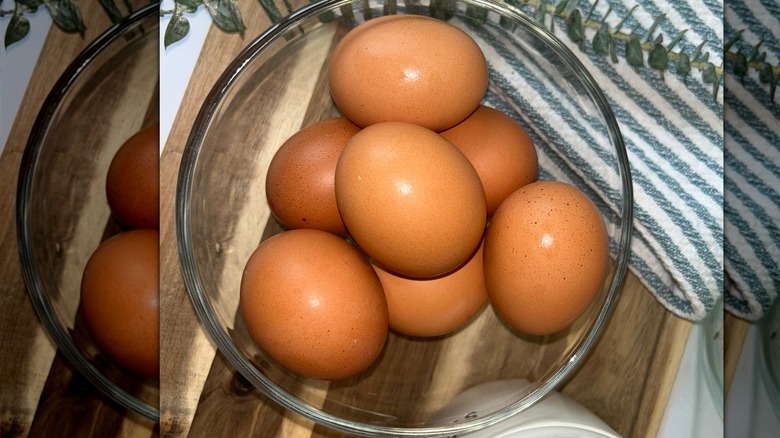
I have to admit, I was skeptical of this method before trying it. But there are a number of upsides to peeling your cooled egg in a bowl of warm water. First, the water helps to loosen the shell and you can leave the shells right in the bowl as you peel your eggs, making cleanup a breeze. I don't like to put my egg shells in the garbage disposal, so I'm always fishing them out of the sink when I'm done peeling eggs. But with them in the bowl, I just drained the water and pitched the shells.
Overall, the only reason I didn't rank this peeling method first is that I found it difficult to tell how hard I was pressing on the shell and the egg when peeling and my peeled eggs had more indentations than I would have liked. But, it was a quick peeling method and took me about 30 seconds per egg, especially on the second and third egg when I got accustomed to having my hands in water. Likewise, having pruney-looking fingers when I was done was a little annoying. But I will definitely use this method again, as it may make peeling slightly easier once I learn how much pressure to apply in the water.
1. Peel the egg under a stream of warm water
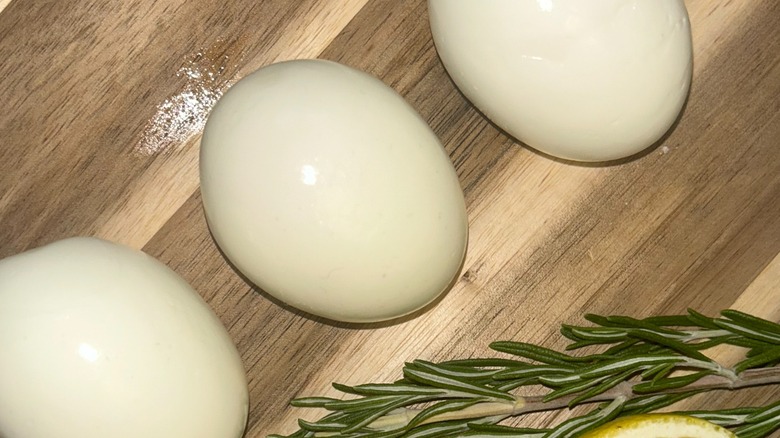
According to my testing process, this method of taking a cooled egg and peeling it under a warm stream of water is the easiest, quickest, and most successful way to peel a hard-boiled egg. It took me less than 30 seconds to peel each egg. Plus, the shells slipped off easily leaving very few indentations or chips in the flesh.
Full disclosure: This is the way I have peeled eggs for as long as I can remember. So, it shouldn't be surprising that I was able to peel the eggs easily in less than 30 seconds per egg. What's more, the shell slipped off easily on all but one egg, which had a stubborn membrane that took some patience to break. But even with that in mind, I am still confident that this is the best way to peel a hard-boiled egg and get a finished product you can serve as is.
That said, if you have trouble getting the shell loosened due to dexterity concerns or issues with fine motor skills, you could try rolling the egg first or shaking it gently in a jar of warm water and then peeling the shell off under running water. I like this method best because your egg is clean and free of any shell remnants when you're done.
Methodology
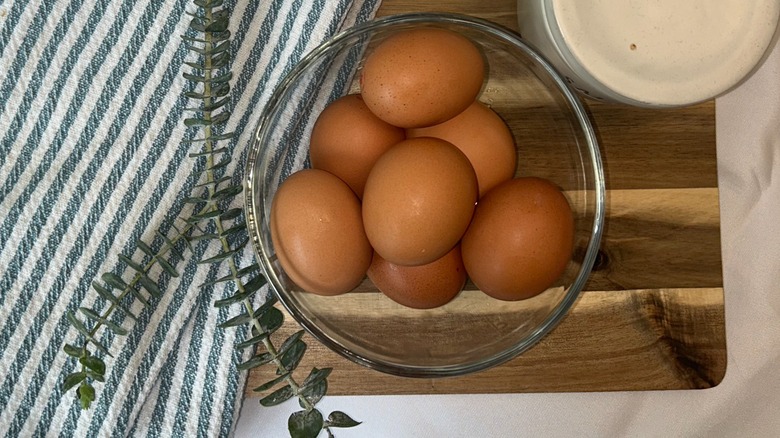
When developing this testing, I purchased two dozen of Eggland's Best Organic large, brown eggs. The eggs were purchased from Kroger and both cartons had the same expiration date. Because the eggs were purchased just before testing, this meant they were all fresh eggs.
To prepare for the testing, I brought a pot of water to a boil on the stove and then dropped the eggs in with a slotted spoon when the water was at a rolling boil. I lowered the temperature on the stove, added a lid, and cooked the eggs for 11 minutes. Once the time was up and the boiling water was drained, I plunged the eggs in an ice bath and allowed them to cool until I could handle the eggs without burning my fingers.
For each method, I peeled three eggs and timed how long it took me to get the shell off of the egg. All of the eggs took less than 60 seconds per egg to peel with the average being around 30 to 40 seconds. Clearly, some methods were easier to employ than others. Consequently, I made note of how simple or complicated each method was to master and how likely the eggs were to be damaged by the peeling method. After all, perfect hard-boiled eggs are a necessity for dishes like deviled eggs or simple Scotch eggs.
Once all of the peeling methods had been implemented, I considered which eggs were the best looking and which methods were the easiest and quickest to implement. From there, I considered other factors or issues that could make the method less desirable (like blowing on the eggs and spreading germs). Overall, warm water seems to be the key to getting the shell off of an egg in a smooth motion. I preferred the method of peeling under warm water, but peeling them in a bowl of warm water or placing them in a jar with a small amount of warm water were also effective.