

This Country Produces The Most Vodka In The World

From magnificent martini recipes to pasta dishes with mysteriously boozy origins, vodka is the definitive building block of some of our favorite indulgences. There's also no denying that the clear, icy spirit is synonymous with the nation that puts the "Moscow" in "Moscow mule." The country of 143 million is the world's number one vodka consumer. On a per capita basis, its populace drinks about 17 shots of the stuff each month. That's quite a difference from Americans' four monthly shots (per World Population Review). Unsurprisingly, Russia is also the world's leading vodka producer, accounting for about 30% of global production as recently as 2021 (via CNBC).
According to a report by TAdvisor, Russia produced a whopping 793 million liters of the spirit in 2025. Alas, despite the country's vast manufacturing capacity, more than 90% of the vodka it makes is consumed domestically. So it actually barely makes a dent in the international market. In the United States, for instance, Russian imports made up less than 1% of total vodka volume on liquor store shelves in 2021. So which nation leads the way when it comes to providing the rest of the world's supply? That distinction actually belongs to Sweden. Surprising as it might be, the Scandinavian nation exports the most vodka of any country in terms of global market share and commercial value.
How vodka became embedded in Russia's economy
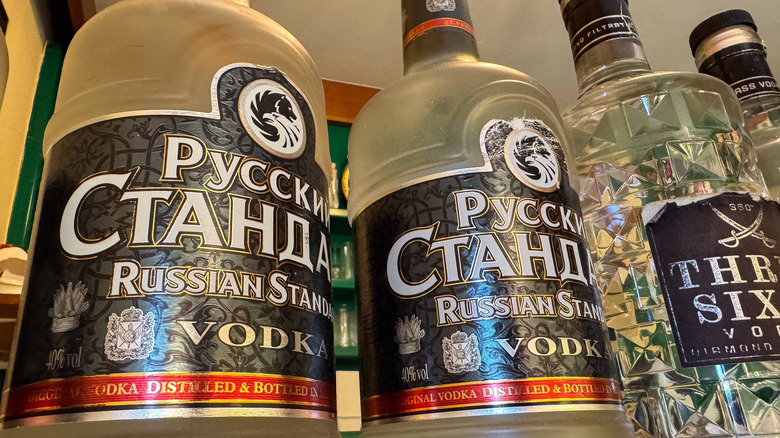
Russia's deep cultural ties to vodka — and the mighty economy surrounding it — date back centuries. A potent precursor to vodka dubbed "aqua vitae" (meaning "water of life") was first brought to Russia by Genoese merchants in the 1300s. However, it didn't really catch on for recreational drinking and was instead used mostly for medicinal purposes. It wasn't until around 1430 that a monk experimenting with distillation created an early version of the Russian vodka we know today (although it was actually referred to as "bread wine" back then).
A major reason Russia was ripe for vodka consumption is that the beverage was made from grain, an abundant and relatively cheap commodity at the time. Furthermore, producing the drink required fermentation, an already essential mode of food preservation in the country's cold climate. So the spirit took off — this time, for drinking. It also wasn't long until the nation's leaders saw the opportunity to use vodka to make a profit. In 1472, Tsar Ivan III (aka Ivan the Great) established the first government monopoly on the production and sale of this so-called bread wine in order to procure revenue for the state.
Indeed, vodka has served a major role in Russia's economy over the past few centuries, and at one point, it was even considered currency. After the collapse of the Soviet Union in the 1990s, the value of the Russian ruble tanked. So instead of using cash for goods and services, many citizens traded bottles of their national spirit, something whose value could never fluctuate (so long as its standardized 80 proof doesn't, that is).