

Does Imitation Crab Last Forever?
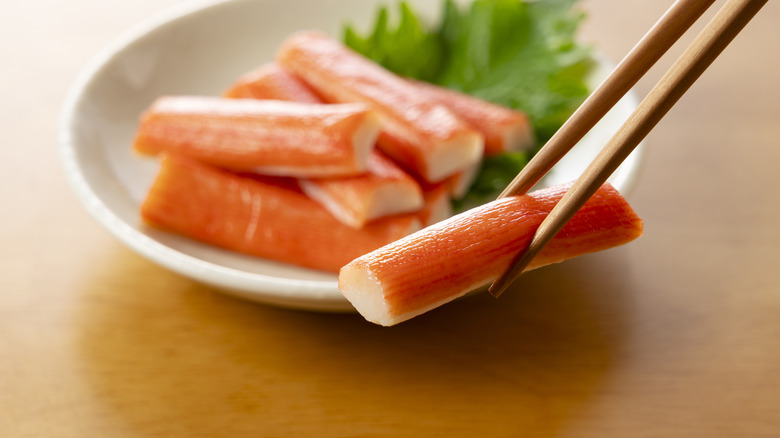
Imitation crab is made from a whitefish paste called surimi and is flavored by shellfish to mimic the taste and consistency of real crab meat. It's a processed food, but does that mean it will last forever? No, not at all. If refrigerated and unopened, imitation crab lasts until the expiration date on the package, and if frozen, it's good for about a year. After opening and storing a package in the fridge, it only lasts about three days.
Trans-Ocean Products, a manufacturer of imitation crab, says that it should be treated essentially like any other seafood. If sold refrigerated, it should be kept refrigerated. An unopened package will be good until the date printed on it (a timeframe of about two months). You can also freeze it before the marked date, extending its life by around nine months. The USDA says continuously frozen seafood will be safe to eat indefinitely, but its quality will degrade over time.
Just because it's not real crab doesn't mean it's not seafood (that's one of the myths of imitation crab, after all). Typically, surimi is made with flaky fish like pollock, but each brand may use a slightly different recipe, and some imitation crab brands rank better than others. Although it's processed, you should still store imitation crab like any other fish.
Other food-safety tips for imitation crab

Like many commercial foods, the best way to keep imitation crab fresh for as long as possible is by keeping it sealed in the package it came in. Of course, that's not always possible, as you may use part of a pack and save the rest for later. Keeping imitation crab in an airtight container like a sealed food storage container or zip-top bag will help preserve it, and above all, always keep it refrigerated or frozen.
Surimi is more heavily processed than true crab meat, and part of its manufacturing involves cooking. The imitation crab meat you buy in a grocery store is already fully cooked and therefore safe to eat from the package. If you're cooking with imitation crab, heat the surimi all the way through, but be careful not to overcook it. Bacteria grow most rapidly between 40 and 140 degrees Fahrenheit, so avoid keeping the internal temperature in that range.
Since imitation crab doesn't last forever, keep an eye out for signs of spoilage if you're not sure how long you've had it. A mild, sweet smell is normal, but a strong fishy odor means it's gone bad, as does a sour taste (try to avoid eating spoiled seafood at all). If it feels slimy on the outside, that's also a sign that it's probably spoiled. Pollock or other fish inside surimi eventually go bad like any other seafood, so caution is advised when you're unsure.